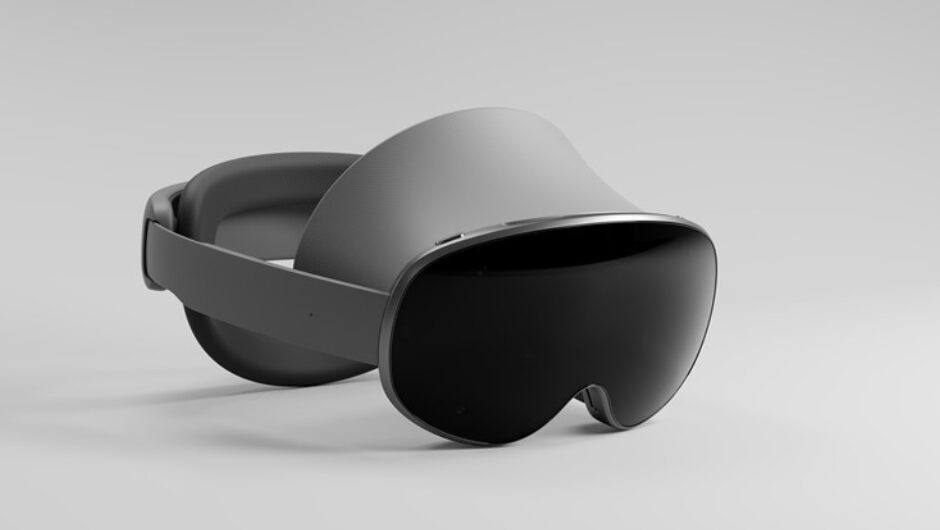

Samsung’s long-rumored mixed reality glasses have finally broken cover in a substantial leak, pointing to a lightweight headset that looks more like everyday eyewear than a gaming rig. The details suggest a direct play for the same mainstream audience Meta is chasing with its Ray-Ban Meta smart glasses, but with a stronger push into full XR experiences rather than simple camera and assistant features.
From the industrial design to the reported display tech and connectivity, the leaked Galaxy-branded glasses signal that Samsung is preparing to move beyond phone-tethered experiments and into a serious challenge to Meta’s growing dominance in consumer mixed reality.
What the leak actually shows about Samsung’s XR glasses
The latest leak gives the clearest picture yet of Samsung’s first dedicated XR glasses, including renders that show a slim frame, relatively compact lenses, and a design that could plausibly pass for chunky prescription eyewear rather than a full headset. The images and descriptions circulating online point to a product that sits somewhere between traditional AR glasses and a VR visor, with a visor-like front section integrated into a glasses-style frame, which is consistent with the early look shared through a recent leak report. I see that positioning as a deliberate attempt to avoid the “ski goggles” stigma that still hangs over bulkier headsets.
Alongside the renders, the leak outlines key hardware elements such as integrated cameras, sensors along the temples, and a relatively thick bridge section that likely hides core processing components and battery. The overall package, as described in the early breakdowns of the first-look details, suggests Samsung is aiming for a self-contained device that can still lean on a Galaxy phone when needed, rather than a simple display accessory. That approach would put the glasses in direct conversation with Meta’s more capable devices, not just its camera-first wearables.
Design, lenses, and the push for everyday wear
One of the most striking claims in the leak is that Samsung is using transition-style lenses that can darken for outdoor use and clear up indoors, a choice that would make the glasses feel more like a normal pair of sunglasses that just happen to be smart. The reporting on these transition lenses and built-in camera frames them as a core part of the pitch, not an afterthought, which tells me Samsung wants people to wear these for long stretches of the day rather than only during dedicated VR sessions. That is a clear nod to the lifestyle framing that has helped Meta’s Ray-Ban line gain traction.
The frame itself, based on the leaked imagery and descriptions, appears to balance style with the practical need to hide optics, cameras, and connectivity hardware. Reports describing the Galaxy glasses design and specs point to a relatively thick temple section that likely houses batteries and radios, while the front visor area seems designed to shield internal displays from ambient light. I read that as Samsung trying to keep the silhouette familiar enough that it does not scream “prototype headset” in public, while still leaving room for the components needed to deliver mixed reality overlays that can compete with Meta’s more immersive devices.
Model numbers, connectivity, and how the glasses will talk to your phone
Under the surface, the leak points to specific model numbers that tie the glasses into Samsung’s broader Galaxy ecosystem, reinforcing the idea that this is not a one-off experiment but a product line the company expects to support. Reporting on the smart glasses model number indicates that Samsung is treating the device like any other flagship Galaxy accessory, with clear SKU tracking and regional variants. That level of detail usually appears only when a product is moving closer to commercial reality, which suggests these glasses are more than a concept.
Connectivity details in the leak describe a device that can pair tightly with Galaxy phones and tablets, likely over Wi‑Fi and Bluetooth, while also supporting direct cloud access for streaming and updates. A social media breakdown of the connectivity details highlights how Samsung is positioning the glasses as both a companion and a semi-standalone device, which mirrors the strategy Meta has used with its Quest headsets and Ray-Ban glasses. In practice, that could mean using a Galaxy S-series phone for heavy processing in some scenarios, while still allowing the glasses to handle basic notifications, media playback, and camera capture on their own.
US launch signals a direct challenge to Meta
The leak does not just describe hardware, it also points to Samsung targeting the United States as a key launch market, which is exactly where Meta has built the strongest presence for its XR ecosystem. Coverage of the US market launch notes that Samsung is preparing carrier and retail channel support that mirrors how it sells Galaxy phones and watches, a sign that the company wants these glasses to sit alongside mainstream devices rather than in a niche gaming corner. In my view, that is a direct shot at Meta’s strategy of using big-box retail and online channels to normalize headsets as everyday electronics.
By leaning on its existing Galaxy ecosystem, Samsung can offer tight integration with devices that millions of US customers already own, from Galaxy S and Z phones to Galaxy Buds and Galaxy Watch. The early reporting on the Galaxy XR wearables features suggests that Samsung is planning features that tie notifications, media controls, and possibly health or fitness data into the glasses experience, which would differentiate it from Meta’s more social and entertainment-focused approach. If that plays out, I expect the competition in the US to hinge less on raw specs and more on which ecosystem feels more useful in everyday life.
Specs, cameras, and what kind of XR experience to expect
On the technical side, the leak points to at least one forward-facing camera integrated into the frame, enabling both photo and video capture as well as passthrough for mixed reality overlays. The breakdown of the XR specs and the earlier look at the built-in camera both emphasize that Samsung is not treating imaging as a gimmick, but as a core part of how the glasses will be used. That aligns with Meta’s heavy focus on hands-free capture in its Ray-Ban line, but Samsung’s XR framing suggests a stronger emphasis on spatial computing, not just social sharing.
Beyond cameras, the leaked information points to display and sensor hardware tuned for mixed reality rather than pure VR, which would allow digital objects to be layered onto the real world while still supporting more immersive experiences when needed. A community discussion of the XR leak reveals how enthusiasts are already parsing potential field-of-view, refresh rate, and tracking capabilities based on the limited data available, though many of those specifics remain unverified based on available sources. What is clear from the combined reporting is that Samsung is aiming for a device that can handle both casual glanceable information and richer XR apps, which would put it squarely in competition with Meta’s push toward spatial computing on Quest and Ray-Ban hardware.
Community reaction and early hands-on glimpses
Even before Samsung has said anything official, the leak has sparked intense debate among XR fans about whether the company is moving fast enough to catch Meta or arriving at just the right moment as the category matures. On forums dedicated to Android-based mixed reality, users dissecting the smart glasses leak are weighing the trade-offs between a slimmer glasses-style design and the more immersive, but bulkier, headsets that dominate today’s market. From what I see in those conversations, there is real appetite for a device that can deliver meaningful XR features without demanding that people strap a full helmet to their face.
Short video clips and commentary circulating on social platforms are also shaping early perception, even if they are based on limited or staged material. A brief hands-on style short has been shared as an example of how the glasses might look in real-world use, reinforcing the idea that Samsung is prioritizing a low-profile aesthetic. While none of these glimpses can replace a full demo, they are already helping set expectations that Samsung’s entry will be closer to Meta’s Ray-Ban glasses in form factor, but with a stronger tilt toward XR functionality that could appeal to both enthusiasts and curious first-time buyers.
How Samsung’s XR move reshapes the Meta rivalry
With these leaks, the competitive landscape between Samsung and Meta in mixed reality is coming into sharper focus. Meta has spent years building out the Quest line and, more recently, its Ray-Ban Meta smart glasses, betting that a mix of gaming, productivity, and social features will pull people into its ecosystem. Samsung’s leaked Galaxy XR glasses, as described in the initial leak coverage and the more detailed first-look analysis, suggest a different starting point: a device that feels like a natural extension of a Galaxy phone, with XR layered on top rather than the other way around. I see that as a classic Samsung move, using its strength in hardware and mobile ecosystems to meet Meta on more familiar ground.
At the same time, the reporting on the smart VR features and the detailed product identifiers makes it clear that Samsung is not treating this as a side project. If the leaked US launch plans hold, and if the transition lenses, camera system, and connectivity stack deliver as described, Samsung will be stepping directly into Meta’s lane with a product that looks and behaves more like everyday eyewear while still promising full XR capabilities. For consumers, that rivalry could finally bring the kind of competition that pushes mixed reality out of the early adopter bubble and into the same mainstream conversation as smartphones and smartwatches.
More from MorningOverview