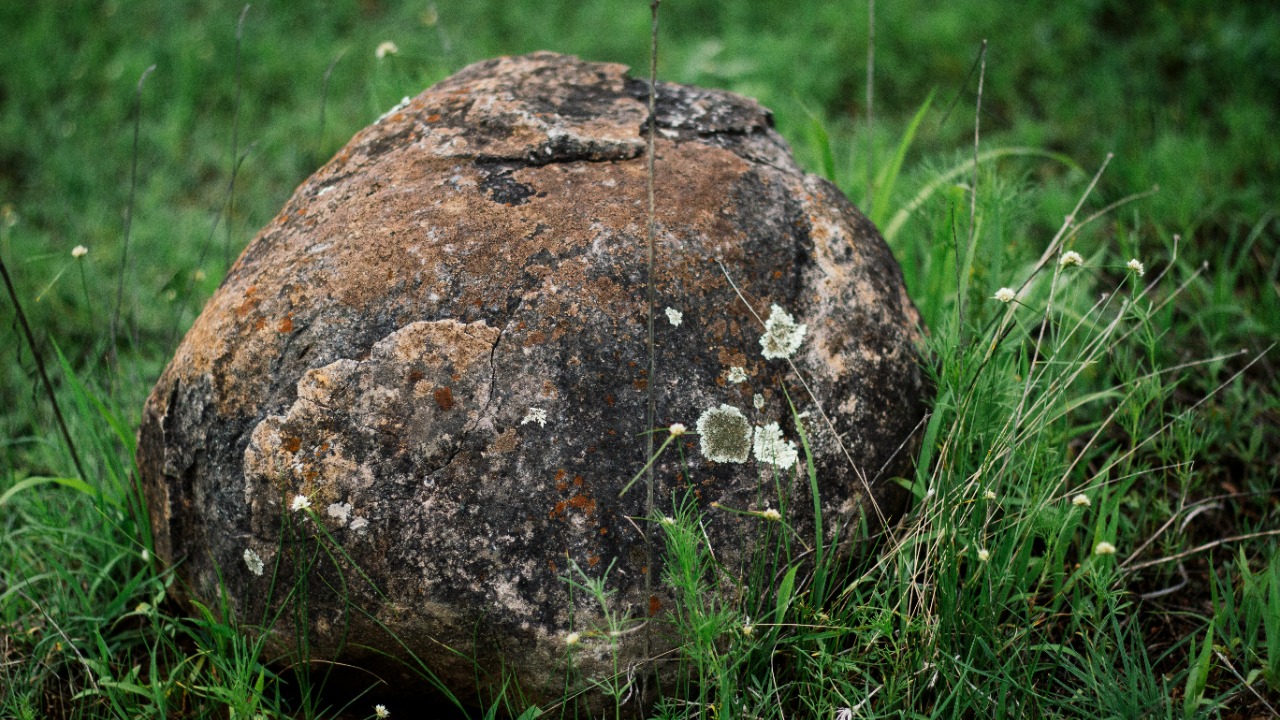

Archaeologists working in the Amazon have uncovered sealed stone spheres that contain carefully arranged human bones, but the remains inside do not appear to belong to single individuals. Instead, they look like curated collections, with bones from different people placed together in ways that defy straightforward explanations about burial or ritual. The result is a puzzle that forces researchers to rethink how prehistoric communities in the region treated death, memory, and the body itself.
Rather than a simple graveyard, the spheres point to a complex system of handling the dead, where bones were cleaned, selected, and recombined before being locked away. I see these objects as part archive, part shrine, and part message from a culture that left almost no written record, yet invested enormous effort in shaping how its dead would be encountered by the living.
Unearthing the mysterious Amazon spheres
The starting point is deceptively simple: rounded stone containers, buried in the Amazon and only revealed when excavation cuts through the soil. Reporting on the discovery describes archaeologists opening these prehistoric spheres to find human bones that had been deliberately placed inside, not as intact skeletons but as disarticulated pieces that had been cleaned and arranged in tight bundles. The very existence of these sealed containers, and the labor required to carve and move them, signals that the people who made them treated the dead as a long term responsibility rather than a brief funeral moment, a point underscored by accounts of the strange prehistoric spheres that first drew global attention.
What makes these finds so striking is not only their form but their context. The Amazon has long been portrayed as a place where dense forest erased traces of older societies, yet the spheres suggest a community capable of planning, engineering, and symbolic design. In online discussions among enthusiasts and researchers, images of the spheres and their contents circulate alongside other unusual burial practices, with one widely shared archaeology group post highlighting how these containers differ from more familiar tombs or ossuaries. That contrast, between expectation and evidence, is what gives the spheres their power: they are both recognizably funerary and deeply unfamiliar.
Bones that refuse to tell a single life story
Once the lids are removed, the real mystery begins. The bones inside the spheres do not line up into a single skeleton, and early analyses suggest they come from multiple individuals whose remains were mixed together. Instead of one person per container, the pattern looks more like a curated set of body parts, with some elements missing and others repeated, as if the community selected particular bones for symbolic reasons. Reports on the excavations emphasize that the bones were not tossed in at random but placed with care, which makes the mismatched remains even harder to explain within a simple family grave model described in the initial coverage of the find.
For me, the most compelling reading is that these spheres held composite ancestors, figures built from the remains of several people whose identities were fused into a single ritual presence. That idea fits with broader patterns in Indigenous Amazonian cosmologies, where kinship and personhood can be fluid and shared across generations, although the specific practices inside these spheres remain unverified based on available sources. Video explainers that walk through the discovery, such as one detailed analysis of the bone arrangements, stress how the pattern of mixing and selection resists any straightforward forensic reconstruction. The bones, in other words, are not trying to tell us who these people were as individuals; they are telling us how the living wanted to remember and recombine them.
Ritual engineering in stone and space
To understand the spheres, I have to look beyond the bones and focus on the containers themselves. Carving a hollow stone globe, shaping a lid that seals tightly, and then burying the whole structure in a specific location is not an improvised act. It is a form of ritual engineering that turns geology into architecture. The spheres function as micro-structures, with their own interior climate, darkness, and acoustic silence, all of which would have shaped how the community imagined the dead residing inside. That sense of a designed environment for memory echoes in contemporary projects that treat enclosed glass or steel shells as curated worlds, such as the plant filled Amazon Spheres project in Seattle, where the enclosure itself becomes part of the experience.
What stands out in both cases is the deliberate separation between inside and outside. In Seattle, visitors step from city streets into a controlled interior landscape, while in the prehistoric Amazon, mourners would have moved from open forest into the conceptual interior of a sealed stone globe. Modern descriptions of the Seattle complex emphasize how its intersecting domes create a distinct microclimate for thousands of plants, a point highlighted in architectural profiles of the Amazon Spheres that detail their steel and glass lattice. The prehistoric stone versions, by contrast, used mass and opacity rather than transparency and light, but the underlying logic is similar: build a boundary, then use that boundary to stage a different relationship between humans, non humans, and time.
From prehistoric tombs to corporate biomes
It might seem like a stretch to compare sealed funerary spheres in the Amazon rainforest with a high tech office complex in downtown Seattle, yet both are part of a long human habit of using rounded enclosures to manage life and death. The Seattle domes are not burial sites, but they are carefully controlled environments where living collections are curated, cataloged, and displayed. Public materials about the complex describe how visitors can explore an interpretive space called Understory, where exhibits explain the design and ecological thinking behind the domes, and where the building itself becomes a teaching tool, as outlined in the visitor information for the Understory experience. The prehistoric spheres, in their own way, were also teaching tools, encoding a community’s ideas about ancestry and the afterlife in stone and bone.
When I look at photographs and travelogues from people who have toured the Seattle domes, what jumps out is the language of immersion and otherworldliness. One photographer describes stepping into a lush interior filled with tropical plants, elevated walkways, and filtered light that makes the space feel detached from the city outside, a mood captured in a detailed account of a visit to the Amazon Spheres interior. The prehistoric stone spheres would have been far less visually dramatic, but they likely produced a similar psychological effect for those who knew what lay beneath them: a sense that, just below the surface, another world existed, populated by carefully arranged remains that did not map neatly onto any single life.
How spheres shape stories about nature and culture
Both the ancient burial containers and the modern glass domes rely on a simple geometric form to tell complex stories about nature and culture. In Seattle, the domes are marketed as a place where employees can work surrounded by greenery, a living laboratory that blends office life with a curated rainforest. Guides describe how the structure houses thousands of plant species, arranged in zones that mimic different ecosystems, and how the design team used the spherical form to maximize light and vertical space, details that appear in promotional material for the Amazon Spheres attraction. The prehistoric spheres, by contrast, used their shape to compress multiple human lives into a single container, turning the dead into a kind of composite ancestor that could be visited, remembered, or perhaps feared.
In both cases, the sphere becomes a narrative device. It tells visitors where one world ends and another begins. Video tours of the Seattle domes, such as a guided walk through the plant filled interior of the Amazon Spheres campus, emphasize how the curved glass walls and intersecting orbs create a sense of enclosure without total separation, allowing views of the city while still feeling like a distinct biome. The prehistoric stone versions likely offered the opposite experience: total separation, no windows, and a boundary that could only be crossed conceptually. Yet the underlying impulse is shared. People use spheres to stage encounters with things that are hard to manage in everyday life, whether that is tropical biodiversity in a temperate city or the unsettling presence of the dead.
Digital afterlives of ancient and modern spheres
One of the ironies of the Amazon burial spheres is that, for now, their most visible life is online. Short clips, still images, and speculative diagrams circulate across social platforms, where users debate whether the mixed bones point to ritual cannibalism, ancestor veneration, or something else entirely, although many of those interpretations remain unverified based on available sources. The same digital circuits that amplify interest in the prehistoric finds also promote the Seattle domes as a photogenic destination, with influencers and visitors posting sweeping shots of the glass curves and dense foliage, as seen in a widely shared social media reel that treats the domes as both workplace and tourist backdrop.
That digital afterlife matters because it shapes how the public understands both sets of spheres. Architectural organizations frame the Seattle complex as a case study in biophilic design, highlighting its structural system, plant program, and role in rethinking office space, a perspective laid out in a detailed project profile of the Amazon Spheres architecture. Meanwhile, video explainers about the prehistoric burial containers, such as the earlier analysis of the bone filled spheres, invite viewers to imagine how these objects fit into broader patterns of Amazonian archaeology. In both cases, the sphere becomes a stage not only for plants or bones but for stories, arguments, and aspirations about what it means to live with the past, whether that past is a prehistoric community that curated its dead or a twenty first century company that curates its own miniature rainforest.
More from MorningOverview