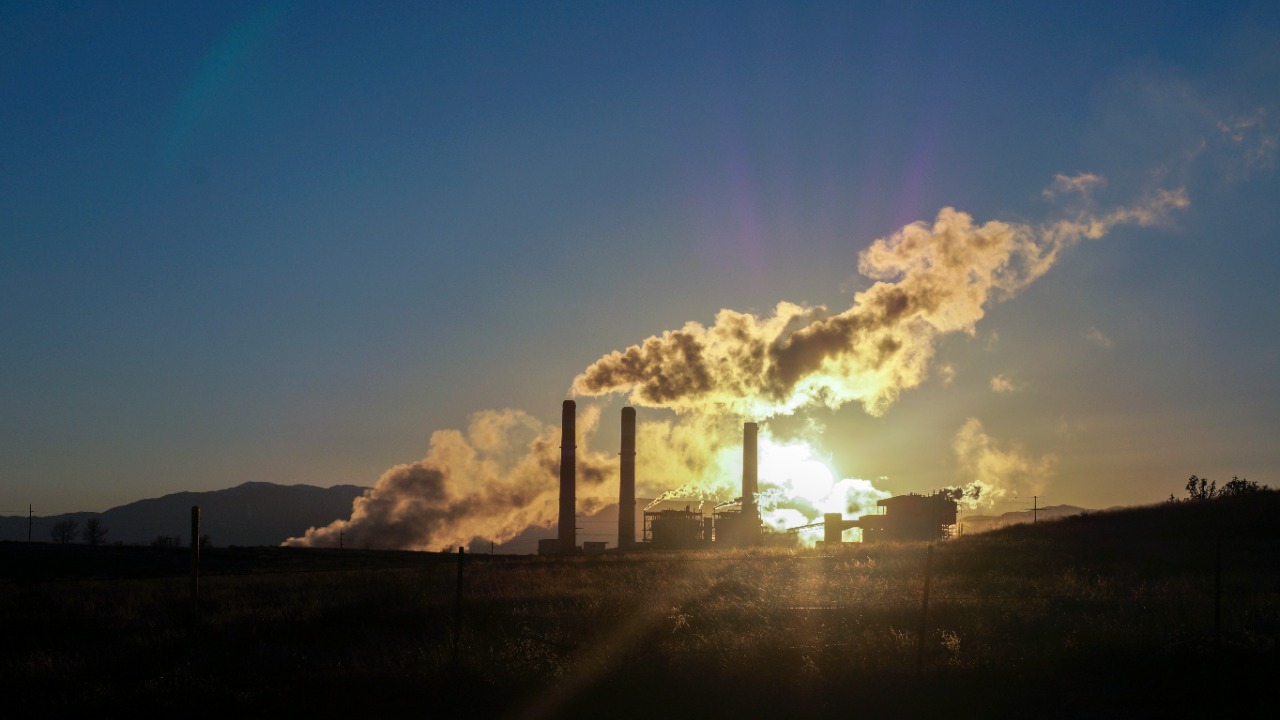

For decades, Earth’s forests, wetlands and soils quietly mopped up a huge share of the carbon pollution from cars, power plants and factories. Now that natural brake on global warming is faltering just as temperatures spike to record highs. The result is a dangerous feedback loop in which rising heat is turbocharging the breakdown of one of the planet’s most important greenhouse gas buffers.
Instead of reliably swallowing carbon dioxide, vast swaths of land are starting to absorb less, and in some cases to emit more, turning a crucial sink into a new source. That shift is already visible in atmospheric data and ecosystem studies, and it is shrinking the remaining carbon budget for holding warming close to 1.5°C.
The land sink that once bought us time is suddenly wobbling
Natural ecosystems have long acted as a powerful counterweight to fossil fuel use, with land-based vegetation and soils historically removing roughly 30% of human carbon dioxide emissions from the air. Analyses of the global carbon cycle show that, together with the oceans, natural systems have been taking up About 55% of anthropogenic CO2, with land sinks accounting for around 29% in recent years. In the United States, that land buffer has been central to climate planning, with forests and soils expected to keep offsetting a significant fraction of national emissions even as policymakers work to cut pollution at the source, a role detailed in assessments of the land carbon sink.
That quiet service is now under acute stress. A string of recent research has documented an “unprecedented” weakening of natural land-based carbon sinks in 2023 and 2024, with scientists warning that the capacity of forests and soils to absorb CO2 has roughly halved in some regions as global temperatures climb. Syntheses of these findings show that the resilience of these sinks has eroded as warming, deforestation and extreme weather stack up, and that the share of emissions left in the atmosphere has doubled globally in the past two decades.
Record heat is pushing forests and soils toward a tipping point
The recent weakening of the land sink is not happening in a vacuum, it is unfolding during the hottest years ever measured. Analyses of global temperatures show that Last year was the warmest year on record, with the greatest number of recorded climate disasters, and that a strong El Niño, which began in 2023, continued into early 2024, amplifying heat extremes around the world, as described in assessments that note how Last year broke multiple records. Against that backdrop, atmospheric monitoring networks reported that the Annual global increase in carbon dioxide concentrations jumped by about 3 parts per million, the highest growth rate on record, a spike that arrived just after the hottest year and signaled that more of each ton of pollution is now staying aloft, according to analyses of the Annual increase.
On the ground, the impact is stark. Forests, plants and soil, as a net category, absorbed almost no carbon in 2023 during the hottest year on record, a collapse that prompted warnings that the Earth’s systems are beginning to show signs of strain that had been expected decades from now, according to briefings that highlight how Forests nearly stopped functioning as a net sink. One analysis of global land uptake found that, However, in 2023, this capacity fell to just one-fifth of its usual level, marking the weakest land carbon sink performance in two decades and underscoring how the planet’s natural ability to limit the impacts of emissions is being drastically undermined, as summarized in reports that stress how However weak the sink has become.
Inside the biology: how heat and drought shut down nature’s carbon pump
At the microscopic level, the breakdown of the land sink starts with how Plants breathe. Plants, by contrast, breathe through tiny pores called stomata on the underside of their leaves, which they open and close to balance the CO2 they need with the water they lose, a basic physiological process that controls how much carbon they can absorb, as explained in primers on how Plants regulate stomata. When temperatures rise above 90°F (32°C), a lot of plants start to close their stomata in an effort to save water, However this also chokes off photosynthesis and reduces the capacity for carbon uptake, a threshold documented in agronomic guidance that notes how When heat crosses 90°F, 32°C, plant physiology shifts.
In forests, that stress is magnified by drought. Experimental work on subtropical coniferous stands has shown that During the combined drought-warming event, stomatal closure induced inhibition of plant photosynthesis therefore limit the carbon sequestration capacity, with productivity remaining depressed even after the warming-only scenario ended, according to ecosystem experiments that describe how During the stress period, trees lock down. A study from the peer-reviewed Atmospheric Chemistry and Physics journal found that during times of high heat, plants shut down their ability to absorb pollution, a response that decreases the amount of carbon and other pollutants they can remove from the air, as summarized in reviews of the Atmospheric Chemistry and findings.
From gradual slowdown to near-collapse: models meet reality
For years, climate scientists expected the land sink to weaken slowly, not to lurch toward failure. Core assessments of the climate system have long noted that Changes in Naturally Occurring Carbon Dioxide Concentrations over hundreds of thousands of years were driven by natural processes, but that the rapid rise in CO2 since industrialization is overwhelmingly due to human activity, as explained in overviews of Changes in Naturally Occurring Carbon Dioxide Concentrations. Models generally indicate a decreasing sink over time with future climate change, However, rather than a gradual decline, 2023 saw an abrupt weakening of land uptake that coincided with a high CO2 growth rate, a mismatch between projections and observations highlighted in analyses of how Models underestimated the speed of change.
On the ground, Earths natural carbon sink nearly collapsed in 2024, with forests, grasslands and wetlands that had quietly pulled vast amounts of CO2 from the air for decades suddenly absorbing far less, a shift that raised alarms about the stability of the global carbon cycle, as detailed in reports that describe how Earths systems faltered. Climate models do predict a gradual slowdown, yet most placed an abrupt collapse several decades away, and the back-to-back weak years suggest that tipping points may lurk closer than advertised, according to assessments that warn that Climate thresholds are arriving early. One synthesis of recent work on 1.5°C pathways notes that a string of studies has found an “unprecedented” weakening of land sinks in 2023 and 2024, and that the fraction of emissions staying in the air has doubled globally, tightening the window for keeping warming near 1.5°C.
What a failing sink means for climate goals and what we do next
The weakening of the land sink is not just a scientific curiosity, it directly reshapes the math of climate targets. A weakened land sink implies the carbon budget for keeping warming below 2°C is thinner than official tallies suggest, and that if ecosystems keep faltering, humanity will have to cut emissions roughly one-third faster to stay on track, according to analyses that quantify how weakened land sink tightens the budget. That reality collides with the fact that the world is still on course for a catastrophic 2.6C temperature rise, with scientists warning that the combined effects of global heating and the felling of trees have already turned some tropical forests in southeast Asia and the Amazon from carbon sinks into sources of the climate-heating gas, as documented in assessments of how Asia forests are flipping.
More from Morning Overview