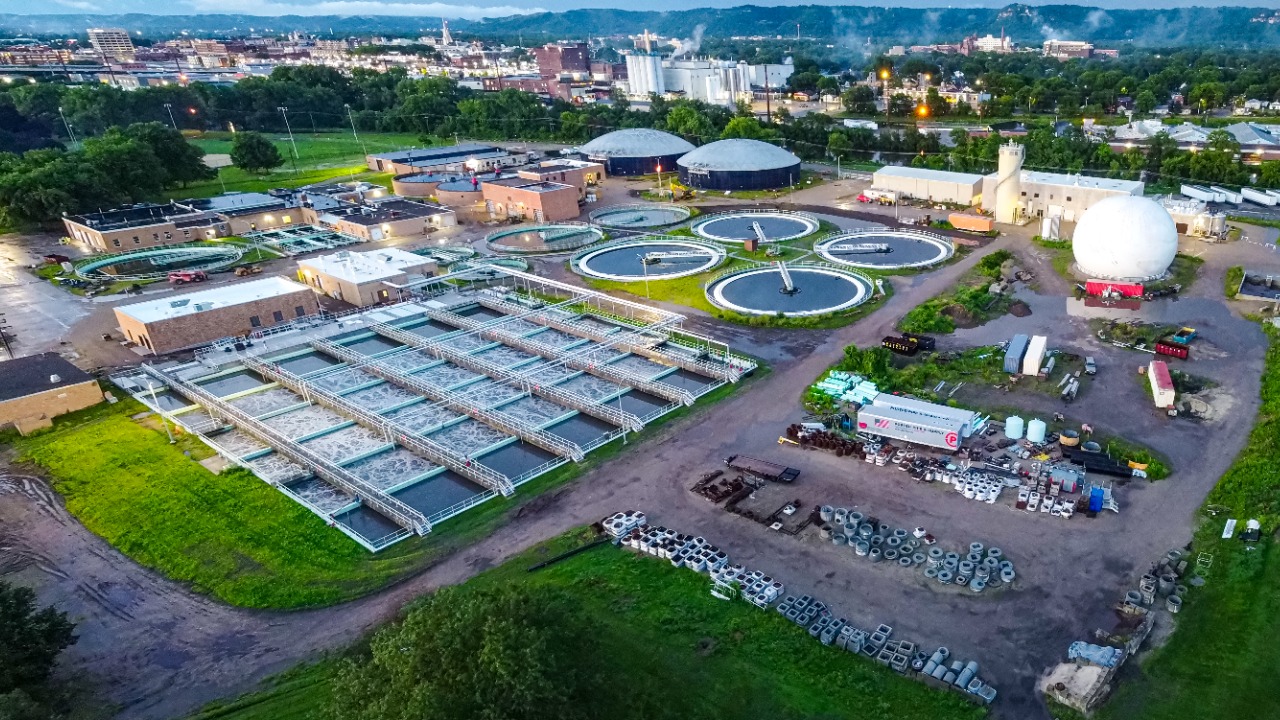

Across the United States, the systems that keep drinking water flowing are under strain from every direction: climate shocks, chemical pollution, cyberattacks, and aging pipes. Experts now warn that the country is drifting toward a kind of water insecurity that feels less like a distant scenario and more like a present-tense emergency. The message from researchers, regulators, and local officials is blunt: the water coming out of the tap is not guaranteed to be safe, or even to be there at all, unless policy and investment catch up fast.
What I see emerging from recent data and government briefings is a layered crisis, where physical shortages collide with contamination and digital sabotage. From the Colorado River to small-town treatment plants, the same pattern repeats: rising risk, lagging regulation, and communities left to improvise their own defenses.
Cascading climate shocks are shrinking supplies and stressing old systems
Water security in the American West is being quietly rewritten by winters that no longer behave like winters. Scientists are warning that less snowfall across key mountain ranges is already translating into weaker spring runoff and a major decline in reservoir levels that millions of people depend on. One analysis notes that a single dry year can drop some reservoirs by dozens of feet, a stark signal for cities and farms tied to the Colorado River. Federal managers have responded with a complex web of operating rules, but those rules were written for a climate that no longer exists.
The U.S. Bureau of Reclamation has acknowledged this new reality by leaning on Current guidelines that include the 2007 Interim Guidelines, 2019 Drought Contingency Plans, and international agreements known as Minutes 323 to ration the Colorado River through at least 2027. At the same time, The Lower Basin states have cut their consumption since 2014, even as Nevada and six other states race toward a new Colorado River deal under a federal deadline. Globally, a United Nations assessment has warned of a looming water supply Looming “bankruptcy” that puts billions at risk, a backdrop that makes the American debate feel less like a regional squabble and more like part of a planetary crunch.
Cyberattacks and cascading outages expose hidden fragility
Even where water is physically abundant, the infrastructure that treats and delivers it is increasingly vulnerable to digital and weather-driven shocks. A nationwide warning in 2024 traced back to a series of cyber intrusions into water and wastewater utilities, with attackers probing critical vulnerabilities in control systems that were never designed to be online. The Environmental Protection Agency has since launched a dedicated water resilience push, and its Office of Water Emergency Response and Cybersecurity, or OWERC, now hosts regular threat briefings to help utilities understand the tools and tactics being used against them.
Those warnings are not theoretical. In one case highlighted by federal officials, cyber intruders targeted an Israeli-made device used by a U.S. utility in the wake of Israel’s war against Hamas, part of a pattern that the Environmental Protection Agency has described as a rising tide of hostile activity. Video briefings have underscored that these are not just nuisance hacks but attempts to manipulate chemical dosing or disable pumps. Another federal warning stressed that Americans face “serious threats” from Bad actors around the world, a message echoed in separate coverage of cyberattacks on U.S. water systems.
Chemical contamination and deregulation are eroding trust in the tap
At the same time, the chemical cocktail in many drinking water systems is becoming harder to ignore. Researchers tracking Environmental safety warn that public health remains at significant risk from heavy metals, microbial contaminants, and persistent organic pollutants that require immediate regulatory action. One review of U.S. water systems found that the most notable threat is widespread contamination by small quantities of organic chemicals, a problem that now affects all but two of the systems examined. Advocacy groups like Food & Water Watch point to factory farm waste polluting groundwater and rivers, arguing that existing laws are not being enforced strongly enough to stop new contamination.
Policy choices in Washington are amplifying those concerns. On May 14, 2025, On May that year, As Donald Trump entered his second year back in office, his Trump-appointed EPA Administrator Lee Zeldin rescinded federal limits on PFAS “forever chemicals” in drinking water, a move that left more than 30 million people at risk in systems where tests have already detected some level of PFAS. Separate research has identified a “dangerous threat” in the drinking water of millions of Americans, with Experts warning that the problem Needs to be addressed with urgency as New data emerge.
Everyday pollution, from road salt to factory farms, is seeping into taps
Not all threats arrive through industrial chemistry or hackers. Some of the most insidious damage comes from routine practices that have scaled far beyond what local ecosystems can absorb. In cold-weather states, transportation agencies and private contractors now spread roughly 20 million tons of deicing salt on roads each year, a volume that Experts say is contaminating groundwater and threatening drinking water supplies. One researcher warned that road salt overuse can raise sodium levels in tap water enough to affect people with hypertensive disorders, turning a winter safety measure into a chronic health risk.
Similar patterns show up in agriculture. Large-scale livestock operations generate vast quantities of manure that can leach into aquifers and rivers, a problem that As the new administration took office, campaigners highlighted as one of the top threats to safe drinking water. They argue that regulators have failed to use existing tools under the Safe Drinking Water Act to curb widespread contamination, allowing pollution from factory farms and other sources to accumulate in communities that often lack the resources to install advanced treatment. Over time, these “everyday” inputs can be just as destabilizing as a headline-grabbing spill.
Storms, outages, and aging pipes are turning local crises into a national pattern
Extreme weather is turning water systems into the weak link in a chain of interconnected infrastructure. When Winter Storm Fern swept from Texas to Maine, it left more than one million people without power and exposed how quickly Beyond the immediate outages, cascading failures can ripple into water treatment and distribution. Analysts noted that Winter Storm Fern showed how Power, transportation, and communications can fail together, increasingly testing the limits of aging infrastructure. The same convergence is visible in building systems, where What we are seeing in winter is that underinvestment, labor shortages, and system age are converging, as Nou Vang, CEO of a major HVAC firm put it, a diagnosis that applies just as neatly to water utilities.
Recent events in Richmond, Virginia illustrate how quickly things can unravel. A Winter Outage Highlight there showed that cities across the country face similar vulnerabilities, with Challenges that include aging pipes, drought, wildfires, and pressure on outdated systems. After a recent winter emergency, the Virginia Department of Health bluntly warned that After a disaster, tap water may not be available or safe, urging residents to Use bottled, boiled, or treated water for drinking, cooking, and personal hygiene. That kind of guidance, once reserved for rare events, is becoming a recurring feature of winter storm advisories.
More from Morning Overview