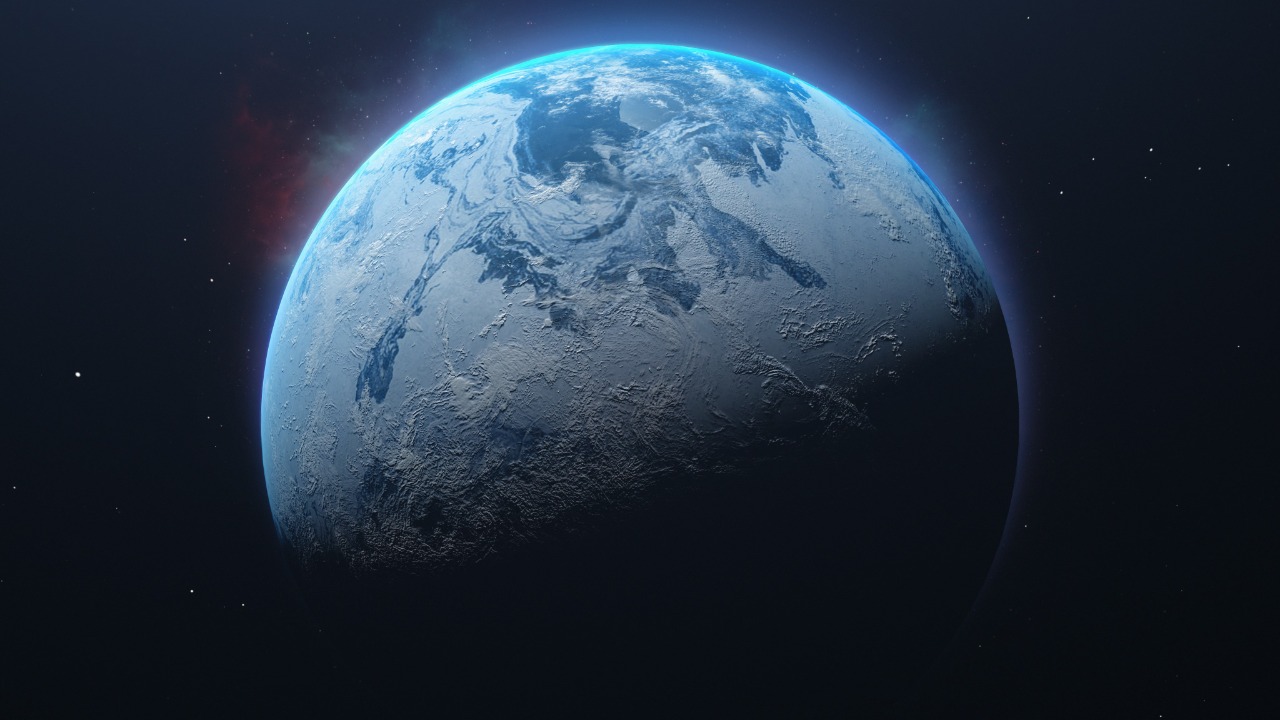

Earth’s physical systems are shifting at a pace that would have seemed implausible a generation ago, from record heat to subtle changes in the length of a day. The planet is warming, water cycles are being rewritten, and even the planet’s spin is behaving in ways that are forcing scientists and regulators to rethink long standing assumptions. If the world is transforming this quickly, the real question is how prepared any of us are for the next wave of disruption that is already on the way.
I see two stories unfolding at once. One is the hard physics of a planet with a fever, edging toward critical thresholds in temperature and stability. The other is the scramble by governments, companies, and communities to adapt, redesign rules, and build new systems that can survive what is coming next.
Crossing the heat lines: from 1.4 to 1.5 degrees
The clearest signal that Earth is entering a new phase is the temperature record. The United Kingdom Meteorological Office, formally The United Kingdom Meteorological Office (Met Office), expects that 2026 will be the fourth year in a row when global temperature exceeds 1.4 degrees above pre industrial levels, a benchmark that would have been unthinkable not long ago and that the Met Office links explicitly to the 1850 to 1900 baseline. That is happening even though 2025 was shaped by a modest La Ni event, a cooling phase that would normally take the edge off the heat but still left the year among the warmest on record according to Berkeley Earth, which contrasted it with the earlier El Ni conditions of 2023 and 2024.
Climate scientists are increasingly blunt about what this means. A World Meteorological Organization assessment cited in one analysis put the odds at roughly 50/50 that the planet will hit or exceed 1.5 degrees Celsius of warming at least temporarily between now and 2026, a threshold that the World Meteorological Organization treats as a critical line. A separate probability assessment put the chance at 48% that a single year will reach a yearly average of 1.5 degrees Celsius, underscoring how close the system already is to that symbolic mark.
Mountains, microbes and tipping points
Global averages can sound abstract until you look at how specific landscapes are reacting. Mountain regions are now warming faster than the lowlands around them, a pattern that is reshaping snowpack, rainfall, and the stability of slopes in ways that directly threaten water supplies, ecosystems, and human safety according to new Mountain research. At the same time, United Nations experts warn that pollution, melting microbes released from thawing ice, the undamming of rivers, and the vulnerability of an ageing population are converging into four rapidly emerging threats in a world already shaped by climate extremes, a warning laid out starkly in the Frontiers Report 2025.
Scientists tracking the broader system argue that these are not isolated curiosities but signs that Earth is edging toward environmental tipping points. Because our emissions have continued at unprecedented rates over the past decade, researchers say we have moved quickly from a world where coral reefs and ice sheets were at risk in the abstract to one where large parts of the planet are already experiencing cascading impacts, from bleaching events to regions locked into chronic heat waves, a shift captured in a detailed Because analysis. Activist voices have been sounding similar alarms for years, arguing that Earth has a fever and is heating up in ways that make it clear we are rapidly heading toward catastrophe, a sentiment summed up in the phrase Earth First With any bit of discernment.
When the planet’s clock stutters
Even the length of a day is no longer something scientists can take for granted. Over the past few years, measurements have shown that Earth is starting to spin faster, enough that timekeepers are now contemplating an unprecedented step of subtracting a second from official clocks, a so called negative leap second, around 2029 according to a study in the journal Nature that prompted Clocks experts to call the situation unprecedented. Earlier forecasts suggested that The Earth would increase its rotation speed in July and August, bucking the long term trend of gradual slowing and leaving specialists puzzled about what is driving the change, a pattern highlighted in The Earth coverage of the July and August anomaly.
On July 9, 2025, scientists at the International Earth Rotation and Reference Systems Service, the body known as the International Earth Rotation and Reference Systems Service (IERS), reported that the Earth completed one of its shortest days on record, a reminder that the planet’s rotation is not perfectly constant and can shift in response to changes in its core, oceans, and atmosphere, as documented in a detailed On July account. Researchers have been tracking this trend closely, with one report noting that Earth is starting to spin faster and that scientists are considering doing something unprecedented to keep atomic time aligned with planetary time, a debate laid out in Earth News By Pandora Dewan. The fact that such tiny variations now matter for navigation, finance, and digital infrastructure is a reminder that planetary physics is not an abstraction but a background condition for modern life.
ENSO resets and a world of extremes
Behind the record heat and strange seasons lies a familiar but newly volatile driver, the El Ni Southern Oscillation, or ENSO. Unlike the El Ni years of 2023 and 2024, which helped push temperatures to new highs, 2025 began and ended with a modest La Ni event that should have cooled the global average, yet the year still ranked among the warmest, a sign that the underlying human driven trend is overwhelming natural variability according to Unlike assessments of the El Ni and La Ni sequence. Climate analysts now talk about a 2026 ENSO reset, a shift in the global climate system that is expected to have huge implications for rainfall, storms, and regional extremes, a prospect unpacked in a ENSO deep dive that frames early 2026 as a pivotal moment.
Video explainers have started to walk through what this reset could mean, with one Jan discussion describing how the global climate system in early 2026 is being defined by the interplay of ocean temperatures and atmospheric circulation, and why that matters for everything from monsoon timing to wildfire risk, a narrative that the Jan ENSO explainer makes explicit. When you combine that with the probability that global temperature will flirt with 1.5 degrees Celsius in the same window, as flagged both in the 1.5 degree warning and the 48% probability estimate, it becomes clear that the next few years will test the resilience of food systems, infrastructure, and public health in ways that go beyond anything in the recent record.
Regulators, boardrooms and the race to adapt
As the physical world accelerates, the rules that govern economic life are scrambling to catch up. Analysts describe 2026 as a year of Sustainability in Transformation, with the start of the year already defined by a complex and demanding global environment that is forcing companies and investors to rethink how they manage climate risk and opportunity, a shift mapped out in a Sustainability outlook that frames this as a deep Transformation. Another Jan assessment of What is Happening in 2026 argues that The Sustainability Shifts That Will Start to Matter in Practice are moving from theory to implementation, with The Sustainability Scene now defined by concrete changes such as low carbon materials becoming more mainstream, a trend described in What Happening The Sustainability Shifts That Will Start Matter Practice analysis.
More from Morning Overview