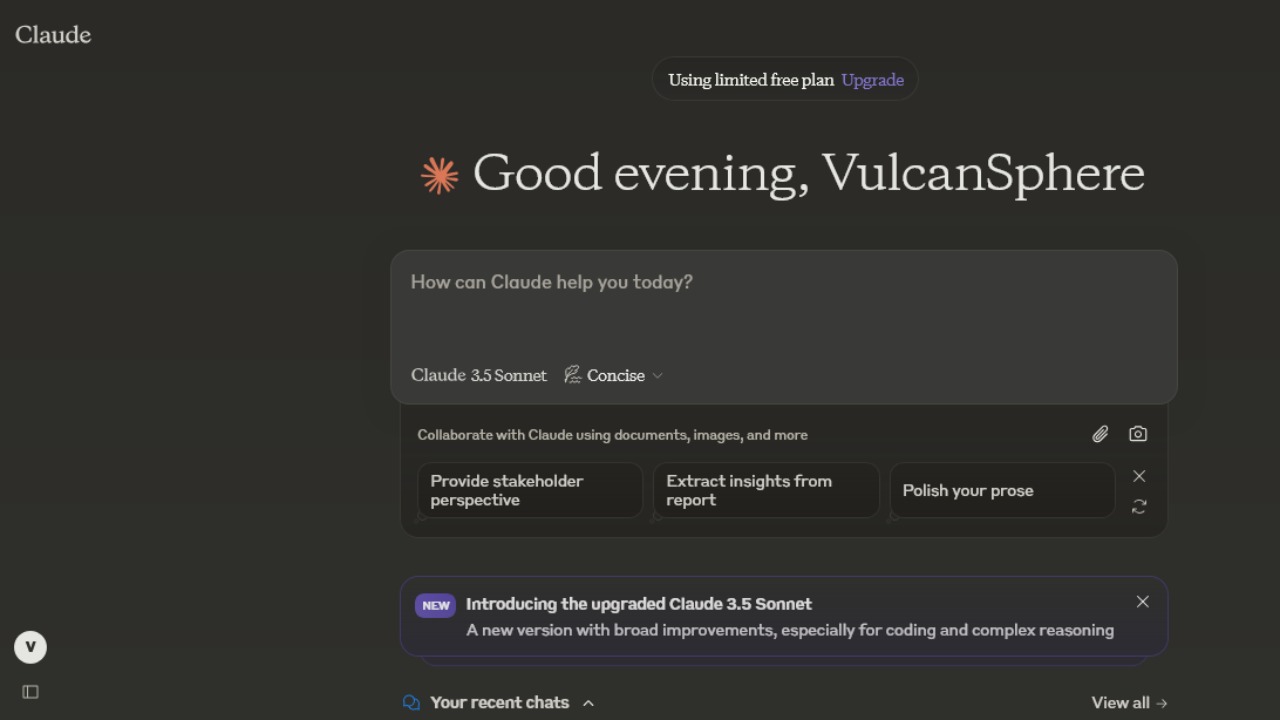

Claude has moved from niche curiosity to front-page phenomenon, with a growing number of everyday users saying it feels less like a chatbot and more like a capable colleague. What began as a text assistant is now spilling into desktops, medical records, and software workflows, leaving even self-described “non-nerds” surprised at how naturally it slots into daily life. I see a pattern emerging: Anthropic is quietly building an ecosystem that treats AI not as a toy, but as infrastructure for real work.
From chatbot to coworker on your desktop
The clearest sign that Claude has shifted gears is the arrival of Claude Cowork, which Anthropic describes as a general agent that sits alongside you and helps with complex tasks on your computer. Early testers describe Claude Cowork as a kind of AI teammate that can coordinate multi-step projects rather than just answer isolated prompts, a step change from the chat windows most people associate with generative AI. That shift, from conversation to coordination, is what makes the current wave feel different to users who simply want their computers to help them get things done.
On the consumer side, reviewers argue that this agent points toward a true Desktop AI future, where the assistant is woven into the operating system instead of trapped in a browser tab. One analysis frames Desktop AI as a fundamental rethink of how people interact with their machines, whether they are drafting documents, wrangling spreadsheets, or juggling email. In that view, Claude is not just another model, it is the interface layer that could finally make AI feel like part of the computer rather than an app bolted on top.
A general agent that does not scare off non-developers
Anthropic has been explicit that Claude Cowork is meant to broaden the appeal of its earlier developer-focused tools. The company itself describes the new agent as “Claude Code for the rest of your work,” signaling that it wants the same power coders enjoyed to be available to anyone who spends their day in documents, slides, or CRM dashboards. One early write-up notes that Anthropic is trying to avoid intimidating language so that non-developers feel comfortable delegating real tasks to the system, not just asking it trivia questions.
That strategy is paying off in the broader public reaction. Coverage of the product’s rollout highlights how Claude Cowork is framed as a breakthrough not because it introduces a single flashy feature, but because it quietly handles the messy glue work that fills a modern knowledge worker’s day. By focusing on workflows instead of wow moments, Anthropic is betting that the real mass-market hook is reliability, not spectacle.
Healthcare and life sciences become a proving ground
Now Anthropic is pushing Claude into some of the most sensitive environments in the economy, starting with hospitals and labs. The company has introduced Claude for Healthcare, a complementary set of tools aimed at everything from clinical trial management to regulatory operations. By targeting life sciences workflows that are both document-heavy and tightly regulated, Anthropic is signaling confidence that its models can handle high-stakes reasoning without drowning clinicians in hallucinated noise.
Hospitals are already experimenting with this approach. Stanford Healthcare has said it used the Claude 3.5 Sonnet large language model, explicitly described as an LLM, to generate more readable test result descriptions for patients and to help clinicians query medical records. Leaders there explained that they chose Claude because of its performance and safety profile, a notable endorsement in a sector that tends to move cautiously. If patients start receiving clearer lab explanations and doctors can interrogate charts in natural language, that is the kind of everyday impact that makes AI feel less abstract and more like a practical upgrade to care.
Developers, power users, and the coding revolution
While non-technical users discover Claude through Cowork and healthcare portals, developers are encountering it through specialized tools that reshape how software is written. Engineers in Seattle describe Claude Code as ushering in “a new era of software development,” with the system able to handle longer, more complex workflows than earlier coding assistants. Reports from that community highlight how Artificial Intelligence is no longer just suggesting single lines, but refactoring entire modules and reasoning about architecture in a way that feels closer to a senior engineer than a glorified autocomplete.
Under the hood, Anthropic is also iterating on its core models to support this kind of deep reasoning. A community post notes that Anthropic “just dropped Claude 3.7 Sonnet,” described as the first hybrid reasoning model that attempts multiple reasoning strategies in parallel before returning an answer. That same discussion explains that Claude can now orchestrate tools directly from a terminal, a capability that matters to developers who want AI to run tests, call APIs, or manipulate repositories without constant babysitting. For power users, this is where the “storming the AI world” narrative becomes tangible: the assistant is not just chatting about code, it is shipping it.
Economic impact, job anxiety, and what users actually say
As Claude’s capabilities expand, so do questions about what this means for jobs and productivity. New research from Anthropic’s economists suggests the story is more nuanced than simple replacement, introducing an Economic Index built around “economic primitives” that measure how AI changes specific tasks. Another analysis of Anthropic’s work on labor markets notes that earlier findings showed disproportionate use of AI concentrated in a small number of states, and that the latest report emphasizes augmentation and delegation rather than mass displacement. In other words, the company is trying to quantify how tools like Claude shift the mix of tasks within jobs, not just whether roles vanish.
That framing matters because public anxiety about AI taking jobs remains high. One recent piece on workplace fears quotes Anthropic researchers explaining that their data does not support a simple narrative of automation wiping out entire professions, and instead points to more complex patterns of task sharing between humans and systems. The same reporting on Anthropic underscores that policy makers and employers will need to track not just where AI is deployed, but how it changes the texture of everyday work, from call centers to clinical documentation.
More from Morning Overview