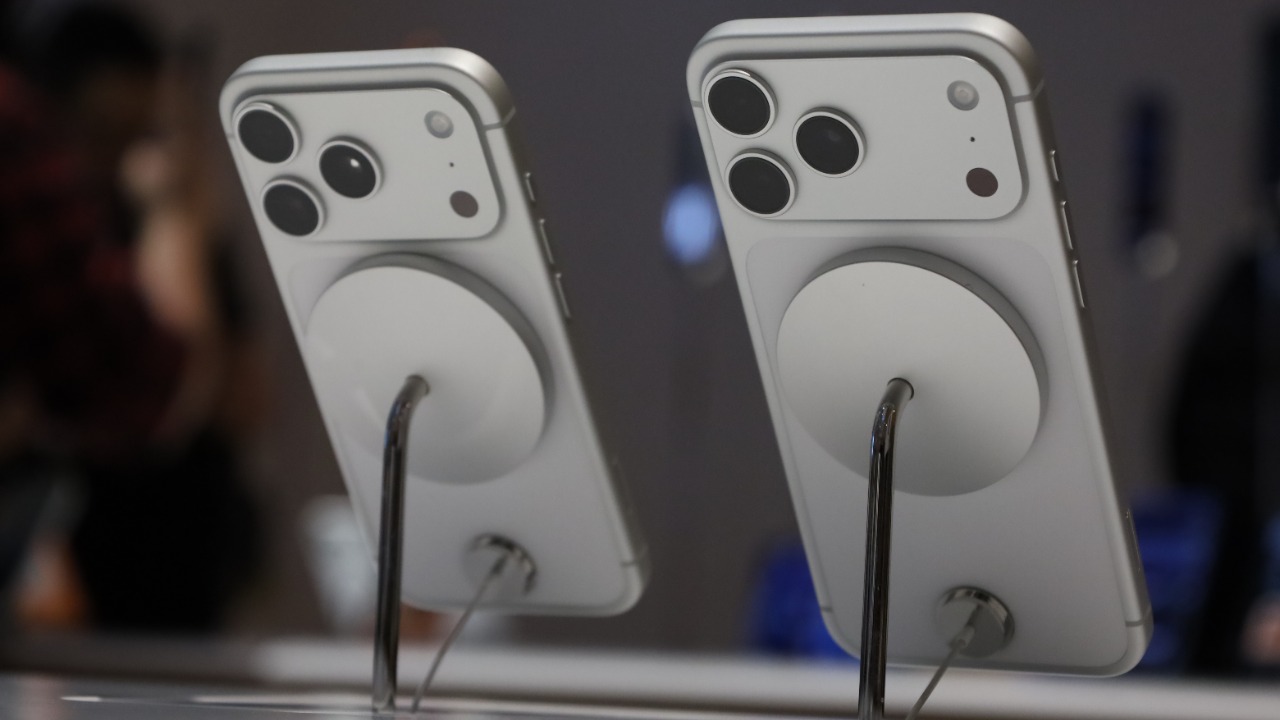

Apple is on the verge of ending a 14 year stretch in which Samsung has dominated global smartphone shipments, with the iPhone 17 cycle emerging as the catalyst that could restore Cupertino to the top of the rankings. If current projections hold, the company will not just edge ahead in a single quarter but could lock in a full year lead on the back of a tightly orchestrated product and pricing strategy. For investors, rivals and regulators, the shift would confirm that Apple’s bet on premium hardware, services and silicon control is still the defining force in the phone business.
The long road back to the top spot
For more than a decade, the smartphone market has been defined by one simple fact: Samsung ships more phones than anyone else. Apple has periodically grabbed the revenue and profit crown, but in unit terms it has not led since 2011 and has not been the top smartphone maker since 2012, a gap that has stretched to 14 years according to projections that describe how Apple Projected to Overtake Samsung as Top Smartphone Maker After Years. That context matters because it underscores how unusual it is for a premium focused vendor to challenge a diversified rival that sells everything from entry level Android devices to foldables. When I look at the current forecasts, what stands out is not just that Apple might finally reclaim the volume title, but that it is doing so without abandoning its high end positioning.
The turning point is expected to come as shipments of iPhones accelerate around the iPhone 17 launch, with analysts pointing to strong demand that could give Apple the largest share of worldwide smartphone shipments for the first time since that earlier leadership run. Reporting that Apple is set to become the world’s top phone maker, overtaking Samsung, frames the shift as a structural change rather than a one quarter blip, with the company poised to regain its crown as the world’s largest smartphone maker thanks to a surge in iPhone 17 volumes, a view echoed in analysis that describes how Apple set to become the world’s top phone maker overtaking Samsung. In other words, the story here is not just about a hot product cycle, it is about a company that has spent years building the conditions for a decisive swing in market share.
How the iPhone 17 cycle changes the math
The iPhone 17 series is shaping up as the engine of Apple’s push back to the top, and the expectations around this lineup are unusually specific. Analysts who track shipments say that following the launch of the iPhone 17, shipments of iPhones are expected to rise on the back of strong iPhone 17 series reception, a dynamic that sits at the heart of the projections that Shipments of iPhones are expected to climb. I see two forces at work here: a large base of older devices that are now due for replacement, and a product line that appears designed to capture both premium buyers and those who might previously have opted for mid range Android phones.
Reporting from Nov 25, 2025 describes how a 14 year wait to end soon: How iPhone 17 series may help Apple beat Samsung in global shipments, with the coverage explicitly noting that this will give Apple a chance to surpass its rival in overall units as the new phones outperform their predecessor during the same period. The same analysis highlights Apple’s Secret 3 Year Plan and points out that many owners of devices bought during that window are now entering their upgrade phase, which is exactly the kind of synchronized replacement cycle that can swing market share when combined with a compelling new product. When I connect those dots, the conclusion is straightforward: the iPhone 17 family is not just another annual refresh, it is the centerpiece of a multi year strategy that was always aimed at this moment when 14 year wait to end soon and the installed base turns over in unison.
Why demand for iPhone 17 looks unusually strong
Forecasts are only as good as the demand assumptions behind them, and here the signals are strikingly aligned. Analysts tracking early sales trends say that strong iPhone 17 sales may push Apple ahead of Samsung this year, with commentary that frames the current cycle as one in which the entire iPhone line up is performing, not just a single flagship model. In coverage dated Nov 25, 2025 and expanded on Wed, November 26, 2025, commentator Stevie Bonifield ties that strength directly to the possibility that Apple may finally overtake its Korean rival, a view captured in the assessment that Strong iPhone 17 sales may push Apple ahead of Samsung. When I look at that argument, what stands out is the emphasis on breadth: the suggestion is that demand is robust across storage tiers and screen sizes, not just at the very top of the range.
There is also a clear sense that Apple has managed to create a product that feels like a meaningful step up for owners of devices that are three or more years old, which is critical when the company is counting on a large cohort of upgrades. The reporting that highlights the figure 48 in the context of this cycle underscores how closely analysts are watching specific metrics, and while the exact framing of that number is not fully detailed in the available summaries, its inclusion in the same breath as strong iPhone 17 sales and Apple’s potential to leapfrog Samsung signals that quantitative indicators are lining up with the qualitative buzz. From my vantage point, that combination of broad based demand and measurable performance is what gives credibility to the idea that this is the cycle in which Apple converts enthusiasm into sustained market share gains, rather than a short lived spike that fades once early adopters have upgraded.
Pricing, product mix and the role of “good enough” phones
One of the more underappreciated aspects of Apple’s current strategy is how it has broadened the iPhone portfolio without diluting the brand. The company now fields a range that stretches from ultra premium flagships to more accessible models that still carry the core experience, a shift that is particularly visible in the way it positions devices that might once have been considered last year’s leftovers. Reporting on Apple’s push to reclaim the top spot notes that the meteoric growth will reportedly be supported by a more budget friendly iPhone 17e next year, a device that is expected to appeal to buyers who want an Apple phone but have historically opted for cheaper Android hardware, a detail that surfaces in analysis of how Apple set to reclaim its title as the world’s biggest smartphone maker. In my view, that kind of product is crucial because it allows Apple to participate in volume segments without racing to the bottom on price.
The broader context here is a market in which “good enough” phones have become the norm for many users, who are less willing to pay top dollar for incremental improvements. Apple’s answer has been to make sure that even its more affordable models feel like a step up in areas that matter, such as camera performance, battery life and integration with services like iCloud and Apple Music. The reference to a more budget friendly iPhone 17e suggests that the company is doubling down on that approach, using its scale and control over components to deliver devices that can compete with mid range Android phones on price while still pulling buyers into the iOS ecosystem. When I connect that to the projections that Apple is reportedly set to become the leading vendor of smartphones since 2012, it becomes clear that product mix, not just headline flagships, is central to the strategy that underpins its expected return to the top.
Samsung’s challenge and the shifting Android landscape
Any story about Apple’s rise back to number one is also a story about Samsung’s position and the broader Android ecosystem. For years, Samsung has relied on a sprawling portfolio that covers every price band, from entry level Galaxy A series devices to high end Galaxy S and foldable models, a strategy that has kept its shipment share high even as Chinese rivals have nibbled at the low end. The projections that Apple is expected to surpass Samsung in global shipments after 14 years, and that it has not led since 2011, underline how significant it would be for a single vendor with a narrower price range to overtake a company that has dominated the Android space, a point that is central to the analysis that Apple is expected to surpass Samsung in global shipments. From my perspective, that shift would signal not just Apple’s strength but also the limits of Samsung’s ability to offset pressure from Chinese brands at the low end while defending the high end against a resurgent iPhone lineup.
The Android landscape itself is fragmenting, with brands like Xiaomi, Oppo and Vivo competing aggressively on price and features, often in markets where Apple’s presence has historically been weaker. That competition has squeezed Samsung in regions such as India and parts of Southeast Asia, where its mid range devices now face intense pressure. If Apple can grow its share in premium and upper mid tiers globally while Samsung is forced to defend its base against multiple rivals, the Korean company’s unit lead becomes harder to maintain. The reporting that frames Apple as set to become the world’s top phone maker overtaking Samsung suggests that this is exactly what is happening, with the iPhone 17 surge tipping the balance in a market where Samsung’s once unassailable position is now under sustained attack from both above and below, a dynamic that is central to the narrative that Apple set to become the world’s top phone maker.
Apple’s ecosystem advantage and the upgrade supercycle
Beyond hardware specs and price points, Apple’s greatest asset in this race is the ecosystem that wraps around every iPhone. Services revenue from subscriptions like Apple Music, Apple TV+, iCloud storage and the App Store has turned each device into a gateway to recurring income, which in turn gives the company more flexibility in how it prices hardware. The reporting that highlights Apple’s Secret 3 Year Plan and notes that many users are now entering their upgrade phase suggests that the company has been deliberately pacing its feature rollouts and software support to encourage predictable replacement cycles, a strategy that aligns with the idea that a large installed base is now primed for an upgrade to the iPhone 17 series as part of a coordinated supercycle, a pattern described in coverage of how Apple’s Secret 3 Year Plan is now entering its payoff period. In my view, that kind of planning is only possible when a company has deep visibility into how its customers use devices and services over time.
The ecosystem effect also shows up in the way accessories and other hardware reinforce the appeal of a new iPhone. Buyers who already own AirPods, an Apple Watch or a MacBook are more likely to stay within the ecosystem when they upgrade their phone, because the integration benefits compound with each additional device. Even seemingly small details, such as how a new iPhone interacts with a HomePod or how it unlocks a Mac, can tip the scales when a user is deciding whether to stick with Apple or switch to Android. The presence of a broad accessory and device catalog, visible even in generic product search listings, reinforces how tightly woven that ecosystem has become. When I factor that into the shipment forecasts, it becomes easier to see why analysts believe the iPhone 17 cycle can do more than just spike quarterly numbers, instead resetting the baseline for Apple’s share of the global smartphone market.
What a new number one would mean for the industry
If Apple does retake the unit crown, the implications will ripple far beyond bragging rights. Component suppliers will have to recalibrate their capacity planning, with more of their output tied to Apple’s tightly managed supply chain and less to Samsung’s more diversified portfolio. App developers and accessory makers, already inclined to prioritize iOS because of its higher monetization rates, will see further justification for treating the iPhone as the default platform, especially in premium segments. The analysis that describes how Apple looks poised to regain its crown as the world’s largest smartphone maker, propelled largely by the iPhone 17 surge and the prospect of a more budget friendly iPhone 17e, frames this shift as a structural rebalancing of the market rather than a fleeting anomaly, a perspective that runs through coverage of how Apple looks poised to regain its crown.
There are also regulatory and competitive angles to consider. A world in which Apple not only dominates smartphone profits but also leads in unit shipments will attract even more scrutiny from antitrust authorities who are already focused on app store policies, default settings and platform control. Rivals in both hardware and software will have to decide whether to double down on open ecosystems, experiment with new form factors like foldables, or try to replicate aspects of Apple’s vertical integration. From my vantage point, the most important takeaway is that the smartphone market, often dismissed as mature and slow moving, is still capable of dramatic shifts when a company aligns product cycles, pricing, ecosystem and installed base dynamics as effectively as Apple appears to have done with the iPhone 17 series. The projections from Nov that Apple may finally overtake Samsung, and that a 14 year wait to end soon, suggest that the next phase of this industry will be shaped by how competitors respond to a world in which Apple is once again the largest smartphone maker by shipments as well as by profit.
More from MorningOverview