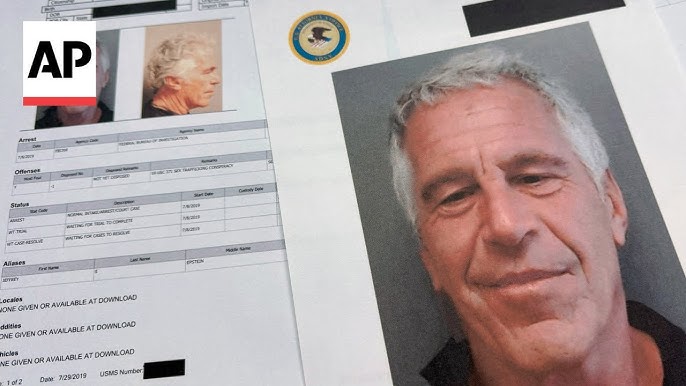

The federal government has now opened a window into one of the darkest scandals in modern American life, and what is visible already suggests years of work ahead. With millions of pages of records on Jeffrey Epstein’s network now public and millions more still locked away, the country is only at the beginning of understanding who enabled him, who tried to stop him, and who looked away. The sheer scale and complexity of the material virtually guarantees that America will be sifting through these files for decades.
What has emerged so far is not a single smoking gun but a dense, often contradictory archive of interviews, draft indictments, travel logs, photographs, and internal memos. It is an archive that exposes failures inside law enforcement, raises fresh questions about powerful friends, and is already driving new legislative proposals and political fights. I see it less as a document dump than as a long-term test of whether American institutions can handle full accountability for a crime pattern that thrived in plain sight.
The scale of the release guarantees a long reckoning
The Justice Department has now made public more than three million pages of records tied to Epstein, a volume that would overwhelm even the best staffed newsroom or legal team. Officials have described the material as part of a broader set of roughly six million pages in the government’s possession, meaning that what the public can see is only about half of the total archive. According to Deputy AG Todd Blanche, nearly three million additional pages are being withheld because they are covered by legal privileges or other protections, a reminder that the story is still incomplete even after the largest release to date. At the same time, the department’s own portal for the case, hosted by the Justice Department, underscores how sprawling the official record has become.
Officials say the latest tranche alone includes about three million pages of documents, videos, and roughly 180,000 images, a data set so large that even basic indexing will take time. The department has acknowledged that the documents arrived 42 days after a court ordered deadline, and that an additional three million pages remain withheld. That delay, combined with the volume, virtually ensures that journalists, lawyers, and survivors will still be uncovering new details years from now, long after the initial headlines fade.
Inside the files: what we now know about Epstein and his enablers
Even in the first wave of analysis, the documents have already reshaped the public understanding of Epstein’s criminal exposure. Among the internal records are draft charging papers showing that the DOJ once considered hitting Epstein with 30 criminal counts, including 10 counts of sex trafficking, in the mid 2000s, far more aggressive than the plea deal he ultimately received in Florida. Those draft materials, described in detail in one of the new draft indictments, highlight how close the system came to a more robust prosecution and how sharply it pulled back.
The files also catalog the breadth of Epstein’s social world, including famous names who continued to associate with him even after his child sex abuse conviction. Newly released records, as summarized in one detailed overview, indicate that high profile figures, including political leaders and business executives, maintained friendships or contact with him after his conviction. Another analysis of the release, focused on what ordinary readers should know, walks through how the documents trace Epstein’s movements, his finances, and his ties to Ghislaine Maxwell, while also stressing how many questions remain about who else may face legal exposure, a point underscored in a comprehensive guide.
How the DOJ handled the drop, and why critics are not satisfied
The manner of the release has become its own controversy. The DOJ has framed the publication of more than three million pages as a “full release” of all non privileged material related to Epstein, emphasizing that the agency is not trying to shield any particular individual. Officials highlighted that the department has now made public more than three million records, including investigative files, correspondence, and internal memos, a point stressed in a detailed account of the department’s public messaging. On the department’s side, officials have also pointed to the dedicated case site as evidence of a commitment to transparency.
Yet survivors and transparency advocates have raised sharp concerns about how the Justice Department handled the timing and redactions. Some of the newly released records appear in one place with names visible and in another copy with those same names blacked out, a discrepancy that has fueled concerns about consistency and potential favoritism. The department has also faced criticism for missing a court ordered deadline by 42 days, as highlighted in a widely shared video report, and for initially signaling that only three million of the six million pages in its files would be released at all, a limit that Blanche described in a separate briefing.
Famous names, political stakes, and the Trump factor
The political reverberations from the files were inevitable, given the roster of high profile figures who crossed paths with Epstein. Newly released records, summarized in one detailed analysis, show that some prominent individuals continued to socialize with Epstein even after his conviction, including political figures and business leaders whose names have already sparked intense debate. The same reporting notes that the documents do not, at least so far, convert those associations into new criminal allegations, which is why the files are likely to fuel political arguments and reputational damage long before they produce additional charges.
Inside the DOJ, officials have been acutely aware of the political sensitivity, particularly around President Donald Trump. Deputy AG Todd Blanche has publicly insisted that the department “didn’t protect” Trump in the handling of the Epstein records, a point he emphasized while explaining that six million pages exist in total and that roughly three million are being withheld under privilege, as detailed in one press briefing. That insistence has not stopped critics from questioning whether the timing and structure of the release, including a late Friday evening drop of a massive new tranche described in a live update, was designed to blunt political impact.
Congress, courts, and the long tail of accountability
Even as the files are still being read, lawmakers are already trying to codify lessons from the Epstein saga. A new proposal in the House, filed as House Bill 4405, would tighten federal oversight of non prosecution agreements and require more transparency when prosecutors cut deals in sex trafficking cases. The bill is a direct response to the lenient Florida plea arrangement that allowed Epstein to avoid a broader federal case in the 2000s, and it reflects a broader push in Congress to ensure that similar arrangements are subject to public scrutiny and judicial review. That legislative effort sits alongside ongoing civil suits by survivors, who are now combing through the newly released records for evidence that could support fresh claims against institutions and individuals.
The courts, too, are likely to be busy for years. The DOJ has already faced litigation over its pace of disclosure and its redaction choices, and the fact that some documents appear unredacted in one place and blacked out in another is almost certain to generate further motions, as highlighted in the reporting on redaction disputes. At the same time, the public release of investigative summaries, interview transcripts, and internal memos gives defense lawyers and survivor attorneys alike a new trove of material to test in court, a dynamic that will likely play out in both federal and state venues for years.
More from Morning Overview