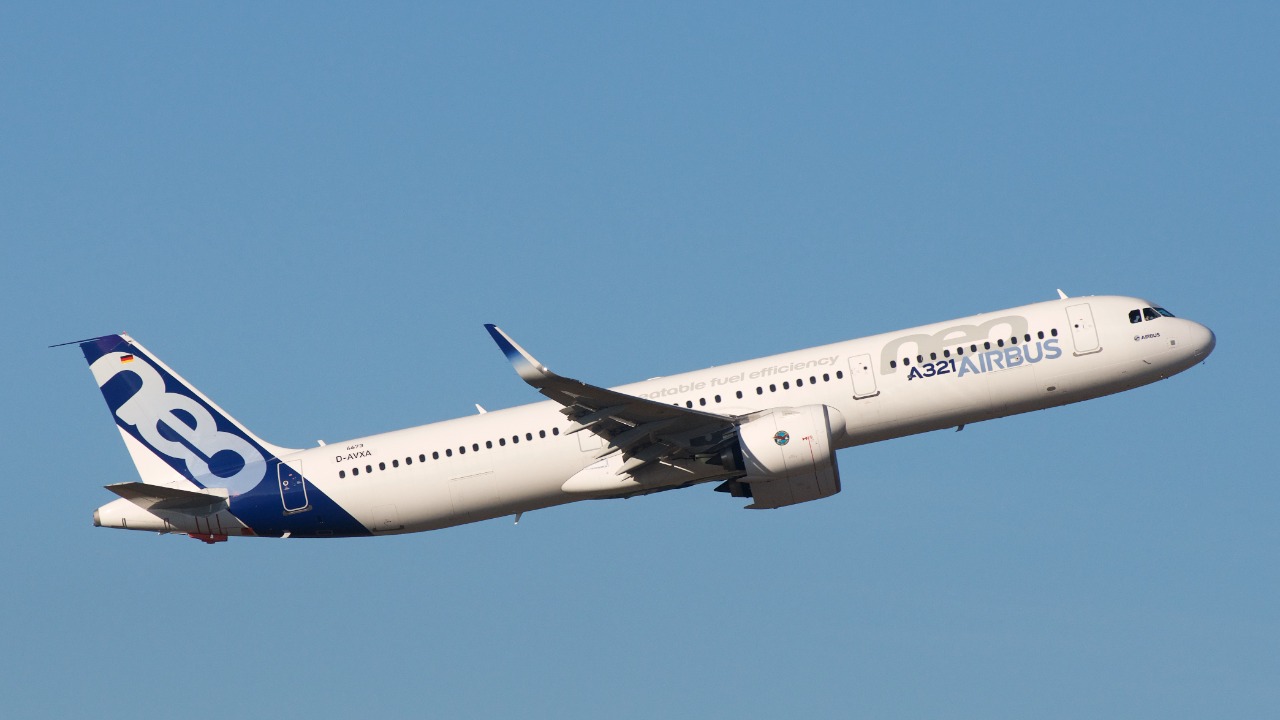

The global jetliner market in 2026 is not a photo finish so much as a split-screen. On one side, Airbus is on track to ship record numbers of aircraft and hold the upper hand in the workhorse single-aisle segment that keeps most airlines profitable. On the other, Boeing is clawing back commercial momentum with a surge in new orders, helped by political tailwinds from Washington and renewed confidence in its narrowbody lineup.
When I look at the data, the answer to who “owns the skies” this year depends on what you measure: deliveries, backlog, or fresh sales. By those yardsticks, Airbus and Boeing are trading leads in different lanes, and the balance of power is shifting more in nuance than in headlines.
Deliveries: Airbus Coming Out On Top in 2026
On the production side, Airbus is the clear pace-setter. Industry projections for 2026 show the manufacturer on course to hand over roughly 900 to 1,044 aircraft, a range that would put it comfortably ahead of Boeing’s expected output. That gap reflects not just stronger demand but also the fact that Airbus has worked through some of its most critical manufacturing bottlenecks, while its rival is still normalizing production after years of disruption.
The momentum was already visible at the end of last year. In December, Airbus delivered 136 aircraft, including 114 narrowbodies and a smaller batch of widebodies, while Boeing managed 63 jets across its own portfolio. That kind of monthly spread, repeated over a full year, is what underpins the expectation that Airbus will again out-deliver its US rival in 2026, even as Boeing’s factories accelerate.
Orders: Boeing’s comeback meets Airbus’s installed lead
Deliveries tell only half the story, because Boeing has quietly retaken the initiative in new sales. After several sluggish years, the company finally overtook Airbus in annual orders in 2025, a shift that one analysis linked directly to a “Trump bump” as Washington leaned harder on trade diplomacy to promote US manufacturing abroad. That push helped Boeing outsell Airbus on aircraft commitments for the first time in seven years, signaling that airlines are again willing to bet on its long-term recovery.
Yet Airbus still starts 2026 from a position of strength in the installed base and backlog. One detailed market review notes that Airbus has an installed fleet that is 16% larger than Boeing’s and an order backlog that is 35% higher, a combination that locks in years of future deliveries and service revenue. Another assessment of the global Aircraft order book suggests the backlog now equates to roughly 12 years of production, with Airbus again outselling Boeing in 2025 overall, even as the US manufacturer narrowed the gap.
Single-aisle supremacy: A320neo vs 737 MAX
The real battleground is the single-aisle market, where narrowbody jets fly the bulk of global passengers and generate the fattest margins. By July, Airbus had already built a commanding position, with one historical snapshot showing that By July 2021 Airbus, including the A220, held 65% of the single-aisle backlog compared with Boeing’s 35%. That imbalance has carried through into the current decade, amplified by the success of the A320neo family and the lingering reputational damage from the 737 MAX grounding.
Fresh projections for this year suggest Airbus will keep that edge. A widely cited forecast labeled Outlook 2026 indicates that Airbus Holds 58% of the Single Aisle Market, with the A320neo family alone accounting for 54% versus 33% for the Boeing 737 MAX. That split reflects years of strong A320neo sales and the fact that airlines locked in large Airbus positions while Boeing was still working through the MAX crisis, even as the US manufacturer now touts renewed demand for its Orders and Backlog in that same product line.
Backlog, sustainability and the 2026–2030 horizon
Looking beyond this year’s scoreboard, I see structural forces that could reshape the rivalry through 2030. One forward-looking assessment of SAF and fleet planning argues that sustainable aviation fuel will meet less than 3% of industry needs for the rest of the decade, even as Europe drives environmental activism and regulatory pressure. That dynamic favors whichever manufacturer can offer the most fuel-efficient airframes and engines in the near term, since airlines cannot rely on fuel switching alone to hit climate targets.
Both companies are already positioning for that reality. A detailed comparison of Airbus and Boeing in 2025 described a long-term strategic duel, with Airbus leaning on its efficient narrowbody portfolio and Boeing banking on a mix of refreshed 737 MAX variants and new widebody orders. Another forecast on Outlook and Market deliveries suggested Boeing’s output is on a clear upward trend, with management explicitly targeting recovery and a bid to regain market leadership later in the decade if production and certification stay on track.
Who really “owns” 2026: a split decision
When I weigh the numbers, Airbus currently dominates the tangible metal in the sky, while Boeing is rebuilding its future pipeline. One detailed market snapshot notes that Airbus Coming Out in 2026 is the short answer on deliveries, with the European manufacturer expected to ship far more jets than its US rival. Another analysis of the same landscape concludes that the short answer for 2026 is that Airbus will keep more aircraft rolling off the line and onto the tarmac in high volume, even as Boeing’s order book improves.
Boeing, for its part, has reasons to be encouraged. One review of its commercial performance highlighted that Nicholas Werner pointed to the strength of the 737 M family and described how the bestselling variant of all time remains central to the company’s comeback story. Another perspective stressed that Airbus still has plenty to celebrate, since it delivered more actual planes than Boeing last year and is still doing better in the present, even as the US manufacturer narrows the gap in new commitments.
The rivalry is also playing out in symbolic milestones. One detailed look at the narrowbody race noted that Airbus launched the A320neo in 2010, prompting Boeing to respond with the 737 MAX two years later, and that the A320 family is now poised for a symbolic overtake of the Boeing 737 as the top-selling jet. Industry watchers have also tracked how strong demand for the MAX and record widebody deals have lifted Boeing’s order totals, even as Airbus keeps a larger share of the backlog. A separate memo on 2025 deliveries and engine performance, listed under Related Content such as Flight Friday and The State Of Narrowbody Engines As 2026 Takes Off, underscored how propulsion reliability and fuel burn are now as central to airline decisions as sticker price.
For airlines, the practical takeaway is that there is no single winner, only different kinds of dominance. Airbus currently leads in deliveries, installed fleet, and single-aisle share, while Boeing is regaining ground in orders and banking on political support and product upgrades to close the gap. As long as both manufacturers keep investing in efficiency and reliability, the real winners in this high-stakes duel are the carriers and passengers who benefit from newer, cleaner, and more capable jets on both sides of the Atlantic.
More from Morning Overview