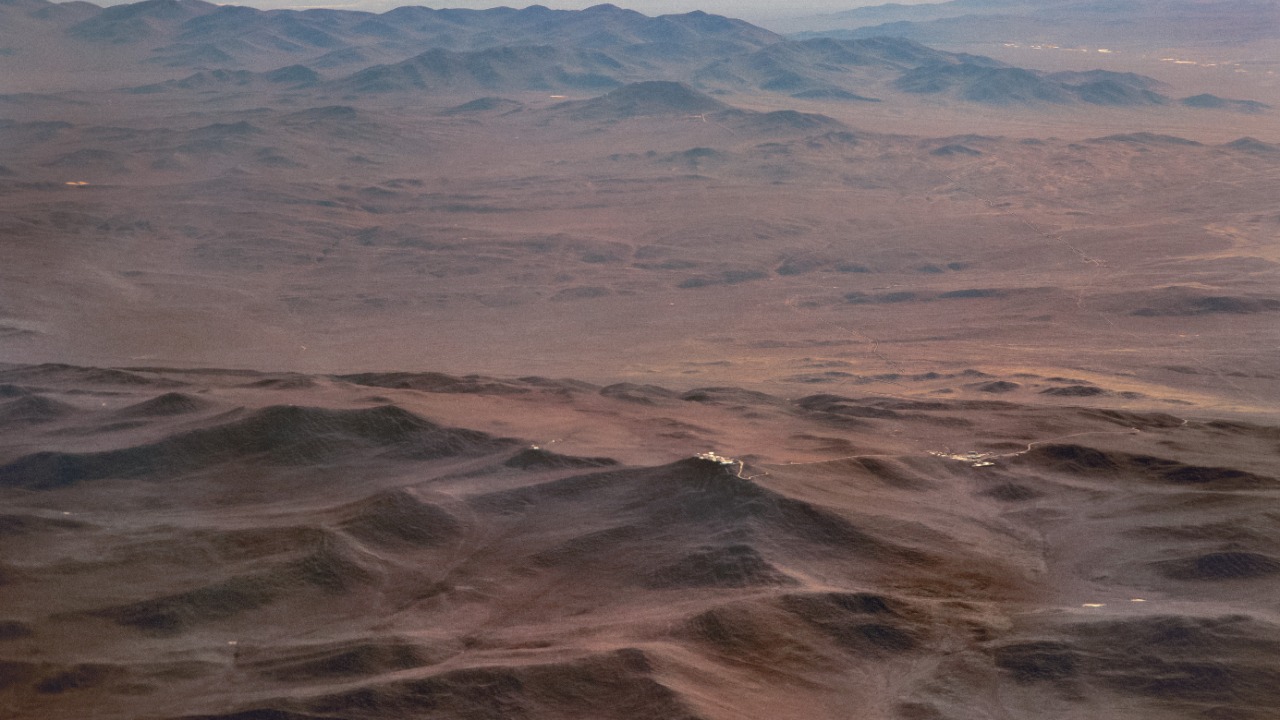

In the coastal desert of Peru, a line of stone towers has reappeared from beneath windblown sand, reviving a site that may be the oldest working observatory in the Americas. Long overlooked and partially buried, the complex is forcing archaeologists to rethink how early societies in this region watched the sky, organized their calendars, and tied political power to the movements of the sun. As the dunes retreat and new research accelerates, the story emerging from this landscape is less about a single monument and more about a sophisticated culture that used astronomy to govern life in one of the driest places on Earth.
The desert complex that would not stay buried
The observatory sits in a barren corridor between the Andes Mountains and the Pacific Ocean, a strip of land where fog, wind, and sand can erase human footprints in a generation. For years, the low ridges and scattered walls here blended into the background of the coastal plain, their outlines blurred by dunes that crept over foundations and filled courtyards. Only with renewed mapping and conservation has the full extent of the complex, including its distinctive line of towers, come back into view as a coherent ceremonial and scientific landscape rather than a scatter of ruins.
Satellite imagery and on-the-ground surveys have helped researchers trace the footprint of this ancient center, which lies within a broader cultural zone now recognized for its archaeoastronomical importance. The site is part of what UNESCO describes as the Chankillo Archaeoastronomical Complex, a network of structures that together capture the sun’s path not just on a single day but throughout the seasonal year. That recognition has sharpened the focus on how a place once half-swallowed by the desert could have functioned as a precise instrument for tracking time.
Why researchers say it may be the oldest in the Americas
Archaeologists have argued for more than a decade that this desert installation predates other known solar observatories in the Western Hemisphere, and the latest work is strengthening that case. Excavations and radiocarbon samples place the main construction phase in the first millennium BCE, which would make the complex older than many classic Maya and Andean ceremonial centers that also incorporated astronomical alignments. The claim that it may be the earliest purpose-built observatory in the Americas rests not only on age but on the clarity of its design, which appears engineered from the ground up to track the sun.
Earlier research on the oldest solar observatory in the Americas highlighted how the architecture here differs from later temples that happen to align with celestial events. Instead of a single axis or a few sightlines, the builders created a full horizon-scale instrument, with multiple observation points and a sequence of markers that together capture the sun’s annual journey. That deliberate layout, combined with the early date, is what underpins the argument that this is not just an old sacred site with astronomical features, but a dedicated observatory that may be the first of its kind on the continent.
The Towers of Chankillo and a 2,300-year-old calendar
At the heart of the complex is a serrated ridge known as the Towers of Chankillo, a row of thirteen stone structures that step along a low hill from north to south. From carefully chosen vantage points on either side, the sun appears to rise or set behind different towers at different times of year, turning the skyline into a living calendar. The sequence is so regular that an observer could determine the date within a few days simply by noting which tower framed the sun at dawn or dusk, a level of precision that would have been invaluable for scheduling rituals, planting, and harvests.
Reporting on the site has emphasized that this is not a rough approximation but a finely tuned system embedded in a 2,300-year-old ceremonial complex. The Towers of Chankillo form a continuous arc along the horizon that was used for solar observations, with the flanking observation points positioned so that the sun’s extreme positions at solstices line up with the outermost towers. That arrangement allowed ancient skywatchers not only to mark the longest and shortest days, but also to track the sun’s gradual shift across the horizon through the seasons.
New traces in CASMA, PERU reshape the story
Recent fieldwork in CASMA, PERU has added fresh layers to the narrative, revealing that the observatory was part of a more extensive ritual and settlement landscape than previously understood. Archaeologist Ivan Ghezzi Solis and his colleagues have identified traces of additional structures and activity areas that suggest a complex choreography of movement between observation points, plazas, and residential zones. These findings point to a community that did not simply visit the towers on special days, but lived in and around a broader sacred-scientific precinct.
An Update from Peru’s Ancient Solar Observatory notes that Andina News Agency reported on how this work, carried out under the oversight of the Peruvian Ministry of Culture, is refining the chronology and function of the site. A related report on the same project explains that Ivan Ghezzi Solis and his team are also examining how pathways, walls, and smaller installations connect to the main towers, treating the observatory as one node in a network rather than an isolated monument. That shift in perspective is helping researchers see the site as a living environment where astronomy, ceremony, and daily life were tightly interwoven.
From forgotten ruins to UNESCO recognition
For much of the modern era, the desert complex received only sporadic attention, its significance obscured by erosion and the sheer number of archaeological sites scattered along Peru’s coast. Local residents knew of the ruins, but without sustained excavation or conservation, the towers and associated buildings continued to deteriorate. The turning point came when systematic surveys and archaeoastronomical studies demonstrated that the alignments here were not accidental, but part of a sophisticated system for tracking the sun’s movement across the sky.
That body of research eventually led to international recognition of the Chankillo Archaeoastronomical Complex as a site of outstanding universal value. UNESCO’s brief synthesis describes how the towers and observation points together allow the determination of the date throughout the seasonal year, a capability that underscores the intellectual achievements of the culture that built them. The designation has brought new funding and visibility, but it has also raised expectations that Peru will protect the fragile structures from looting, uncontrolled tourism, and the relentless forces of the desert climate.
How the observatory actually worked
At a practical level, the observatory functioned through a simple but powerful principle: using fixed markers on the horizon to track the shifting position of sunrise and sunset over the course of the year. Observers stationed at designated points east and west of the towers would watch as the sun appeared behind different gaps and silhouettes, noting its progression from one extreme at the June solstice to the opposite extreme at the December solstice. By calibrating these positions, they could divide the year into a fine-grained sequence of days and ceremonial periods, anchoring social and agricultural cycles to the predictable rhythm of the sky.
Visual reconstructions and field measurements, including those shared in a close look at the site in A Close Look at the Oldest Solar Observatory in The Americas, show how the towers’ spacing and height create a continuous scale along the horizon. The setting between the Andes Mountains and the Pacific Ocean provides a clear, low skyline, ideal for such observations, and the builders took advantage of this by aligning the structures so that the sun’s path could be read with remarkable accuracy. The result is a kind of architectural instrument, one that translates celestial motion into a visible and repeatable pattern accessible to trained observers.
Desert erasure and the archaeology of forgetting
The story of this observatory is not only about discovery, but also about how important places can vanish from collective memory. After the original builders abandoned the complex, shifting sands and changing settlement patterns gradually erased it from local narratives, even as fragments of walls and towers remained on the surface. The process mirrors what archaeologists have documented elsewhere, where sites that were once central to regional life later became anonymous mounds or quarries for building stone.
One instructive parallel comes from a very different landscape, in Co. Roscommon in Ireland, where a settlement-cemetery at Ranelagh was once a focal point of community life. As later generations moved on, Despite its apparent importance, though, the site would ultimately become completely forgotten, fading not only from historical records but also from local folklore until excavations by IAC Archaeology Ltd brought it back into view. The Peruvian desert observatory followed a similar arc, slipping from memory until modern archaeology, satellite imagery, and renewed local interest converged to restore its place in the story of the region.
Re-emergence in the public eye
What has changed in recent years is not only the state of the ruins, but the level of public attention directed at them. Conservation work has stabilized key structures and cleared some of the sand that once obscured the towers, making the alignments easier to demonstrate and photograph. At the same time, a growing fascination with ancient astronomy and Indigenous science has primed audiences to see the site not as an isolated curiosity, but as part of a global history of skywatching that includes Stonehenge, Nabta Playa, and the great observatories of Mesoamerica.
That shift is evident in recent coverage that describes how a Lost Observatory Just Emerged From the Desert, and It May Be the Oldest in the Americas, highlighting what readers will learn about the site’s age and its implications for understanding the ancient world. Here, the emphasis is on how the observatory’s reappearance challenges assumptions about when complex astronomical knowledge developed in the region, suggesting that organized skywatching and calendar-making were central to Andean societies much earlier than many people realize.
Lessons from other rediscovered sites
The Peruvian observatory’s trajectory from obscurity to global recognition echoes patterns seen at other ancient sites that lay hidden in plain sight. In Mexico’s Yucatán Peninsula, for example, the ruins of Chacchoben were long known to local farmers but remained largely unstudied by professionals. After the site was abandoned for an unknown reason around 1000 C.E., archaeologists did not begin exploring the area until the late twentieth century, and even today visitors see only a small portion of this ancient Mayan community, as described in accounts of how After the site was abandoned, its story faded from view.
These parallels underscore how fragile our knowledge of the past can be, and how much depends on the accidents of preservation, research funding, and local advocacy. In Peru’s coastal desert, the observatory’s survival owes something to the aridity of the environment, which slows biological decay, but that same dryness also makes the structures vulnerable to wind erosion and temperature extremes. Digital tools, including high-resolution mapping platforms such as the viewer for the Chankillo area, are now helping researchers document the site in detail, creating a record that can outlast the stone itself even as conservationists work to protect what remains on the ground.
What the observatory reveals about ancient power and knowledge
Beyond its technical ingenuity, the desert observatory offers a window into how early Andean societies linked authority to control over time and ritual. The ability to predict solstices, equinoxes, and seasonal shifts would have given priests and leaders a powerful tool for organizing labor, staging ceremonies, and legitimizing their role as intermediaries between the human and cosmic realms. The architecture reinforces that hierarchy, with restricted observation points and elevated platforms that would have limited the best views to a select group, while the broader population watched from plazas below.
In that sense, the Chankillo Archaeoastronomical Complex is not just an ancient scientific instrument, but also a stage on which power was performed and reinforced. The careful alignment of towers, the choreography of movement through gates and courtyards, and the timing of rituals to match celestial events all speak to a society that understood the persuasive force of spectacle. As new excavations in CASMA, PERU continue to reveal more about the people who built and used the observatory, the site is likely to remain a focal point for debates about how knowledge, belief, and governance intertwined in the ancient Americas.
More from MorningOverview