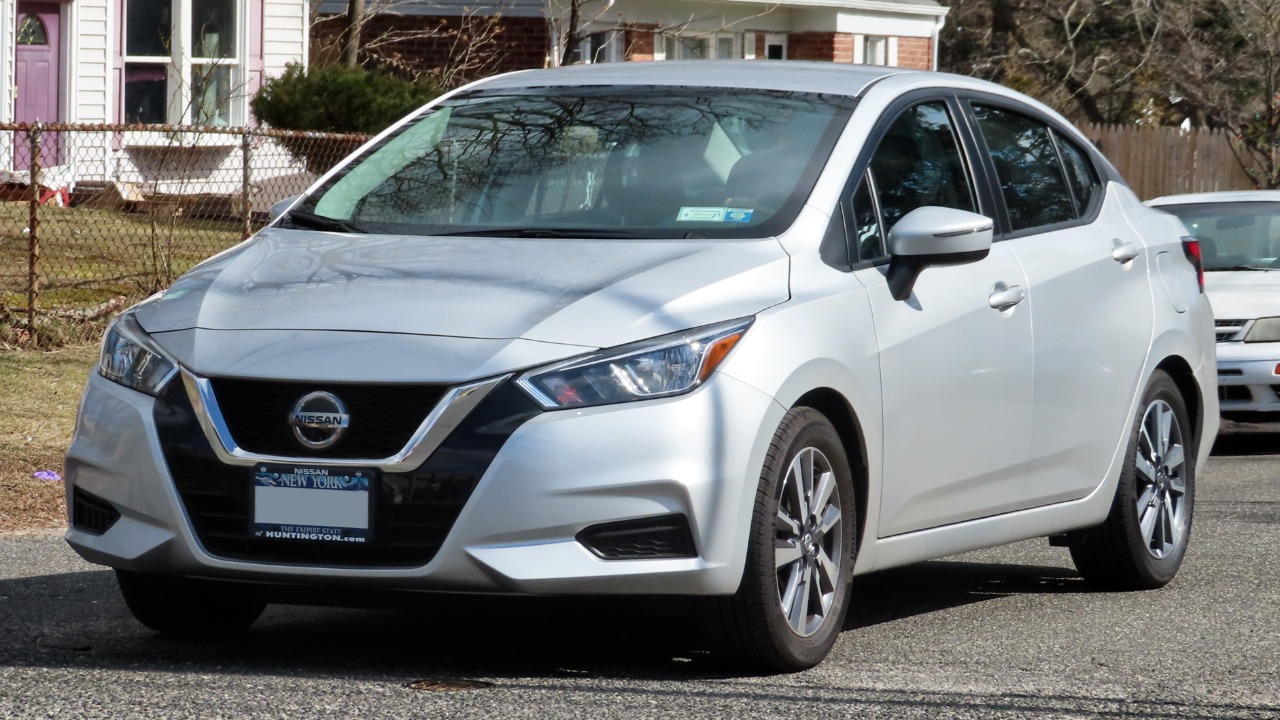

The Nissan Versa has long been the default answer for drivers who simply needed the cheapest new car that would start every morning and not wreck their budget. With Nissan now ending production of its entry sedan, that era is over and the company’s last new car with a sticker under $19,000 is disappearing from U.S. showrooms. The move does not just retire a nameplate, it closes the book on the idea that a truly bare‑bones, brand‑new vehicle can still be bought in America for less than $20,000.
The Versa’s exit caps a decade of rising prices, shifting tastes and corporate strategy that have steadily squeezed low‑margin small cars out of the market. As I look at what Nissan is doing with its lineup, and at how much more Americans now pay for transportation, the death of this sedan reads less like an isolated decision and more like a verdict on the economics of affordable motoring.
The last under-$19,000 new car is gone
Nissan has confirmed that the Versa will not return for the 2026 model year, effectively killing the company’s most affordable car and ending its run as the last new vehicle in the United States with a base price below $19,000. Reporting on Nissan Finally Pulls the Plug notes that the Versa had been positioned as the brand’s entry point, and that Nissan has since confirmed that the sedan will be dropped as it shifts focus to the SUV segment with the Kicks. With the Versa gone, the company no longer offers a conventional car that undercuts the psychological $20,000 barrier.
The broader market context is even starker. Analysts tracking the low end of the price spectrum point out that, with Nissan ending production of the Versa this month, the sub‑$20,000 category dies with it and that the $20,000 car is officially dead in America. The Versa had been the last holdout in a field where even so‑called economy models now start well above that figure, with some entry crossovers starting at $22,910 including destination, leaving budget buyers to choose between older used vehicles or much higher monthly payments.
Nissan’s 2026 lineup strategy: fewer sedans, bigger bets
The Versa’s demise is part of a deliberate restructuring of Nissan’s U.S. portfolio rather than a one‑off cull. Internal planning for the 2026 lineup has been framed as a “Lineup Strategy” built around “Fewer Models, Bigger Goals,” with the company trimming slower‑selling sedans to concentrate investment on higher‑margin crossovers, trucks and electrified vehicles. In that context, the What Nissans Are Being Discontinued for 2026 analysis describes the Nissan Versa as “the end of an era for affordable sedans,” noting that the 2025 model year will be the last for the Versa in the U.S. as part of this broader consolidation.
Consumer behavior is giving Nissan cover to make these cuts. The same planning documents emphasize that consumer preferences have changed, with compact sedans losing ground to compact SUVs in sales across all brands, and that the company sees more upside in channeling resources into vehicles like the Kicks and Rogue. By shrinking the number of nameplates, Nissan is betting that it can sharpen its marketing, simplify production and chase bigger profits per vehicle, even if that means walking away from the entry‑level shoppers who once relied on the Versa as their on‑ramp to the brand.
Reports had warned the Versa was living on borrowed time
The Versa’s fate did not come out of nowhere. Industry Reports as far back as 2023 suggested both the Versa and Altima were living on borrowed time, as Nissan weighed whether to keep investing in traditional sedans in a market tilting hard toward crossovers. Those reports noted that the Versa, which started life as a bare‑bones subcompact, had already been repositioned and mildly upmarketed in an attempt to stay viable, but that its margins remained thin compared with larger vehicles.
By the time Nissan confirmed the Versa’s end, the writing had been on the wall for years. The same analysis that chronicled the death of America’s last sub‑$20,000 new car also pointed out that the Versa had been one of the final models available with a 5‑Speed Manual Gearbox Car in the U.S., a configuration that appealed to a shrinking slice of buyers. Once that enthusiast niche and the budget‑conscious mainstream both began to erode, the business case for keeping the sedan alive became increasingly difficult to justify inside a company under pressure to streamline.
What replaces the Versa for budget-minded Nissan buyers
With the Versa gone, Nissan dealers are already pivoting customers toward other models that can fill at least part of the same role. One retail perspective, framed around the question What Will Replace the Nissan Versa After 2025, comes from At Mossy Nissan Kearny Mesa, where staff say they are proud to serve drivers across San Di and are steering former Versa intenders toward the Kicks subcompact SUV and the Sentra compact sedan. Those vehicles are not as cheap as the outgoing car, but they are being positioned as the new entry points into the brand, with more features and higher perceived value.
Other dealers are delivering a similar message. A separate briefing titled Introduction to “What is replacing the Altima and Versa?” describes Big changes on the horizon for Nissan, noting that the company may discontinue the Altima and Versa, two of its most familiar sedans, while emphasizing that a Nissan spokesperson responded by pointing to a future lineup anchored by sedans, trucks and SUVs with more technology and safety equipment. For buyers who once chose the Versa purely on price, the new pitch is that slightly more expensive models will deliver enough extra utility and content to justify the jump.
Why Nissan is walking away from its cheapest new car
Inside Nissan, executives have been blunt that the Versa’s low price no longer offsets the costs of building and selling it in a market dominated by crossovers. A dealer‑facing explainer titled Why Is Nissan Discontinuing the Nissan Altima and Nissan Verse After 2025 frames the decision under “The Shift in Consumer Preferences: Why Se,” explaining that with the Nissan Versa discontinued after 2025, the brand is reallocating resources toward crossovers and SUVs that are also growing in popularity. The argument is straightforward: when more buyers want higher‑riding vehicles with larger profit margins, it becomes harder to justify a sedan that exists primarily to hit a rock‑bottom price.Another analysis, headlined Why Nissan Is Dropping America’s Cheapest New Car, notes that Nissan is officially pulling the plug on the five‑speed manual Versa and that this move effectively signals the end for this model. That piece underscores that the Versa’s role as a price leader was increasingly at odds with the company’s desire to push customers into better‑equipped trims and more profitable body styles, especially as safety and emissions regulations added cost to every vehicle regardless of size.
The manual transmission and the end of a driving era
Long before the Versa itself was canceled, Nissan had already begun stripping away the elements that made it a cult favorite among enthusiasts and frugal commuters. Earlier this year, coverage under the banner It’s All Over chronicled how the company dropped the base S trim’s manual transmission, noting that, at such a low price point, buyers who were looking to save a buck really had to sacrifice to make it happen and that the Versa had been the company’s last sedan standing with a stick shift. Once that option disappeared, the car lost one of its final points of distinction in a market where most rivals had already gone automatic‑only.
Another report, titled The Last 5‑Speed Manual in the US Is Gone as Nissan Discontinues Base Versa, went further, declaring that The Last Speed Manual Is Gone and that Nissan Discontinues Base Versa because there was no longer a viable business case for the car. That piece highlighted how the Versa S had an incredibly low list price but generated limited profit, and that the shrinking share of buyers who could even drive a manual made it impossible to justify engineering and certifying a separate transmission for such a small audience.
Sticker shock: how far “cheap” new cars have drifted
The Versa’s base price illustrates just how far the market has moved. A detailed breakdown of the model’s final year notes that a 2025 Nissan Versa starts at $17,190 for the manual base S trim, making it the U.S.’s most affordable new car right up until the five‑speed manual officially exits production. That figure, once typical for entry‑level sedans, now stands out as an outlier in a market where even compact models routinely start in the mid‑$20,000s and climb quickly with options.
At the same time, the average new vehicle has become dramatically more expensive. A consumer finance feature on models languishing on dealer lots notes that, in recent years, the price of new cars has soared and that the average new car or truck now costs almost $50,000, a shift driven in part by a shortage of computer chips that pushed automakers to prioritize higher‑margin models. Against that backdrop, the Versa’s sub‑$18,000 sticker looks less like a sustainable business proposition and more like a relic from a different economic era.
Pandemic aftershocks and the vanishing budget car
The pandemic years accelerated trends that were already making life difficult for low‑priced cars. Reporting from FENTON TOWNSHIP, Mich, described how the viral pandemic triggered a cascade of price hikes throughout America’s auto industry, making both new and used vehicles unaffordable for many. Supply chain disruptions, especially in semiconductors, meant automakers could not build enough cars, and when they did, they prioritized higher‑trim models that delivered more profit per scarce chip.
Those dynamics hit budget sedans particularly hard. With production constrained, there was little incentive to keep churning out low‑margin vehicles like the Versa when the same factory capacity could be devoted to crossovers and trucks that sold for far more. As inventories tightened, dealers also had less reason to discount, which meant that even the remaining “cheap” cars often sold for closer to sticker price, further eroding the value proposition that had once defined the segment.
The bigger picture: budget cars are vanishing from U.S. roads
The Versa’s death is part of a broader pattern in which truly low‑cost new cars are disappearing from the American landscape. A policy and industry analysis on Nissan’s manufacturing plans, titled The Bigger Picture, explicitly states that Budget Cars Are Vanishing from U.S. Roads The demise of the Versa ( Nissan Versa ) and possible price pressures on models like the Sentra are cited as examples of how tariffs, regulatory costs and consumer demand are all pushing the market upmarket. The same analysis warns that monthly car payments are climbing past $700 for many buyers, a level that would have seemed extreme only a few years ago.
In that environment, the Versa’s exit feels less like an anomaly and more like the logical endpoint of a system that no longer rewards automakers for serving the lowest end of the market. With the $20,000 car officially gone and budget models vanishing, the gap between what new vehicles cost and what many households can afford is widening. For now, used cars and longer loan terms are filling part of that gap, but as I see it, the loss of the Versa underscores how little room is left for genuinely affordable new transportation in today’s auto industry.
More from MorningOverview