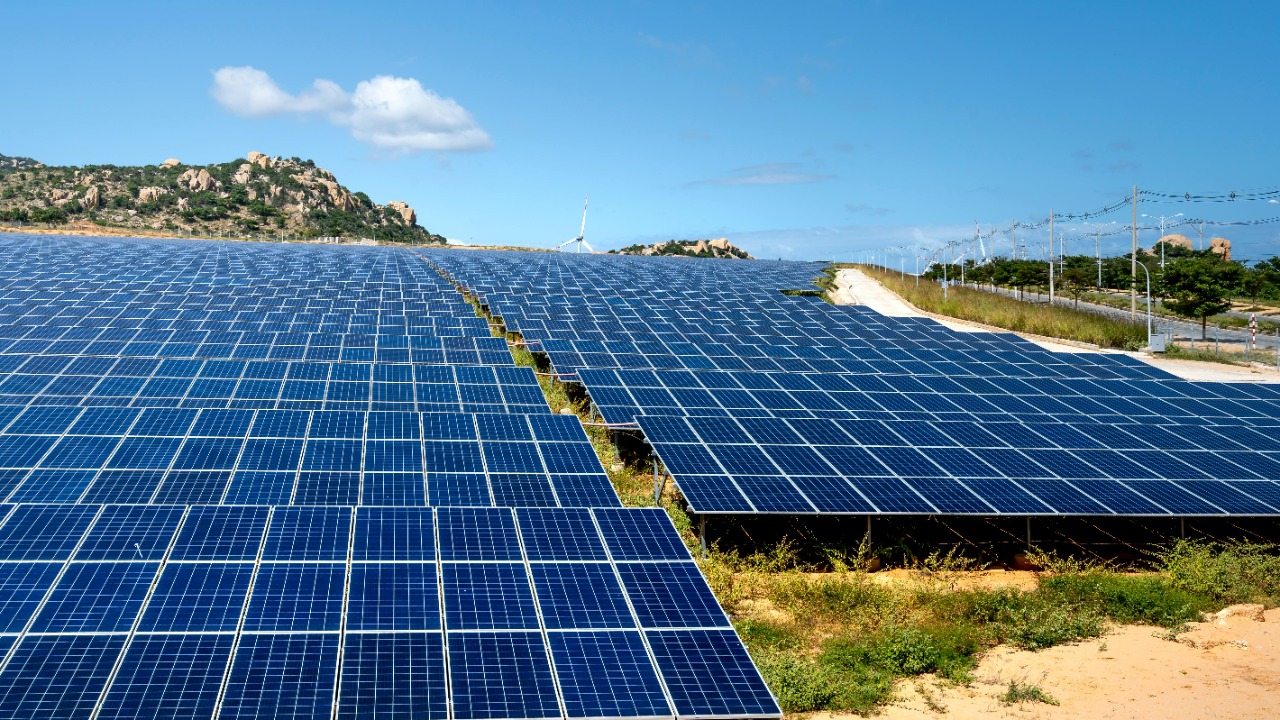

I see 13 green technologies that are not just incremental upgrades but genuine shocks to how energy, food and materials are made. Each one is already moving from lab to market, promising to slash emissions, restore planetary health and rewrite business models. Taken together, they show how fast the sustainability revolution is accelerating, and why no sector can afford to ignore it.
Perovskite Tandem Solar Cells
Perovskite Tandem Solar Cells stack a thin perovskite layer on top of conventional silicon, capturing more of the light spectrum and pushing solar efficiency far beyond today’s rooftop panels. Analysts highlight these tandem designs as a leading edge of next‑generation modules that are safer and longer‑lasting than early prototypes. By squeezing more watts from the same surface, they cut land use and balance‑of‑system costs.
I see the shock factor in how quickly this could upend power markets. When perovskite tandem panels reach mass production, utility‑scale solar farms and even urban facades could deliver electricity at costs that undercut fossil fuels almost everywhere. That would accelerate coal plant retirements, reshape grid planning and force regulators, investors and communities to rethink where and how they build energy infrastructure.
Next Gen Solar Power
Next Gen Solar Power goes beyond better panels, reimagining how solar is integrated into buildings, vehicles and infrastructure. A detailed Table Of Content on green tech trends lists Next Gen Solar Power alongside smarter cities and transport, underscoring how solar is becoming a structural feature of urban design. From transparent photovoltaic windows to flexible films on warehouses, generation is shifting closer to demand.
In my view, the disruptive impact lies in decentralization. When factories, data centers and apartment blocks all generate a significant share of their own electricity, grid operators must pivot from one‑way power flows to highly dynamic local balancing. That creates opportunities for software, storage and demand‑response providers, while challenging traditional utilities that still rely on centralized fossil assets.
Green Hydrogen Breakthroughs
Green Hydrogen Breakthroughs are turning a long‑promised fuel into a practical decarbonization tool for heavy industry and long‑distance transport. Analysts tracking Green Hydrogen Breakthroughs point to cheaper electrolysers, better catalysts and large‑scale projects that pair hydrogen production directly with renewables. The goal is to replace coal and gas in steelmaking, fertilizers and shipping fuels without the carbon penalty.
I see this as a shock to commodity markets and geopolitics. Countries with strong solar and wind resources can become exporters of green hydrogen and its derivatives, challenging traditional oil and gas suppliers. For industrial companies, access to low‑carbon hydrogen will increasingly determine competitiveness as carbon prices rise and customers demand cleaner supply chains.
Carbon Capture and Storage (CCS)
Carbon Capture and Storage, often shortened to CCS, is moving from pilot projects to large‑scale deployments that trap CO₂ from smokestacks and lock it underground. In overviews of Carbon Capture and, it is framed as essential for sectors that are hard to electrify quickly, such as cement and certain chemicals. New solvents, membranes and modular capture units are cutting energy penalties and costs.
From my perspective, the world‑shocking element is not just the technology but the scale of infrastructure it implies. CCS hubs, shared pipelines and long‑term storage sites could retool existing fossil regions into climate‑service economies. However, communities and regulators will have to weigh safety, monitoring and liability, making transparent governance as critical as engineering breakthroughs.
Direct Air Capture Systems
Direct air capture systems pull CO₂ directly from ambient air, rather than from concentrated industrial streams. A recent overview of Direct air capture describes them as a breakthrough tool for removing legacy emissions and balancing sectors that cannot reach absolute zero. These facilities use fans, sorbents and heat to concentrate CO₂ for storage or reuse.
I see their disruptive potential in how they redefine responsibility for past pollution. If direct air capture can be scaled with cheap clean energy, it could underpin carbon‑removal markets where companies and even governments pay to erase historical footprints. That would create new financial instruments, new accountability expectations and a new class of climate infrastructure developers.
Precision Fermentation for Animal‑Free Proteins
Precision fermentation uses microbes as tiny factories to produce Animal‑free proteins, fats and other complex molecules. In a landmark list of climate solutions, Precision fermentation is highlighted for its ability to transform food, materials and medicine while reducing demand for feed crops. Tanks of engineered yeast or bacteria can churn out dairy proteins, egg whites or collagen without livestock.
I consider this one of the most shocking shifts for agriculture. If large volumes of staple proteins move into stainless‑steel bioreactors, land now used for feed could be freed for rewilding or higher‑value crops. That would hit commodity markets, reshape rural economies and dramatically cut methane and deforestation linked to industrial animal farming.
Planetary Health Precision Fermentation
Planetary health frameworks go further, positioning Precision fermentation as a tool to relieve pressure on multiple ecological boundaries at once. A detailed review of emerging technologies notes that More than a of current cropland is tied to animal feed, so shifting even part of that demand into fermenters could ease biodiversity loss, freshwater stress and fertilizer pollution simultaneously. Oct is cited as a turning point in how these links are framed.
In my assessment, this systems view is what will surprise policymakers most. Precision fermentation is not just a novel food technology, it is a land‑use and nutrient‑cycle intervention. Governments that recognize this can align agricultural subsidies, trade rules and health policies to accelerate adoption while supporting farmers through the transition.
Structural Battery Composites
Structural Battery Composites blur the line between energy storage and the materials that make up vehicles or buildings. In a survey of Jun breakthroughs, Top Emerging Technologies 2025 describe how these materials let the chassis of an electric car or the skin of a drone double as the battery. Where lithium‑ion batteries are solid structures that sit inside a frame, these composites turn the frame itself into storage.
I see enormous implications for transport and aviation. Lighter vehicles with integrated batteries can travel farther on the same charge, use fewer raw materials and open new design possibilities. For stakeholders from automakers to aerospace firms, this could reorder supply chains, with carbon‑intensive metals giving way to multifunctional composites that cut both emissions and costs.
Sodium‑Ion Batteries
Sodium‑ion batteries swap scarce lithium for abundant sodium, promising cheaper and more sustainable storage. A detailed assessment of breakthrough climate technologies notes that Today lithium‑ion cells everything from EVs and phones to huge stationary storage arrays that are massive and cost billions. Sodium cells can use cheaper materials and tolerate lower temperatures, making them attractive for grid‑scale storage.
In my view, the shock will come when sodium‑ion undercuts lithium‑ion for large batteries that sit in containers rather than cars. That could ease pressure on lithium mining, reduce supply‑chain risks and accelerate renewable integration in emerging markets. Utilities, battery makers and mining companies will all need to adjust strategies as sodium‑based chemistries mature.
Fusion Futures and the Dawn of the Abundant Energy Race
Fusion Futures, described as the Dawn of the Abundant Energy Race, capture the surge of investment into commercial fusion reactors that promise virtually limitless low‑carbon power. A forward‑looking review of Top Climate Tech notes that this race is intensifying as energy security becomes a core business continuity issue. Private startups and public labs are competing to achieve net‑energy‑gain devices that can be commercialized.
If fusion clears its engineering hurdles, I believe it will shock energy markets more than any other technology on this list. Abundant, dispatchable, low‑carbon power would undermine the economic rationale for new fossil plants and reshape everything from desalination to green hydrogen production. Investors, utilities and governments are already positioning for a world where fusion is no longer science fiction.
Energy‑Transition Finance From Hype to Execution
Energy‑Transition Finance is evolving from slogans to concrete capital flows that build real assets. A detailed analysis of Climate Tech Trends describes Trend number one as Energy‑Transition Finance Broadens and Deepens, with demand driven by electrification, hungry AI and data centers. Capital is shifting into grid upgrades, storage, critical minerals and efficiency.
I see this as a financial technology story as much as an energy one. New instruments, from transition bonds to blended‑finance vehicles, are lowering risk for first‑of‑a‑kind projects. For corporates and cities, access to this capital will determine who can deploy green infrastructure at scale and who is left behind in a higher‑cost, higher‑risk fossil system.
Green Buildings and the 37% Construction Problem
Green buildings are moving from niche to necessity as the climate impact of the built environment becomes impossible to ignore. One influential assessment of green technology stresses that Traditional buildings and construction create 37% of global emissions, a figure that has jolted regulators and developers. Oct analyses of Green innovation argue that smarter materials, heat pumps and digital controls can slash this footprint.
In my judgment, the shock comes when building codes and finance catch up with the science. As performance standards tighten, inefficient assets risk becoming stranded, while high‑efficiency designs and retrofits gain value. For architects, engineers and construction firms, this is a once‑in‑a‑generation chance to redefine best practice and capture a rapidly growing market.
Integrated Planetary Health Tech Solutions
Integrated planetary health tech solutions recognize that climate, biodiversity and human wellbeing are inseparable. A comprehensive review notes that seven of the nine planetary boundaries are under pressure and highlights ten tech solutions that can help societies manage Earth’s ecosystems better. Oct discussions of these tools span sensors, AI, biotech and new monitoring platforms that track environmental change in real time.
I see this integration as the quiet revolution behind the flashier hardware. When data from forests, oceans, farms and cities is combined, policymakers and businesses can spot tipping points earlier and design interventions that help both people and nature. For stakeholders from insurers to health systems, that shift in risk awareness could be as shocking as any single device or molecule.
More from Morning Overview