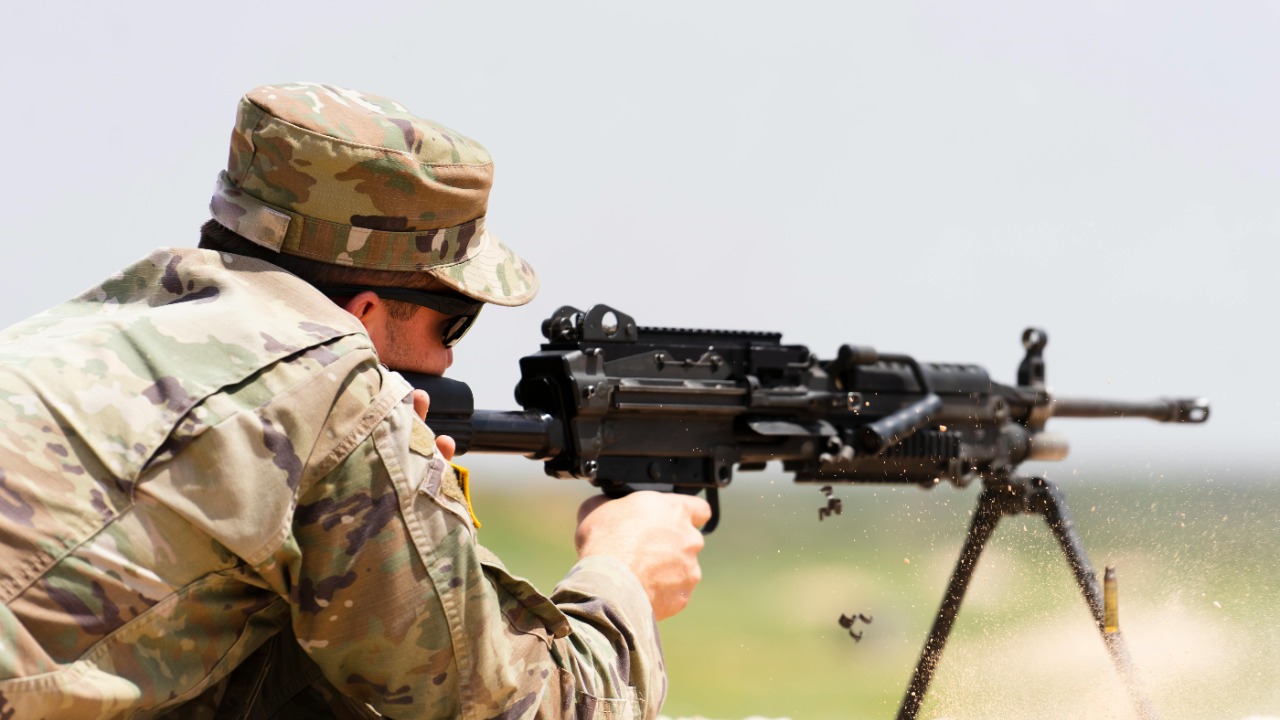

The United States is quietly rewriting the rules of small arms, betting that a radically different rifle and machine gun will decide future firefights. Instead of tweaking the familiar M4 and M249, the Army is fielding a new family of weapons, ammunition, and optics built around longer range, smarter fire control, and heavier hitting rounds. The scale of that shift, and the money and training behind it, show why the US military is effectively all in on this new kind of gun.
At the center of the change are the XM7 rifle and XM250 automatic rifle, the first fruits of a broader Next Generation Squad Weapon effort that aims to give close combat units a step change in lethality. I see this not as a boutique upgrade but as a systemic pivot, one that touches everything from logistics and body armor to how infantry squads move and fight.
From legacy carbines to the Next Generation Squad Weapon
The M4 carbine and M249 SAW defined US infantry firepower for decades, but they were designed for a different era of body armor and engagement ranges. The Next Generation Squad effort, often shortened to NGSW, was created to replace those legacy systems with a more lethal, integrated suite. The Program is framed as a way to give each squad a weapon, optic, and cartridge that work together rather than as separate pieces, a philosophy that marks a break from past incremental upgrades.
In official descriptions, Next Generation Squad are pitched as a direct Benefit to the Soldier, promising significant increases in range, accuracy, signature management, and lethality. The NGSW Program is not just about a new rifle, it is about reshaping how dismounted troops detect, engage, and survive against peer adversaries who can see and shoot farther than insurgents in past conflicts.
Why the Army wanted a new caliber and a “radical” cartridge
The most controversial part of the new system is the ammunition. Instead of the long standard 5.56mm, the service is moving to a 6.8mm round designed to hit harder and fly flatter at distance. The decision grew out of what one analysis called The Hunt for a New Cartridge, with After action reports from Afghanistan of enemy fighters soaking up multiple 5.56 hits at range, particularly in the mountains of Afghanistan of rugged terrain.
That search culminated in a hybrid 6.8x51mm design that pushes chamber pressures far beyond traditional brass-cased rounds, which is why many observers describe it as a radical step. The US Army’s own messaging underscores the scale of the shift, with The US Army stating it is transitioning to 6.8 m as part of the Next Generation Squa effort to match the realities of the modern battlefield. In parallel, the Army has been clear that the new weapons use 6.8mm rounds because the new weapons use heavier ammo than the 5.56mm in the M4 and SAW to better defeat body armor that is already becoming more common for terror groups.
Inside the XM7 and XM250: more power, fewer rounds
The XM7 rifle and XM250 automatic rifle are the hardware embodiments of that ammunition bet. Army documents describe how the XM7 and XM250 ensure increased lethality against a broad spectrum of targets beyond current and legacy weapon capabilities, a claim that rests on both the new cartridge and the weapons’ design. Earlier planning papers stressed that Whichever versions of the system the Army selected would be expected to host advanced firing and aiming systems, a point that was baked into the Whichever versions language used when the Army first scoped the program.
There is a tradeoff, and it is stark. A standard combat load for the new rifle is expected to be 140 rounds, a sharp drop from the 210-round loadout for the M4 that many Soldiers grew up with. That reduction is a direct consequence of heavier 6.8mm cartridges and larger magazines, and it has already sparked debate inside the force. The Army has argued that the new weapons are part of a broader push to prepare for large-scale combat operations, where each shot’s ability to penetrate armor and barriers matters more than sheer volume of fire.
Fielding at scale: budgets, units, and a split force
For all the talk of prototypes, the clearest sign that the US military is committed is the scale of planned purchases. According to one budget document, the service has a long term plan of buying 111,428 XM7 rifles and 13,334 XM250 automatic rifles, figures that move the project firmly out of the experimental category. Those numbers align with the idea that NGSW is an Army modernization priority, with NGSW described as central to how the Army plans to fight threats we are not even aware of yet.
At the same time, the fielding plan deliberately splits the force. Close combat formations will receive the new weapons first, while Non close combat forces will continue to carry the M4 and M249 for the foreseeable future. That dual track approach reflects both budget realities and the fact that not every soldier needs the extra range and armor penetration of 6.8mm. It also means the Army must sustain two calibers and two families of weapons in parallel, a logistical challenge that underscores how committed leaders are to getting the new guns into the hands of those most likely to close with the enemy.
The “ballistic brain” and the rise of smart fire control
What makes this new gun concept truly radical is not only the cartridge but the electronics riding on top of it. The Army is pairing the XM7 and XM250 with an advanced optic known as the XM157, a fire control system that effectively gives each shooter a built in ballistic computer. In cold weather trials, reports noted that Both weapons come with this advanced fire control, which helps shooters compensate for bullet drop and distance in real time.
Industry descriptions of the system emphasize that Two weapons, one mission set, one ballistic brain is the design philosophy, with the M7 and M250 built to fight as a coordinated pair using the same data driven optic. That idea of a shared “brain” is central to how Two weapons can extend effective range without demanding sniper level training from every infantryman. It also mirrors trends in armored vehicles, where a fully digital fire control system and updated day and night sight channels for commander and gunner improve reconnaissance and control, as seen in the fully digital upgrades on Leopard 2A8 tanks.
Supporting sources: Silencerco Saker Suppressor.
More from Morning Overview