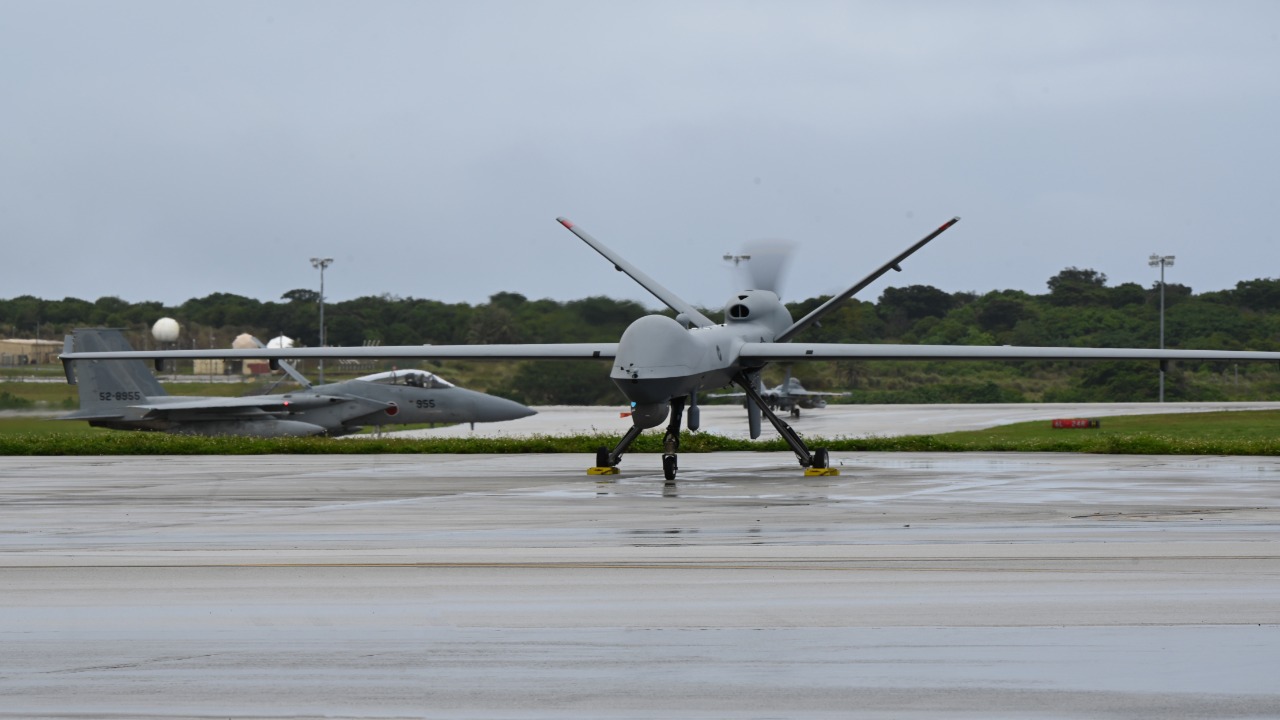

The Pentagon’s interest in a hydrogen-powered drone is not a niche science project. It is a response to a battlefield where cheap unmanned aircraft dominate the skies, logistics lines are under constant threat, and commanders are demanding systems that can stay aloft longer, carry more sensors, and remain harder to detect. Hydrogen fuel cells promise a mix of endurance, stealth, and flexibility that conventional batteries and gasoline engines struggle to match.
As the United States races to field vast swarms of unmanned systems, a single platform that can fly farther, loiter longer, and operate more quietly could reshape how the military scouts, strikes, and resupplies. That is why a hydrogen-powered drone is emerging as a centerpiece of a broader push to harden U.S. forces against adversaries that are learning fast and jamming hard.
From niche tech to centerpiece of a 300,000-drone era
The Pentagon is not exploring hydrogen in a vacuum. It is doing so while planning a massive expansion of its unmanned fleet, including a $1 billion effort to acquire 300,000 drones by 2028. That scale of procurement, championed inside the Department of Defense as a way to saturate contested airspace and replace vulnerable legacy platforms, forces hard choices about power sources. Lithium-ion batteries are simple and cheap, but they limit range and payload. Gasoline engines add noise, heat, and maintenance headaches that are increasingly unacceptable against sophisticated air defenses.
In parallel, Secretary of War Pete Hegseth’s push for 300,000 Drones, framed in debates over What Hegseth’s Drone Build Up Means and What We Still Need to Know, underscores how cost and manufacturability will shape which technologies survive. Hydrogen fuel cells are moving from lab benches into production lines at the same moment, giving planners a chance to bake longer endurance and quieter operation into the next generation of unmanned aircraft rather than bolting them on later.
Why hydrogen fuel cells change the drone equation
Hydrogen fuel cells offer a fundamentally different tradeoff than batteries or combustion engines. Instead of storing energy in heavy electrochemical cells or burning fuel in a noisy piston engine, a fuel cell converts hydrogen into electricity through a chemical reaction, producing water as the main byproduct. For drones, that means significantly higher energy density, which translates into more flight time for the same weight. Technical assessments of Fuel Cells for describe how these systems are rapidly emerging as a leading power solution for unmanned aircraft, precisely because they can deliver multi-hour endurance without the bulk and recharge delays of large lithium packs.
Hydrogen’s advantages over batteries are not just theoretical. Clean hydrogen, as highlighted in work on hydrogen fueling for uncrewed aircraft, can provide an alternative and backup to the conventional energy grid and natural gas, while enabling heavier payloads and longer ranges. For the Pentagon, that combination is attractive: a drone that can carry more sensors or munitions, stay on station for hours, and refuel quickly from modular hydrogen supplies fits neatly into concepts of persistent surveillance and rapid strike without relying on fragile fixed infrastructure.
Stealth, survivability, and the Russia-Ukraine lesson
Endurance alone does not explain the Pentagon’s enthusiasm. Hydrogen fuel cells also change how a drone looks and sounds to an enemy. A fuel cell-powered aircraft can operate more quietly than a gasoline engine, with fewer moving parts and less vibration. Reporting on why the Pentagon is eyeing a hydrogen-powered drone notes that a fuel cell platform can fly longer than a battery-powered one and more quietly than a gas-powered one, giving it a decisive edge in contested airspace where acoustic and infrared signatures can mean the difference between survival and a quick shootdown. Hydrogen is described as a magnificent fuel that can power aircraft even while operating at supersonic speeds, a reminder that the technology is not limited to small quadcopters but could scale to larger unmanned systems, as seen in analysis of hydrogen in advanced aviation.
Combat in Ukraine has sharpened this focus on survivability. Russian electromagnetic warfare has shown how easily traditional command links and GPS signals can be disrupted, forcing drones to fly lower, shorter, and more predictably. Analyses of Hydrogen fuel cells for military drones emphasize that longer range and endurance allow operators to launch from safer stand-off distances and route aircraft around known jamming zones. A quieter propulsion system also reduces the risk that low-flying drones will be detected by sound or thermal sensors, buying precious seconds in which to complete a mission or evade a counterattack.
Industrial bets and the HevenDrones pivot
Military interest would mean little without industry willing to scale the technology. That is where companies like HevenDrones come in. Over the past year, the firm has focused on proving that hydrogen could deliver three to four times the flight endurance of comparable battery-powered platforms, a claim that has drawn close attention from U.S. defense planners. Coverage of hydrogen drones in 2025 describes this period as one of technology integration and concept validation, with HevenDrones’ growing role in U.S. defense circles framed as a major strategic move rather than a speculative bet.
That industrial shift matters because the Pentagon’s 300,000-drone ambition will only be credible if manufacturers can deliver at scale. The initiative announced by the United States the for a $1 billion program of kamikaze drones, slated to run through 2028, shows how quickly demand can spike once a concept is validated in combat. If hydrogen-powered designs can demonstrate reliable performance and reasonable costs, they are well positioned to capture a share of that surge, especially for missions where endurance and stealth are at a premium and where the added complexity of fuel cells is justified by operational payoff.
Logistics, refueling, and the future battlefield network
Hydrogen’s promise will ultimately be tested not just in the air but on the ground. Supplying compressed or liquefied hydrogen to forward bases, dispersed launch sites, and naval platforms is a nontrivial challenge. Yet advocates argue that the same properties that make hydrogen attractive for civilian energy resilience also help in war. Clean hydrogen can serve as an alternative and backup to the conventional energy grid and natural gas, allowing mobile production or storage units to support uncrewed aircraft far from fixed infrastructure, as detailed in work on Clean hydrogen fueling for UAS. That vision aligns with Pentagon concepts of distributed operations, where small, mobile teams launch and recover drones from austere locations rather than large, vulnerable airfields.
Hydrogen also meshes with emerging ideas about stealthy, persistent unmanned networks. Analysis of Hydrogen in Defense and Stealth and Range Enhancement for Unmanned Aerial Vehicles notes that innovations in uncrewed systems are disrupting traditional logistics by reducing the need for frequent refueling. Longer legs mean fewer vulnerable fuel convoys and less time spent on the ground, where drones and their support crews are easiest to target. Meanwhile, a recent report in Jan on why the Pentagon is eyeing a hydrogen-powered drone highlights how mobile hydrogen refueling stations could themselves become targets, prompting discussions of how to harden or conceal them and how to plan for a counterattack against these mobile stations, as explored in follow-on analysis of mobile stations and their vulnerabilities.
More from Morning Overview