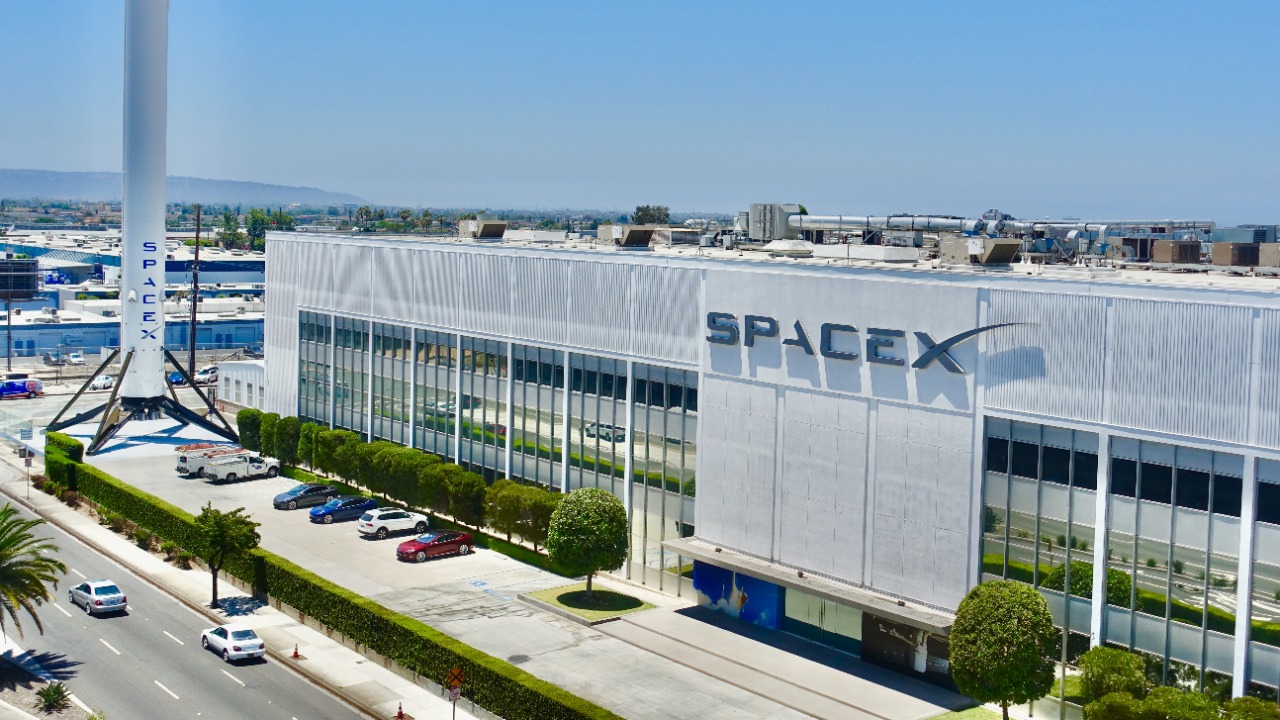

Elon Musk has spent years insisting SpaceX would stay private until its Mars ambitions were well underway, yet he is now pushing to list the company in what could be one of the largest stock offerings in history. The urgency is not just about cashing out early investors, it reflects a race to dominate a new frontier where rockets, satellites and artificial intelligence collide. To understand why he is moving so quickly, I need to trace how orbital internet, space-based data centers and even Tesla’s balance sheet are converging on a single event: a SpaceX IPO.
The AI space race that changed Musk’s calculus
The most immediate driver behind Musk’s rush is the explosive demand for computing power to train and run artificial intelligence systems. Traditional data centers on Earth are already straining under the energy and cooling requirements of large language models and generative AI, and the companies that control the next wave of infrastructure will shape who leads in this technology. According to Sources cited by Jan and Lawrence Bonk, Musk is reportedly trying to take SpaceX public so he can fund data centers in orbit, a project that would be vastly more expensive than even his current satellite network. Building computing hubs above the atmosphere would give him a way to pair Starlink’s connectivity with dedicated AI hardware, turning SpaceX into a vertically integrated platform for both moving and processing data.
That vision helps explain why the company is not content to grow at a measured pace on private capital alone. Space-based data centers would require heavy lift rockets, high throughput satellites and custom-built platforms that can operate for years without maintenance, all of which must be designed, launched and replaced on a tight schedule. The cost of that buildout is far beyond what internal cash flow can comfortably support, even with Starlink’s rapid expansion. By racing toward an IPO, Musk is effectively trying to lock in the funding needed to secure a first-mover advantage in orbital AI infrastructure before rivals can match the scale of his ambitions.
A record-breaking IPO to fund Starlink and beyond
Even before the AI angle came into focus, Musk was already weighing a massive public listing for SpaceX. Reporting from Dec indicates that Elon Musk has been considering an IPO that could rank among the largest ever, with expectations that the valuation could more than double from prior private rounds as public investors bid up the company’s growth story. Analysts have framed this potential offering as a way for Musk to crystallize the value of his launch and satellite businesses, with one IPO FAQ noting that the deal could dramatically increase his personal net worth and influence over the broader tech sector.
The proceeds are not meant to sit idle. Separate reporting on the same plan explains that the money raised would go primarily into expanding Starlink’s satellite internet network and building out new capabilities that private investors alone might struggle to finance. The company expects to generate about $15 billion in revenue in the near term, with most of it coming from its Starlink satellite internet service, yet the capital needs for global coverage and new services remain enormous. One analysis of the offering notes that the money raised would go into scaling the constellation and related infrastructure, effectively turning public markets into a fuel line for Musk’s most capital-intensive projects.
Starlink’s economics and the promise of orbital infrastructure
Starlink is the bridge between SpaceX’s current business and its more speculative AI and Mars ambitions. The company has already deployed thousands of satellites to provide broadband service, and internal projections cited in local market coverage suggest that revenue from this network could reach about $15 billion in a single year, with Starlink accounting for the majority. A report focused on Bastrop-based operations in Texas notes that the company is looking to go public while it is still ramping up this service, highlighting how much of SpaceX’s financial story now rests on the performance of Starlink.
Industry analysts see this as both an opportunity and a risk. A roundtable on the key questions for a potential SpaceX IPO in 2026 argues that investors should not focus too narrowly on short term performance, even though Growth in the here and now is important and Starlink is doing very well in terms of subscriber additions and margins. The same discussion points out that, even with strong margins and a rapidly expanding customer base, the scale of Musk’s ambitions means the company will likely continue to burn cash on new projects in a way private investors do not always tolerate. By tapping public markets, he can spread that risk across a broader shareholder base while using the credibility of a listed stock to support long term investments in orbital infrastructure that might otherwise be hard to justify. Those key questions underscore how central Starlink’s economics are to the entire IPO narrative.
Pressure from Tesla and Musk’s personal balance sheet
There is also a terrestrial reason for Musk to accelerate the timeline: Tesla. As the electric car maker navigates slowing growth in some markets and heavy spending on new models and factories, Musk’s personal wealth and ability to support the company have become strategic variables in their own right. A detailed analysis of the crossover between his ventures argues that SpaceX and Tesla are entering a period of Strategic Convergence, where decisions about one company’s capital structure directly affect the other. The same piece contends that this is Why Musk Must Push for a SpaceX IPO Now, in part because the offering aims to create a light speed communication advantage that could eventually benefit Tesla’s autonomous driving and connected vehicle services. By turning SpaceX into a publicly traded entity, Musk can unlock liquidity without selling as much Tesla stock, preserving his control while still funding ambitious projects across both companies.
Another report drills into what a very large listing could mean for Musk’s flagship carmaker. It frames a hypothetical $1.5 Trillion valuation for SpaceX as a potential game changer, describing how such a deal could create a Strengthened Financial Foundation for Musk and thus for Tesla. If public investors assign that kind of worth to the rocket company, Musk’s stake would give him new options to backstop Tesla during downturns, support new factories or even fund acquisitions without diluting existing shareholders as heavily. The analysis of $1.5 Trillion scenarios makes clear that the IPO is not just about rockets and satellites, it is also about how Musk manages his empire under the scrutiny of public markets and the expectations of investors who hold both stocks.
Timing, competition and the risk of waiting
Finally, there is the simple fact that Musk is not the only one racing to build infrastructure for AI and space based communications. A report by Sven Piper notes that Elon Musk’s rocket company SpaceX, which trades privately under the placeholder ticker SPACE in some discussions, is bolstering its efforts to go public amid a broader rush by companies to build AI related data centers. The same coverage emphasizes that Musk is eyeing space AI data centers specifically, and that the cost of putting such facilities in orbit is far higher than building on the ground. By moving quickly to secure public capital, he is trying to ensure that SpaceX can outspend and out innovate rivals that might otherwise catch up if he waited for internal cash flow to fund the next phase. The reference to Sven Piper and SPACE underscores how closely market watchers are tracking this timing.
More from Morning Overview