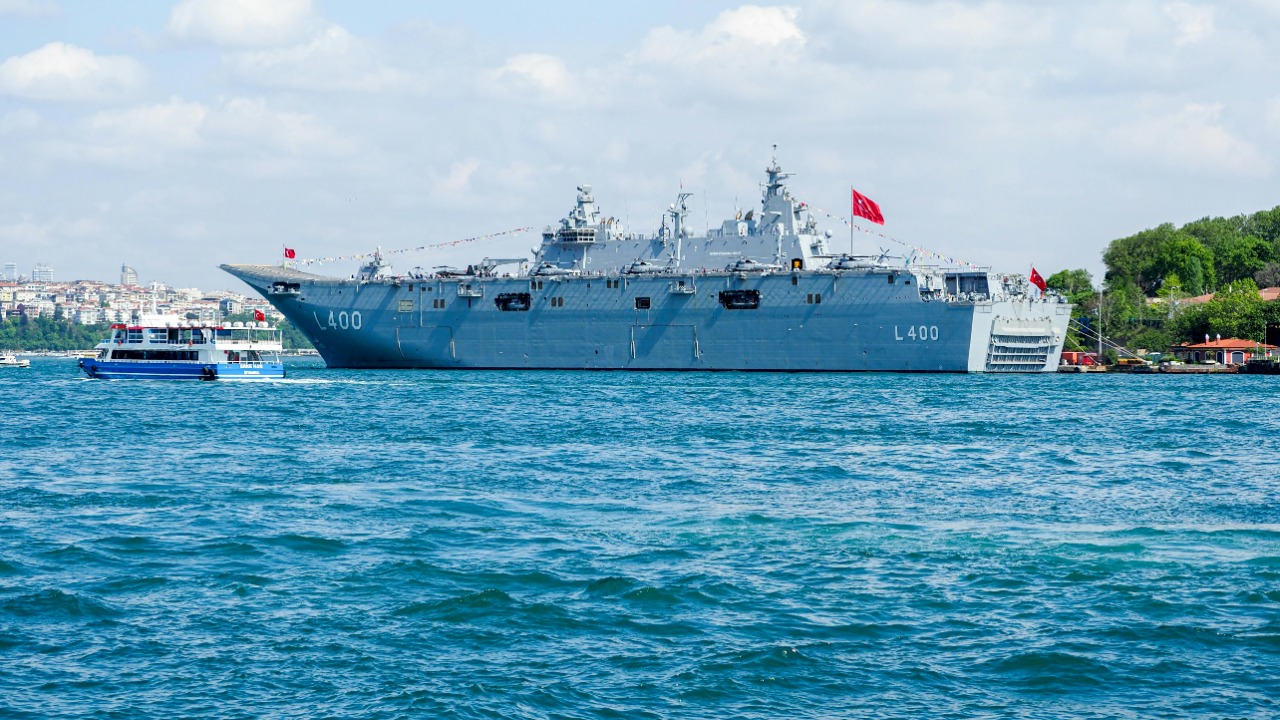

An Egyptian warship’s brief incursion into Israeli waters off the Gaza coast was not a random navigational error. It was a tightly contained crisis that exposed how fragile the security understandings between Egypt and Israel have become during the Gaza war, even as both governments insist coordination is intact. By tracing what happened at sea and why Cairo quickly accepted responsibility, I can show how a single ship crystallized deeper arguments over Gaza, sovereignty and the limits of quiet cooperation.
The incident unfolded inside an Israeli-declared restricted zone off the Gaza Strip, where the Israel Navy has been enforcing a blockade and intercepting vessels it suspects of breaching it. When an Egyptian navy vessel pushed into that cordon and ignored radio calls, Israeli warships fired warning shots and moved to intercept, turning a routine patrol into a rare face-off between two militaries that usually work hard to avoid public friction.
What actually happened off Gaza’s coast
According to Israeli accounts, an Egyptian vessel briefly crossed into Israel’s territorial waters near Gaza after entering a closed maritime zone that Israel has declared off limits to foreign ships. The Israeli Navy reported that an Egyptian ship moved into this area early on a Tuesday, failed to respond to repeated calls from the Israeli side and only turned back toward Egyptian waters after warning shots were fired. The description of a ship that “ignored calls” from the Israeli Navy and then reversed course once shots were fired matches a pattern of escalation that stopped just short of a direct clash.
Israeli military spokespeople framed the encounter as a “serious and highly unusual incident” between Egypt and Israel, language that underscored how rare it is for an Egyptian warship to be challenged so close to Gaza’s shore. One account stressed that the vessel had “briefly deviated” from its course, suggesting that, from Israel’s perspective, the violation was limited in time but significant in symbolism. The same reporting noted that the incident took place on a Tuesday morning, reinforcing that this was not a nighttime misreading of radar but a daytime encounter in a heavily monitored battlespace.
How both sides tried to contain the crisis
What happened after the warning shots may matter more than the incursion itself. Israeli officials have said that Egypt accepted responsibility for the incident, with one report citing an IDF source who said Egypt accepted responsibility for the ship’s actions. Another account noted that The Egyptians expressed their regret and “assumed responsibility for it,” a formulation that appeared in a report that also said The Egyptians were keen to de-escalate any tensions. Taken together, these statements show Cairo moving quickly to reassure Israel that the move was not a deliberate provocation.
On the Israeli side, the messaging was equally calibrated. The IDF Spokesperson stressed that security coordination between the two countries “remains unchanged,” even as the navy described the event as highly unusual. One detailed account quoted The IDF Spokesperson as saying that cooperation continues as usual, while also noting that the incident took place amid powerful winds and heavy rainfall, conditions that could plausibly contribute to navigational error. That dual message, acknowledging both the seriousness and the weather, signaled that Israel was prepared to accept a benign explanation as long as Egypt publicly owned the mistake.
Why an Egyptian warship was near Gaza at all
The more difficult question is why an Egyptian warship was operating so close to Gaza’s restricted waters in the first place. One analysis noted that an Egyptian warship had recently entered the closed maritime zone off the coast of the Gaza Strip, describing it as a rare flare-up in an otherwise carefully managed relationship. That same account framed the move as part of a broader pattern in which an Egyptian warship’s presence near Gaza reflected Cairo’s desire to be seen as actively safeguarding its own maritime approaches during the Gaza war.
Other reporting has highlighted that an Egyptian navy vessel briefly entered Gaza’s Israeli‑declared restricted maritime zone on 8 January, prompting Israeli warships to respond. A video analysis described how An Egyptian navy vessel crossed into this zone, triggering a rapid Israeli reaction and illustrating how sensitive the area has become as the Gaza conflict drags on. In that account, the incident was used to show how strained, yet still functional, ties have become during the Gaza war, with both sides operating in close proximity while trying to avoid miscalculation.
The Gaza blockade, aid routes and Egyptian anger
The maritime standoff cannot be separated from the wider argument over Gaza’s blockade and humanitarian access. Egyptian voices have been sharply critical of Israeli restrictions on aid, with one social media post accusing Israel of preventing humanitarian aid from entering Gaza and even entering international waters to seize a ship named Madleen. That post described how Madleen was intercepted as part of Israel’s effort to enforce its blockade, and framed the Egyptian vessel’s brief entry into Israeli waters as occurring against that backdrop of anger over aid.
At the same time, Egyptian political figures have used the incident to warn of a broader rupture if Israel’s Gaza policy continues unchanged. One widely shared message labeled the episode “BREAKING” and spoke of “Escalating Tensions Between Israel and Egypt,” quoting Egyptian lawmaker Mostafa Bakry as warning that the Egyptian army could be drawn in if the situation deteriorates. In that post, BREAKING was used to emphasize how the warship incident had become a symbol of a much larger debate over Gaza, aid and Egypt’s regional role, even as the same message expressed hope that reason would prevail over further escalation.
Egypt’s security doctrine and the Sinai factor
To understand Cairo’s calculus, it helps to look at how Egyptian strategists describe their security posture in Sinai and along the Gaza border. In a televised discussion, international relations scholar Amani Solomon of Alexandria University explained that Egypt’s military presence in Sinai is framed as essential to securing its borders and preventing spillover from conflicts next door. That analysis, presented by Amani Solomon from Alexandria University, underscored that Egypt sees itself as a front-line state whose forces must be able to maneuver near Gaza and the Mediterranean to protect its own territory, not just to accommodate Israeli security needs.
This mindset helps explain why Egyptian naval units might push close to Gaza’s waters while still insisting they respect formal boundaries. From Cairo’s perspective, patrolling near the restricted zone is part of a broader effort to monitor smuggling, militant movements and any threats that could cross from Gaza into Sinai. That same security logic has driven Egypt to expand its forces in Sinai in recent years, a trend that analysts have linked to both domestic counterterrorism and the need to manage the fallout of the Gaza war. In that context, a warship edging into a contested maritime line looks less like a rogue move and more like a risky byproduct of overlapping security missions.
More from Morning Overview