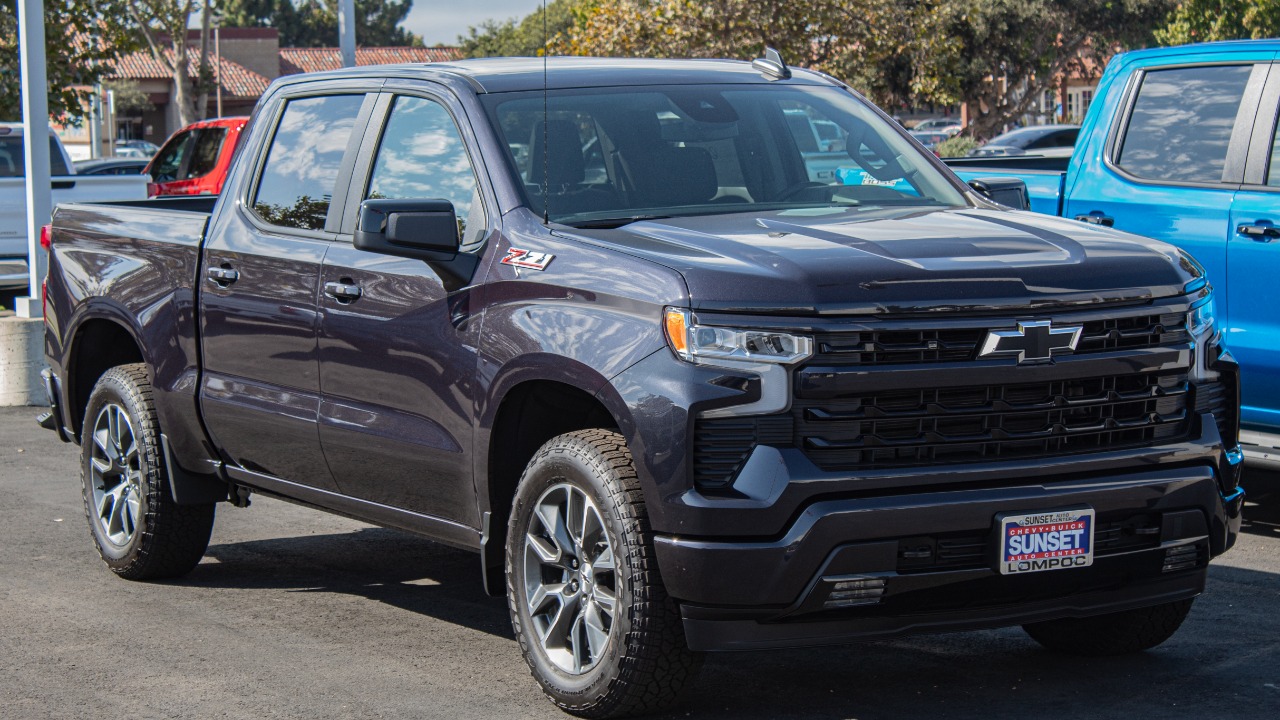

For buyers who care where their money goes, the badge on the grille is only the start of the story. Chevrolet sells vehicles built all over the world, but a core group of trucks, SUVs, sports cars, and soon more electric models still roll out of American plants. Sorting out which Chevy vehicles are made in the United States means looking past marketing and into factory locations, model lines, and how General Motors is reshaping its production footprint.
I want to map that landscape clearly, from high‑volume pickups like the Chevrolet Silverado to niche icons like the Chevrolet Corvette, and then look ahead to the next-generation Chevrolet Bolt EV. Along the way, I will explain how to verify where a specific vehicle was assembled, because even within a single model line, not every example necessarily comes from the same country.
What “made in the US” really means for a Chevy
When people ask which Chevy vehicles are made in the United States, they are usually thinking about final assembly, not every nut and bolt. Modern vehicles are global products, and generally the engine of a vehicle will be built in a place different from where the whole thing is constructed, with most models made from parts sourced from everywhere. One analysis notes that, generally the, supply chain for even an “American” car stretches across multiple continents, so a realistic definition of American-built focuses on where the body, chassis, and major systems are put together into a finished vehicle.
That distinction matters because a Chevrolet model can be assembled in the United States while sharing components with versions built in Mexico, Canada, or Asia. Some shoppers care primarily about supporting U.S. factory jobs, which means prioritizing Chevys whose final assembly happens at domestic plants in states like Texas, Kentucky, Indiana, or Michigan. Others want to maximize American content overall, which is where tools like the American Automobile Labeling Act data and independent rankings of the best cars made in America, including lists that highlight models with high U.S. and Canadian content, become useful reference points for comparing different vehicles.
Chevy’s U.S. truck backbone: Silverado and heavy-duty pickups
Any conversation about American-built Chevys starts with full-size pickups. They are led by the Chevrolet Silverado that trailed only the Ford F-Series for sales through the first three quarters of a recent year, a reminder that this truck is one of the country’s workhorses. A detailed breakdown of which Chevy vehicles are made in the US highlights Chevrolet Silverado LD, MD, HD, and the Silverado EV as core models with American assembly, reflecting how General Motors has concentrated its most important truck lines in domestic plants to meet demand from contractors, fleets, and families.
On the retail side, dealers emphasize the breadth of this lineup, pointing shoppers to options like the versatile Silverado 1500, the heavy-duty Silverado HD in 2500 and 3500 form, and even specialized trims that can handle towing, off-roading, or daily commuting. One dealer blog describes how the Silverado, the Chevy Silverado 1500, and the Silverado HD (Chevy Silverado 2500) anchor holiday road trips and work needs alike, underscoring how these trucks are marketed as both tools and family vehicles. That mix of volume, capability, and domestic assembly is a big part of why the Silverado family sits at the center of Chevrolet’s American manufacturing footprint.
Where Chevy trucks and big SUVs are actually built
Behind those nameplates is a network of U.S. factories that specialize in trucks and large SUVs. The Arlington Assembly Plant, located in Arlington, Texas, produces full-size SUVs like the Chevrolet Tahoe and Suburba, and it has become one of General Motors’ most important facilities for high-margin vehicles. Plant descriptions emphasize that the Arlington Assembly Plant, located in Arlington, Texas, is known for its commitment to quality and efficiency, which helps explain why GM keeps flagship models there instead of shifting them overseas.
Other plants round out the truck and SUV picture. A breakdown of U.S. Chevrolet manufacturing plants notes that the Arlington Plant in Texas makes the Suburban and Tahoe, while the Fort Wayne Plant in Indiana focuses on high-volume pickups. That same overview lists additional U.S. sites that build models such as the ZR1, Corvette, and Colorado, showing how GM clusters its most profitable and brand-defining vehicles in domestic factories. When you see a Chevrolet Suburban, Tahoe, or Traverse on the road, there is a strong chance it came from one of these American plants, and a guide to which Chevy vehicles are made in the US explicitly groups Chevrolet Suburban, Tahoe, and Traverse together as examples of domestically assembled SUVs with generous cargo space, including up to 41.5 cubic feet of space in some configurations.
Sports-car pride: Corvette and performance Chevys
Few vehicles symbolize American performance like the Chevrolet Corvette, and its manufacturing story matches that image. The Chevrolet Corvette Z06 is built at the Bowling Green Assembly Plant in Bowling Green, Kentucky, where the iconic American sports car has been the focus of a dedicated facility. Coverage of the plant notes that the Chevrolet Corvette and Bowling Green Assembly Plant, where the American sports car is manufactured, have even been featured in television programs that spotlight large-scale factories, reinforcing the idea that this is a showcase for domestic engineering and craftsmanship.
Bowling Green is not the only U.S. site tied to performance Chevys. A survey of Chevrolet manufacturing plants points out that one facility makes the ZR1, Corvette, and Colorado, linking high-performance halo cars with a more mainstream midsize pickup under the same American roof. That pairing reflects GM’s strategy of anchoring its most image-critical models in the United States, where enthusiasts often expect their sports cars to be built. For buyers who want a Chevy that is both fast and firmly rooted in U.S. manufacturing, the Corvette family is one of the clearest choices.
Electric trucks and the shift to Factory Zero
Chevrolet’s electric future is also being built in the United States, starting with its battery-powered pickups. Chevrolet has started building pre-production Silverado EVs at Factory Zero in Detroit and Hamtramck and it is doing related work to prepare for full-scale output, according to company executives. That same reporting notes that Scott Bell, vice president of Chevrolet, has framed the Silverado EV as a key part of the brand’s strategy, and the decision to base it at a domestic plant underscores how central American manufacturing remains even as the lineup goes electric.
Video coverage of Chevrolet Silverado EV Production in the United States shows the truck taking shape at Factory Zero, Detroit, Michigan, highlighting the retooled assembly lines and battery integration work that distinguish this facility from traditional truck plants. By keeping the Silverado EV in Detroit and Hamtramck, GM is effectively turning an old-school auto hub into a showcase for its next-generation technology. For buyers who want an electric pickup that is still very much a product of American industry, the Silverado EV’s production story is a significant selling point.
The next-generation Chevrolet Bolt EV and changing plant plans
While the Silverado EV is ramping up, GM is also reshaping its compact EV strategy in ways that affect which models are built in the United States. Both the Chevy Malibu and Cadillac XT4 will have their assembly lines replaced by next-generation Chevrolet Bolt EV production, with the change expected to happen in time for a likely 2026 model year introduction. That plan means a plant that once built a traditional sedan and a Cadillac SUV will instead focus on the Chevrolet Bolt EV, signaling how GM is reallocating U.S. factory capacity toward electric vehicles that can hit mainstream price points.
This shift has two implications for shoppers who care about American-built Chevys. First, it suggests that the next-generation Chevrolet Bolt EV will be assembled in the same U.S. facility that previously produced the Chevy Malibu and Cadillac XT4, giving buyers of this compact EV a clearer domestic manufacturing story than some earlier small electrics. Second, it shows that GM is willing to retire or relocate established nameplates to make room for EVs, which could gradually increase the share of Chevrolet’s electric lineup that is built in American plants rather than overseas.
How to confirm where a specific Chevy was built
Even with these broad patterns, the only way to be sure where a particular Chevrolet was assembled is to check its documentation. One straightforward method is to look at the Vehicle Identification Number, or VIN, which encodes the country and plant of assembly in its first characters. Guidance on decoding a car’s VIN explains that even American car brands build vehicles all over the world, and that checking a car’s VIN is an easy way to find out where it was made, along with details about its safety features and its history. A VIN starting with “1,” “4,” or “5” typically indicates U.S. assembly, while other prefixes point to Canada, Mexico, or other countries.
Window stickers provide another layer of detail. Instructions on how to read a vehicle’s window label note that the section mandated by the American Automobile Labeling Act spells out where a car was assembled, as well as the origins of its major components. Under the heading that explains how to read a vehicle’s window sticker, shoppers can find the percentage of U.S. and Canadian parts content, the country of origin for the engine and transmission, and the final assembly location. For anyone cross-shopping multiple Chevys or comparing them with other brands, those two tools, the VIN and the window sticker, are the most reliable way to verify whether a specific vehicle truly counts as American-built.
Why “American-made” rankings sometimes differ from GM’s plant list
Independent rankings of American-made cars sometimes surprise shoppers by including models from foreign brands while omitting certain Chevys. One guide to the 10 best cars made in America in 2025 points out that if final assembly in the U.S. is important, buyers should check the VIN of a model like the Tucson, because some are assembled domestically and others are not. That nuance applies to Chevrolet as well: a model might be built in multiple countries, and only certain trims or production runs come from U.S. plants, which can affect whether it appears on a given “most American” list.
These rankings also weigh factors beyond final assembly, such as parts content and labor footprint, which can shift the spotlight away from some Chevys even if they are built in the United States. Analysts who ask whether American-brand cars are actually made in America stress that most are made from parts from everywhere, and that generally the engine and other major components may come from different countries than the final assembly plant. As a result, a Chevrolet assembled in Texas or Kentucky might score lower on an “American-made” index than a competitor with higher domestic parts content, even though both are technically built in U.S. factories.
Putting it together: which Chevys are most clearly U.S.-built
Taking all of this into account, a few Chevrolet families stand out as the clearest examples of vehicles made in the United States. The Chevrolet Silverado LD, MD, HD, and Silverado EV form the backbone of GM’s domestic truck strategy, with production centered in plants like Fort Wayne and Factory Zero that are explicitly described as U.S. facilities. Large SUVs such as the Chevrolet Suburban, Tahoe, and Traverse are tied to the Arlington Assembly Plant in Texas and other American factories, while performance icons like the Chevrolet Corvette Z06 and ZR1 are associated with the Bowling Green Assembly Plant and related U.S. sites that specialize in sports cars.
At the same time, GM’s evolving EV plans, including the decision that both the Chevy Malibu and Cadillac XT4 will have their assembly lines replaced by next-generation Chevrolet Bolt EV production, indicate that more electric Chevys will join that American-built list over the next few years. For buyers who want to support U.S. manufacturing, the most practical approach is to start with these truck, SUV, and sports-car lines, then verify each individual vehicle using its VIN and window sticker. That combination of model knowledge and documentation offers the clearest path to driving a Chevy that is not just American in name, but also in where it was actually put together.
More from MorningOverview