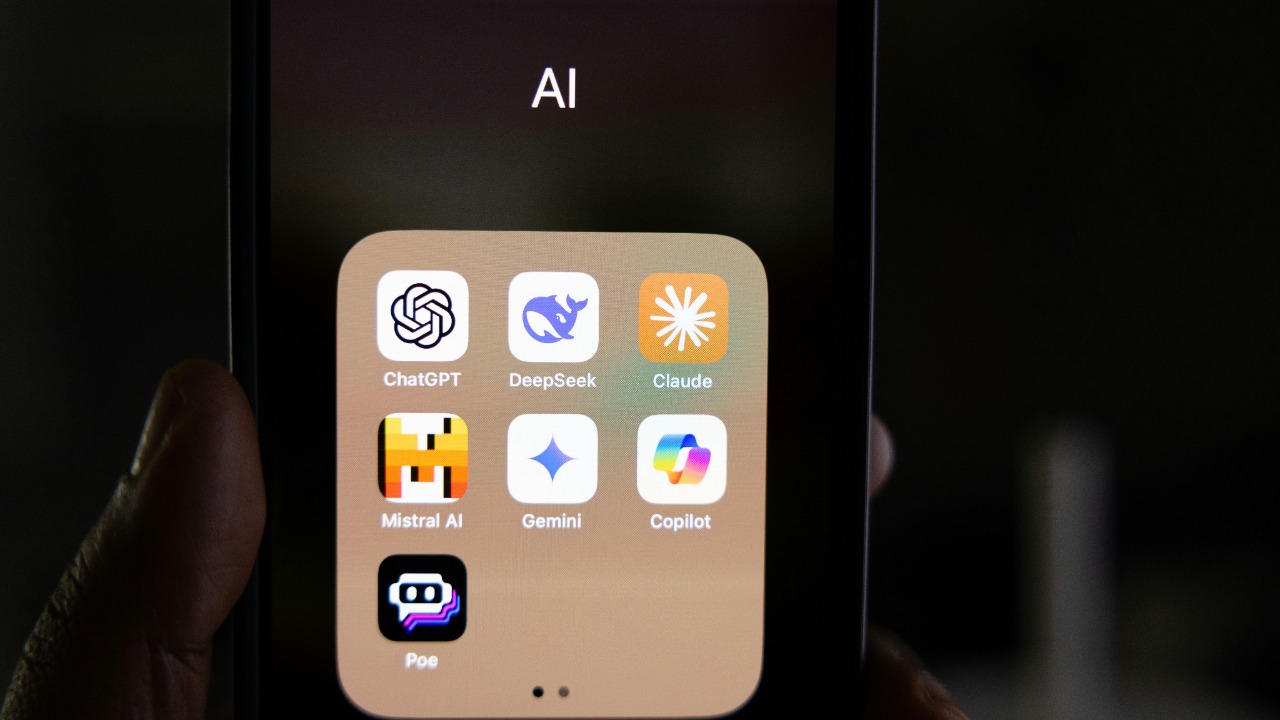

The contest between Washington and Beijing over artificial intelligence is no longer just about who trains the biggest model. By 2026, the real race is over how deeply each side can wire AI into factories, power grids, weapons systems, and global digital infrastructure. What looks like a sprint for technical benchmarks is hardening into a structural competition over economic growth, energy, and political influence.
Where this rivalry is headed over the next few years will be shaped less by headline-grabbing chatbots and more by chips, electricity, and standards. The United States is leaning on its dominance in advanced semiconductors and frontier models, while China is betting on scale, energy, and open-source tools to spread its ecosystem abroad. I see the trajectory pointing toward a long, uneven struggle that will define how both economies grow and how the rest of the world plugs into their AI stacks.
From model benchmarks to physical-world power
Both governments are shifting from treating AI as a software curiosity to treating it as core infrastructure. Analysts describe how Jan and other experts see “integrating AI into the physical world” as the heart of current policy thinking, with the expectation that automation will tackle everything from logistics bottlenecks to demographic decline. That means the race is increasingly about who can embed algorithms into ports, industrial robots, autonomous vehicles, and military systems faster and more safely, not just who can release the next viral app.
On the Chinese side, Jan and other observers highlight how Beijing is steering AI into manufacturing upgrades and smart-city projects, while Washington is channeling investment into cloud infrastructure, defense applications, and critical supply chains. A detailed look at where the US-China AI race is heading notes that integrating AI into real-world systems is now central to both sides’ strategies, a shift that raises the stakes for safety, resilience, and escalation risks.
Economic growth, the Great Divergence, and US advantages
In Washington, AI is being framed explicitly as a growth engine. Analysts note that The United States’ economic growth aspirations are tied to frontier AI’s promise of transformative productivity, with policymakers betting that large-scale deployment across services, manufacturing, and government can lift output even as the labor force ages. To American stakeholders, the key question is whether the country can maintain its edge in the most advanced models and hardware while managing social disruption and regulatory risk.
The White House has started to connect this AI push to a broader historical narrative about inequality between countries. A recent analysis explains that for centuries most of the world’s economies grew at a similarly slow rate, but that a “Great Divergence” occurred with the Indust revolution, when a handful of states pulled far ahead in GDP and the labor force. Officials now warn that advanced AI could trigger a new phase of divergence, with early adopters racing away from laggards, and they explicitly frame artificial intelligence and the Great Divergence as intertwined challenges for global development, as laid out in a Great Divergence research note.
Chips, energy, and the infrastructure gap
Under the hood of this rivalry sits a basic question: who can feed the compute beast. As artificial intelligence drives a surge in energy demand in both the United States and China, each country faces hard choices about power generation, transmission infrastructure, and supply chains. Analysts of the United States and China stress that data centers and AI training clusters are already straining grids, forcing decisions about whether to lean on fossil fuels, nuclear, or renewables to keep the race going, as detailed in a study of how the United States and will power the AI race.
On chips, the balance looks very different. While the United States has the upper hand in access to cutting-edge AI semiconductors, China has a significant advantage in energy capacity from coal, wind, solar, and hydropower. One assessment notes that the United States controls 90 percent of AI chip markets and produces far more advanced AI models than China, yet warns that Beijing is using its energy base and industrial policy to close the gap over time. The same analysis underscores that The United States must treat its 90 percent share as a strategic asset, while another study stresses that While the United States dominates semiconductors, China leans on its vast coal, wind, solar, and hydropower resources to sustain compute growth.
China’s open-source gambit and global AI stack
Beijing is not only racing to catch up on proprietary frontier models, it is also trying to shape the global AI stack through open-source tools. Analysts expect China to double down in 2026 on an open-source AI strategy designed to influence the world’s AI infrastructure, especially in developing economies that are price sensitive and wary of Western export controls. The logic is straightforward: if Chinese frameworks, model weights, and deployment platforms become the default in emerging markets, Beijing gains long-term leverage over standards, data flows, and security dependencies, as highlighted in assessments that in 2026 expect China to use open-source offerings to shape the AI stack.
At the same time, And China is set to continue positioning itself as a champion of what it set out in its 2025 AI plan on creating a diverse, open, and globally accessible ecosystem, a narrative that appeals to governments frustrated by Western restrictions. Reporting on where the US-China AI race is heading notes that And China is actively marketing itself as a partner for countries that want AI infrastructure without the political strings that sometimes accompany Western funding, a strategy that could lock in long-term dependencies if its tools become embedded in local telecoms, cloud platforms, and government systems, as described in coverage that emphasizes how And China is branding itself as a champion of a diverse, open AI ecosystem.
US strategy, tech-stack diplomacy, and the rest of the world
Washington is responding with its own long-game strategy that mixes domestic investment with tech diplomacy. A major policy blueprint frames AI as part of a “new frontier of scientific discovery” and calls for harnessing the full power of American innovation through research funding, workforce programs, and safeguards. The document, released in Jul, opens with the line “Today, a new frontier of scientific discovery lies before us, defined by transformative technologies such as artificial intelligence,” and lays out America’s AI Action Plan as a roadmap for keeping US capabilities ahead while managing risks, as spelled out in the Today statement that anchors the plan.
Beyond domestic policy, strategists argue that U.S. and Chinese dominance over the most advanced layers of the tech stack appear to forge a bipolar contest between the world’s biggest economies, often framed as “democratic vs. authoritarian.” This tech-stack diplomacy lens suggests that what looks like a bilateral race is really a struggle to set rules and architectures for everyone else, from cloud services to undersea cables. At the same time, economic analysts warn that The United States’ economic growth bets on frontier AI are being hedged by concerns that hardware bottlenecks and regulatory fragmentation could slow deployment, as explored in a review of hedged bets on the US-China AI race and in a separate analysis of how U.S. and Chinese dominance over the tech stack shapes global politics.
More from Morning Overview