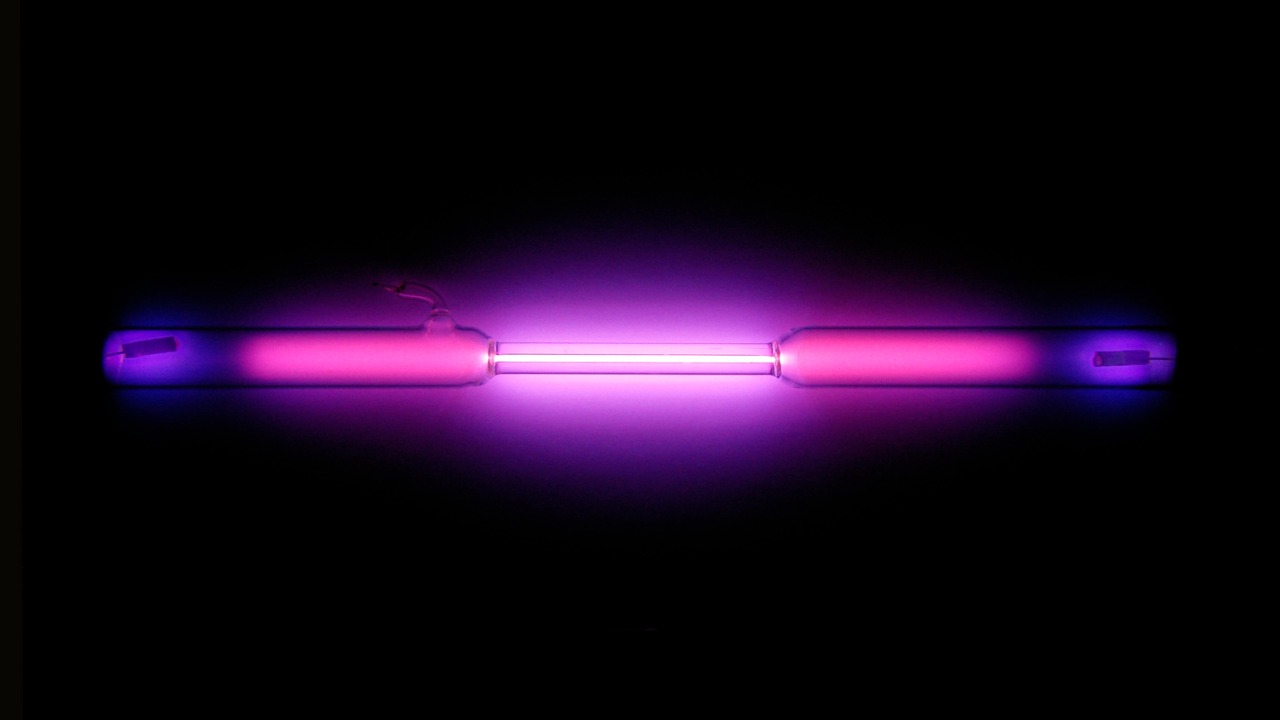

Deep beneath South Dakota, a former gold mine is being reborn as one of the coldest and most ambitious science facilities on Earth. The United States is turning this historic site into a kind of mega refrigerator, holding roughly five Olympic pools’ worth of liquid argon at about -303°F to study ghostlike particles called neutrinos. The scale, 15,000 tons of ultra pure cryogenic liquid in a cavern a mile underground, is as much an engineering story as it is a physics one.
At the heart of the project is The Deep Underground Neutrino Experiment, or DUNE, which will use this frozen argon to capture the faint traces left when neutrinos interact with matter. The experiment is part of a broader Long Baseline Neutrino Facility, or LBNF, that stretches from a particle accelerator complex near Chicago to the converted mine in South Dakota, turning a relic of the gold rush into a precision instrument for twenty first century physics.
The gold mine that became a neutrino lab
The underground “fridge” sits inside a converted gold mine in South Dakota that now hosts a major research campus. The former industrial tunnels and caverns have been reworked into large experimental halls where researchers are building massive, super cooled containers for liquid argon that will eventually anchor the far detector for DUNE. The site’s depth, roughly a mile underground, shields the experiment from cosmic rays and other background noise that would swamp the delicate neutrino signals at the surface, turning the old mine into a quiet, cold listening post for the universe’s most elusive particles, as described in project updates from underground construction.
Deep inside this converted gold mine, researchers are tackling what they describe as a colossal engineering challenge, building the cryogenic infrastructure that will keep tens of thousands of tons of argon at a stable temperature near 303°F below zero. The facility is part of a broader complex that includes the Long Baseline Neutrino Facility and associated underground halls, and it sits alongside other installations such as the Sanford Underground Research Facility and related infrastructure described in Deep South Dakota.
Why liquid argon, and why -303°F?
The choice of argon is not arbitrary. When cooled into a liquid, this common noble gas becomes a remarkably sensitive detector medium, lighting up and releasing electrons when a neutrino finally collides with one of its atoms. To work properly, the argon must be kept extremely cold and extremely pure, which is why the United States is investing in a system that can hold 15,000 tons of liquid at about 303°F below zero, a figure that appears repeatedly in technical descriptions of the project and in coverage of how Scientists in the are building the system.
Liquid argon must be kept at this cryogenic temperature to remain in its liquid state, and the detectors for The Deep Underground Neutrino Experi are designed around that requirement. Reporting on the project notes that the total volume of argon is comparable to about five Olympic pools, a comparison that helps convey the sheer scale of the cryostat tanks and the refrigeration plant needed to keep them stable, as highlighted in technical explainers on the Olympic scale of the installation.
Inside the multi layered “mega fridge”
Keeping that much argon cold and contained is not as simple as building a giant metal tank. Engineers have adopted a multi layered approach that combines a robust outer structure with inner membranes, insulation, and sophisticated monitoring to manage the thousands of tons of cryogenic liquid. Project descriptions emphasize that the containers must withstand both the mechanical stresses of the liquid’s weight and the thermal stresses of operating at 303°F below zero, which is why the design relies on nested barriers and redundant systems described in detail in discussions of the multi layered approach.
The refrigeration and circulation systems are equally intricate. To keep the argon pure enough for neutrino detection, it must be continuously filtered and its flow carefully modeled so that no warm pockets or dead zones develop inside the tanks. Researchers at institutions such as South Dakota State University have been using advanced simulations to understand how the liquid will move and stratify inside the detector volumes, work that is described in detail in studies of how engineers are engineering flow inside the tanks.
The Long Baseline Neutrino Facility and DUNE
The cryogenic caverns in South Dakota are only one half of the story. The Long Baseline Neutrino Facility and the Deep Underground Neutrino Experiment, often referred to together as LBNF/DUNE, link the underground argon tanks to a powerful neutrino beam produced at the Fermi National Accelerator Laboratory near Chicago. Official planning documents describe how LBNF will generate and send a beam of neutrinos through the Earth to the far detector, while DUNE will use the liquid argon to record the resulting interactions with a very high level of precision, a relationship spelled out in technical summaries of Long Baseline Neutrino.
Make no mistake, the LBNF/DUNE is a colossal undertaking. The DUNE collaboration comprises more than 1,400 scientists and engineers from around the world, a figure that appears in collaboration overviews that describe how The DUNE team is organized and how responsibilities are shared across institutions, as outlined in project descriptions that begin with the phrase Make no mistake.
From design studies to underground reality
Turning design studies into hardware a mile underground has required a carefully staged construction program. Engineers first had to prove that large components could be transported safely down the mine shaft and assembled in the cramped underground environment, a process that included test deliveries of long steel beams and other structural elements to the future detector halls, as described in reports on the steel beam test that validated the logistics.
At the same time, scientists in the US have been refining the detector concepts and cryogenic systems through a combination of simulations and smaller scale prototypes. Public facing summaries describe how Scientists are embarking on a monumental undertaking to construct vast, super cooled underground containers for neutrino research, emphasizing both the technical risk and the potential scientific payoff, as highlighted in outreach materials that introduce how Scientists build these underground containers.
More from Morning Overview