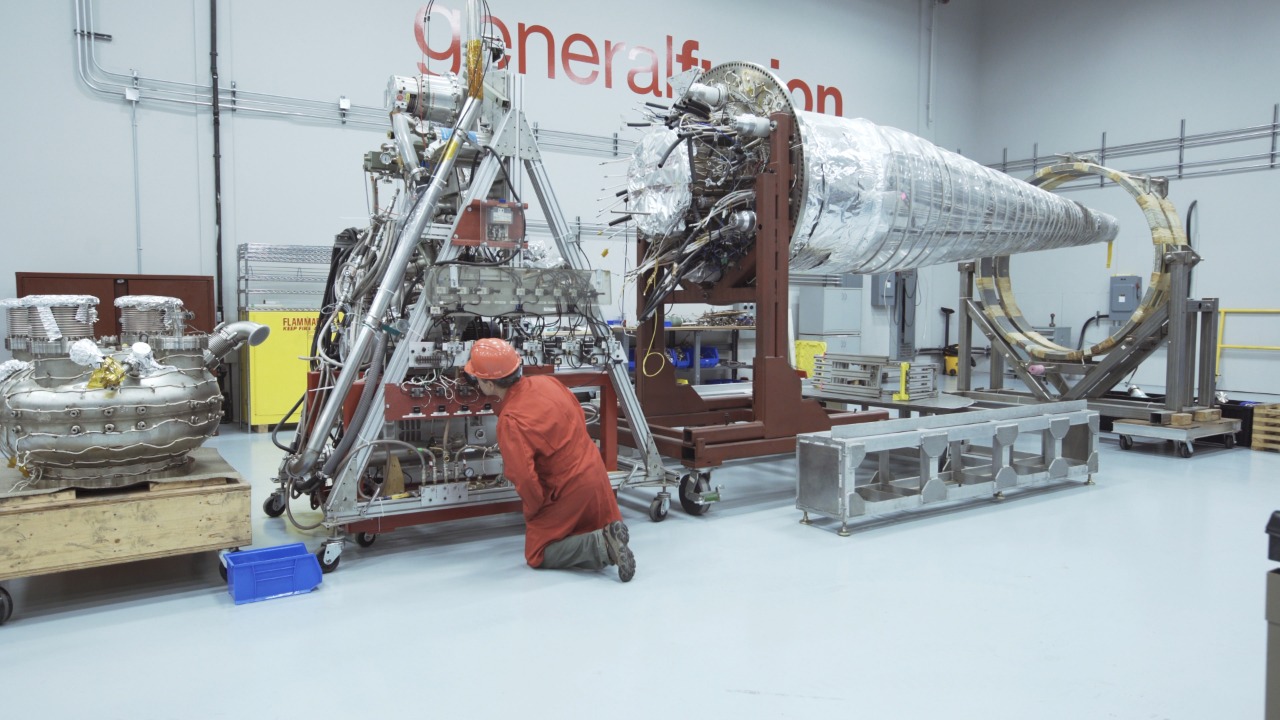

The United States is moving to build a dedicated facility for a fusion “breeding blanket,” the specialized system that manufactures tritium fuel inside a working reactor. By teaming the Department of Energy with Japan’s Kyoto Fusioneering, Washington is trying to close one of fusion power’s most stubborn technology gaps and secure a domestic supply chain for the fuel that keeps reactors running.
The project will anchor a new test platform in Tennessee and plug into Kyoto Fusioneering’s global UNITY network, positioning the US not just as a customer for fusion hardware but as a co-developer of the infrastructure that commercial plants will need. It is a bet that mastering blankets and fuel cycles now will matter as much as chasing record-breaking plasma shots later.
The strategic deal behind the new blanket facility
At the heart of the move is a formal partnership between the U.S. Department of Energy and Kyoto Fusioneering that is explicitly framed as a way to “Build Critical Fusion Infrastructure and Accelera” deployment of commercial reactors. In official language, the Department of Energy and Kyoto Fusioneering Launch Strategic Partnership is described as a vehicle to Build Critical Fusion Infrastructure and Accelera the shift from experimental machines to power plants, a scope that goes well beyond a single test rig and into long term industrial capability. That framing matters, because it signals that the US is treating blankets, tritium handling and thermal cycles as national assets rather than niche research topics.
The agreement is being rolled out as a joint US‑Japan initiative, with announcements coordinated from Washington and Tokyo to underline that the Department of Energy and Kyoto Fusioneering Launch Strategic Partnership is rooted in allied technology sharing rather than a simple vendor contract. In the background is a broader push by the DOE to work with trusted partners on advanced nuclear platforms, a point reinforced in statements that this partnership reflects DOE’s commitment to collaborate with allies and the private sector on fusion infrastructure, as highlighted in official materials. For a technology that will likely be deployed globally, locking in this kind of cross-border framework early is as much a geopolitical move as a scientific one.
Oak Ridge, TBDP and the UNITY network
The operational core of the collaboration sits at Oak Ridge National Laboratory, where At the center of the partnership is a new public private collaboration between Kyoto Fusioneering and Oak Ridge National Laborator that will host the US breeding blanket test facility. Through the partnership, ORNL and Kyoto Fusioneering will close critical gaps identified in the DOE Office of Science’s Fusion Science & Technology program and the Fusion Nuclear Science mission, using Oak Ridge’s existing expertise in tritium, high heat flux materials and nuclear systems to turn paper designs into hardware that can be tested. The facility is also tied directly into the DOE Tritium Blanket Development Platform, or TBDP, which is being positioned as the national hub for blanket and fuel cycle development.
On the Japanese side, the project is being woven into Kyoto Fusioneering’s Unique Integrated Testing Facility, a global network branded as UNITY that already includes the UNITY‑1 blanket and thermal cycle test facility in Kyoto, Japan. The new US site will be the newest expansion of Kyoto Fusioneering’s global UNITY network, giving American researchers access to a coordinated suite of experiments that span non‑nuclear thermal testing in Kyoto and prototypic fusion nuclear conditions in Tennessee, as described in nuclear news. By uniting the DOE’s Tritium Blanket Development Platform and Kyoto Fusioneering’s Unique Integrated Testing Facility, the partners are trying to create a single, end‑to‑end environment where blanket concepts can be designed, built, tested and iterated without leaving the network, a structure that is spelled out in detail in the section that notes how this partnership unites the DOE’s Tritium Blanket Development Platform and KF’s global Unique Integrated Testing Facility in project documents.
Why tritium blankets are fusion’s make‑or‑break hardware
For all the attention on plasma confinement, the physics of a power plant is ultimately constrained by fuel, and that is where the breeding blanket comes in. In a deuterium‑tritium reactor, the blanket surrounds the plasma chamber, absorbs high energy neutrons and uses them to convert lithium into tritium, which is then extracted and fed back into the machine. Without a working blanket, a reactor would burn through its initial tritium inventory and stall, which is why the Department of Energy and Kyoto Fusioneering are emphasizing that the new facility will focus on the systems that keep fusion reactions running, as highlighted in the description that the U.S. Department of Energy and Kyoto Fusioneering have announced a new strategic partnership focused on building the infrastructure to keep fusion reactions running in partnership coverage.
The US‑Japan facility is explicitly framed as a “fusion fuel breeding blanket” testbed, a phrase that underscores its role in producing tritium rather than just handling heat. Reporting on the project notes that the US to build critical fusion fuel breeding blanket facility as DOE, Japan’s firm team up, and that the US Department of Energy (DOE) and Kyoto Fusioneering from Japan are aligning to ensure that any future commercial plant can produce its own fuel rather than relying on scarce external supplies, a point made clear in technical summaries. In that context, the breeding blanket is not a peripheral component, it is the linchpin that determines whether fusion can scale beyond a handful of demonstration reactors.
Closing the fuel cycle gap with UNITY and TBDP
What makes this initiative stand out is its focus on the full fuel cycle rather than isolated experiments. Through the, ORNL and Kyoto Fusioneering are setting up a program that runs from materials testing and coolant chemistry to tritium extraction and safety analysis, all under the umbrella of the DOE Office of Science and its Fusion Science priorities, as described in the section that explains how Through the partnership, ORNL and KF will close critical gaps identified in the DOE Office of Science’s Fusion Science & Technology program and the Fusion Nuclear Science mission in official statements. By tying this work into the Tritium Blanket Development Platform, the DOE is effectively designating the Tennessee site as the national proving ground for how tritium will be bred, recovered and recycled in future plants.
On the industry side, Kyoto Fusioneering is folding the project into its UNITY network, which already includes UNITY‑1 in Kyoto and is now expanding to the US as part of a global “UNITY” network that is described as a Unique Integrated Testing Facility in company briefings. The new facility marks the newest expansion of Kyoto Fusioneering’s global UNITY network, a fact highlighted in coverage that notes how the facility marks the newest expansion of Kyoto Fusioneering’s global “UNITY” network and that any viable fusion power plant must produce its own fuel, with the report also citing the figure 33 and naming Jan, Kyoto Fusioneering, UNITY, Tripathi and Energy Jan as key reference points in technical analysis. By aligning UNITY with TBDP, the partners are trying to ensure that lessons from one site can be rapidly translated into design changes at the other, tightening the loop between research and deployable hardware.
Geopolitics, industrial policy and the race to commercial fusion
There is a geopolitical layer to this story that goes beyond engineering diagrams. The partnership is being presented as a joint effort by Jan, DOE, Japan and The US Department of Energy to build a critical piece of fusion infrastructure on US soil while leveraging Japanese industrial know‑how, a framing that appears in descriptions of how US to build critical fusion fuel breeding blanket facility as DOE, Japan’s firm team up in project coverage. In an era where energy technology is increasingly tied to national security, having a domestic site that can validate blanket designs and tritium systems reduces the risk that future US fusion plants will depend on foreign testing pipelines or fuel supply chains.
More from Morning Overview