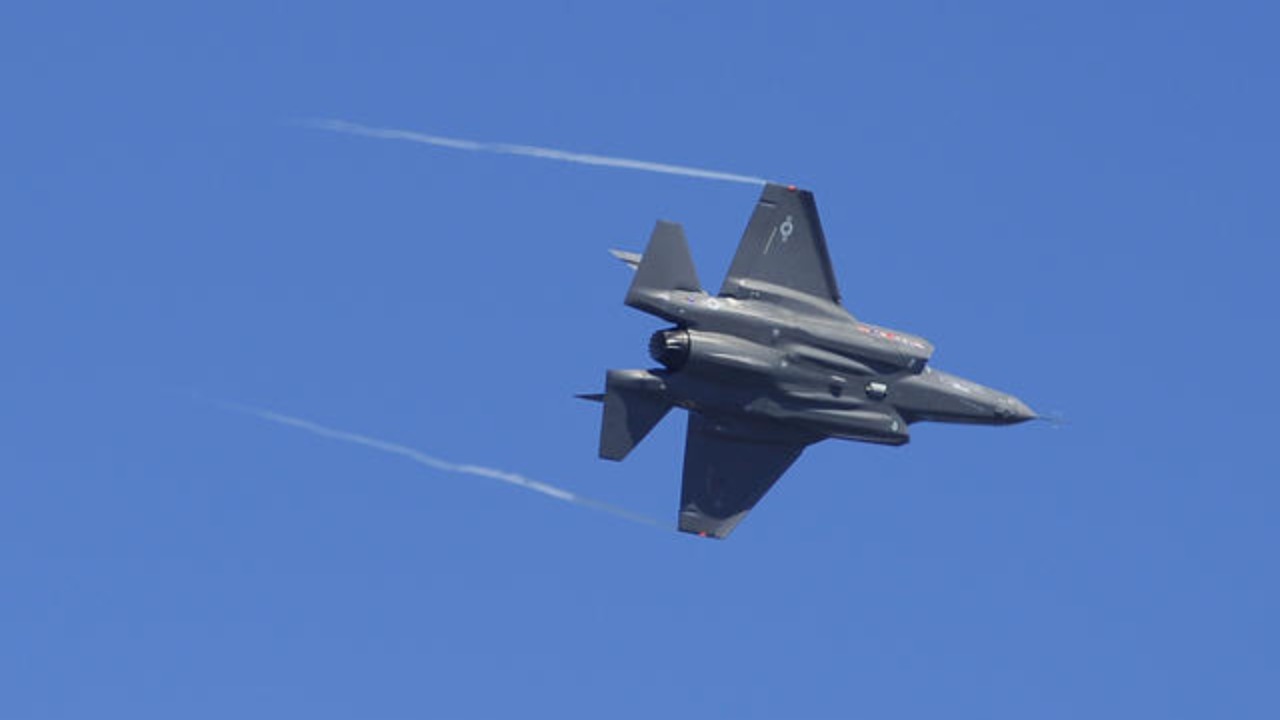

The United States has delivered an unusually blunt warning to its closest neighbour, telling Ottawa that if the planned purchase of new F-35 fighter jets falls apart, Washington is prepared to send its own warplanes into Canadian airspace to plug the gap. The message, delivered by Ambassador Pete Hoekstra, turns a technical procurement review into a test of how far Canada can push its biggest ally on defence burden sharing. It also raises a deeper question about who ultimately controls the skies over North America when one partner hesitates to modernise.
At the heart of the dispute is Canada’s commitment to buy a fleet of F-35s to replace its aging fighters and keep pace with evolving threats to the continent. Ottawa’s decision to “review” the terms of that deal has collided with Washington’s insistence that the North American Aerospace Defense Command, or NORAD, only works if both sides field compatible, high-end aircraft. The result is a standoff in which a long-standing binational command is suddenly being leveraged to force a procurement choice.
The ambassador’s warning and the NORAD leverage play
Ambassador Pete Hoekstra has framed the issue in stark operational terms, arguing that if Canada scales back or walks away from the F-35 purchase, the United States will have to send its own fighter jets into Canadian airspace to intercept threats before they reach American cities. He has tied that warning directly to the North American Aerospace Defense Command, telling Canadian broadcasters that The United States could alter its decades-old NORAD arrangements if Ottawa does not follow through. In his telling, the choice is binary: either Canada flies the same advanced jets as its ally, or it accepts a reduced role in defending its own airspace.
Hoekstra’s comments did not come out of nowhere. They followed months of signals from Ottawa that the government was “reviewing” the fighter jet deal, a process that has unsettled Washington and defence industry insiders who expected the contract to move ahead. One report notes that Hoekstra sharpened his language after Canadian officials publicly acknowledged that review, effectively using the NORAD framework as leverage. By tying the warning to a binational command that has long been treated as sacrosanct, he has raised the political cost for any Canadian government that might be tempted to walk away.
Canada’s F-35 promise and the “We Want More” bargaining stance
Canada originally agreed in 2022 to buy 88 F-35A fighter jets, a fleet size that was meant to replace its aging CF-18s and give it a credible role in continental defence and NATO operations. Funding was initially committed for 16 aircraft, with the rest to follow as the program ramped up, and officials presented the plan as a long overdue modernization of the Royal Canadian Air Force. Reporting on the deal notes that Canada tied the purchase to a broader update of a Cold War era defence arrangement, signalling that the F-35s were not just another procurement but a pillar of its NORAD commitments.
More recently, however, Ottawa has shifted from enthusiastic buyer to hard-nosed negotiator. A detailed Analysis of the NORAD debate notes that Canadian officials have been exploring ways to extract more industrial benefits and technology access from the F-35 program, rather than simply accepting the original terms. One account, headlined with the phrase We Want More, describes how Canada Is Now Playing Hard Ball on the Stealth Fighter Deal, with a Synopsis highlighting the role of the Canadian Industry Minister in pushing for better terms. That tougher stance has pleased domestic advocates of industrial policy but has clearly rattled Washington, which sees delay and uncertainty where Ottawa sees negotiation.
Why the number “88” and the figure “35” matter so much
Behind the diplomatic sparring are two numbers that keep surfacing in the debate: 88 and 35. The planned purchase of 88 F-35s is not arbitrary, it is the figure Canadian planners say they need to maintain a continuous presence in the Arctic, meet NATO obligations, and still have aircraft available for training and maintenance. Hoekstra has zeroed in on that number, warning that if Ottawa does not buy all 88 jets, the United States will have to fill the gap with its own aircraft. Earlier coverage of the procurement review similarly stressed that Washington had grown impatient as Canada of weighed alternatives and considered trimming the order.
The figure 35, meanwhile, has become shorthand for the entire program and its political baggage. The F-35 is a joint strike fighter with a long history of cost overruns and technical controversy, but it is also the aircraft that underpins much of the United States’ future air combat planning. Several of the reports on the current dispute explicitly cite the number 35 when describing the jet, and another account of the procurement fight repeats both 35 and 88 as the key metrics at stake. For Washington, getting Canada to buy into the F-35 program is about more than one ally’s fleet, it is about locking in a common platform across the alliance.
NORAD’s future and the prospect of U.S. jets over Canadian cities
Hoekstra has been explicit that the NORAD pact would have to change if Canada pulls back from its F-35 order, suggesting that the binational command cannot function as intended if one partner flies older or incompatible aircraft. One detailed examination of his remarks notes that NORAD would be reshaped in a way that prioritises direct U.S. control over intercepting threats approaching the American homeland, rather than strengthening the mission as a true partnership. In practical terms, that could mean more U.S. aircraft operating routinely in Canadian skies, with Ottawa relegated to a supporting role.
The ambassador’s warning has also been framed as part of a broader pattern of American pressure on Canada to align more closely with U.S. security and economic priorities. One bulletin on the dispute, written by Ariana Baio Monday, highlights how Ambassador Pete Hoekstra has linked the fighter jet issue to the overall health of US-Canada security cooperation. In that framing, the question is not just whether U.S. jets might patrol Canadian airspace, but whether Canada is seen in Washington as a fully reliable partner at a time when threats from long-range missiles and advanced aircraft are growing.
Domestic politics, Trump’s posture, and the risk of escalation
Domestic politics on both sides of the border are shaping how hard each government is willing to push. In Ottawa, Canadian Prime Minister Mark Carney is already juggling trade tensions with Washington, including tariff threats from President Donald Trump that he has publicly dismissed as bluster. In one account of those trade talks, Carney is quoted in TORONTO by By ROB GILLIES of the Associated Press as saying that some of Trump’s threats would only hit “a few sectors of our economy.” That willingness to call out the White House may make it harder for Carney to be seen at home as caving on a high-profile defence deal, even if the security arguments are strong.
In Washington, Trump has made clear that he expects allies to spend more on defence and to buy American-made equipment when possible. Hoekstra’s tough language on the F-35 fits neatly into that agenda, signalling that Canada cannot expect a free ride on continental defence while also resisting U.S. industrial interests. One detailed bulletin by Ariana Baio notes that the ambassador’s warning about sending fighter jets into Canadian airspace if the F-35 deal collapses is part of a broader pattern of American impatience with Canadian hesitation. As the rhetoric hardens, the risk is that a dispute over 35 and 88 jets spirals into a wider test of the US-Canada relationship, with NORAD and the shared defence of North America caught in the middle.
More from Morning Overview