
The Trump administration is racing to expand nuclear power, and the country’s chief safety regulator is being pushed to keep up. President Donald Trump has framed nuclear energy as a pillar of U.S. industrial strength and climate strategy, and his team is now reshaping how the Nuclear Regulatory Commission evaluates, licenses, and oversees reactors. The result is a high‑stakes experiment in speeding up atomic power while testing how far the United States is willing to bend long‑standing safeguards.
The pivot is not just about building more large plants. It is about clearing a path for a new generation of compact designs, rewriting environmental and safety rules, and aligning the nuclear bureaucracy with a White House that wants steel in the ground before the country’s next big political milestones. I see a regulatory system that was built for caution being retooled, in real time, for acceleration.
The White House orders a reset of nuclear regulation
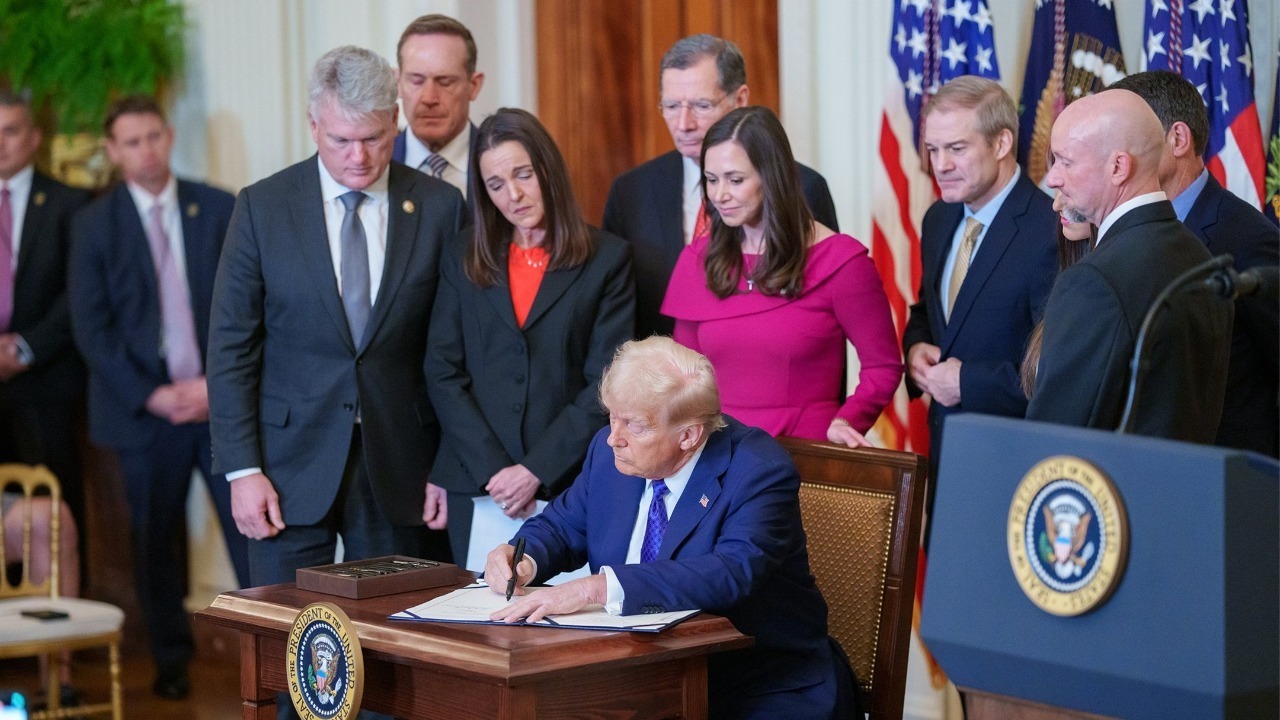
The clearest signal of this shift came when the President signed an order titled The Ordering the Reform of the Nuclear Regulatory Commission, a directive that tells the independent regulator to overhaul how it does its job. The document, posted on the official site for presidential actions, instructs the commission to streamline licensing, modernize its internal processes, and prioritize approvals for new reactor designs that can support the administration’s broader energy agenda, effectively tying the agency’s work to a political mandate for rapid deployment of nuclear projects through regulatory reform.
Supporters inside the administration argue that the Nuclear Regulatory Commission, or NRC, has been too slow and too conservative to handle the wave of applications that the President wants to see. A White House fact sheet, labeled White House Fact Sheet: President Donald J. Trump Directs Reform of the Nuclear Regulatory Commission, frames the move as MODERNIZING NUCLEAR REGULATION and insists that the changes will still respect the agency’s statutory mission even as they speed up licensing for both new builds and the operation of an existing reactor, a message reinforced in the detailed White House Fact. Legal analysts note that the Executive Order, described in one analysis as specifically mandating the Nuclear Regulatory Commission to reorganize and substantively revise its regulations and guidance, is unusually prescriptive for an independent body, underscoring how aggressively the President is trying to align the NRC with his nuclear build‑out through the Executive Order.
Executive Orders and a whole‑of‑government nuclear push
The reform of the NRC is only one piece of a larger campaign built around a suite of Executive Orders that the administration says will usher in a new era of nuclear energy and investment. On May 23, 2025, President Trump signed four Executive Orders that, according to a detailed fact sheet, are intended to strengthen U.S. nuclear energy leadership, expand exports, and clear away what the White House sees as unnecessary barriers to building and operating reactors, a package that policy advocates have summarized in a document titled Fact Sheet: President Trump Nuclear Energy EOs that lays out how the Executive Orders touch everything from financing to fuel supply through Executive Orders.
Energy officials have followed up with their own messaging, including a set of 9 Key Takeaways from President Trump’s Executive Orders on Nuclear Energy that describes how the directives instruct agencies to prioritize advanced designs, support demonstration projects, and coordinate with companies such as Holtec International, which is developing new reactor concepts under the umbrella of Nuclear Energy. A separate legal analysis of the orders notes that the President has also called on the Department of Energy and the Department of Defense to make excess uranium available for commercial use, including under the Defense Produc authorities, a move that could reshape fuel markets and is described in detail in a briefing on how the Executive Orders aim at unlocking America’s nuclear energy sector through coordinated action by DOE and DOD under the Executive Orders.
Advanced reactors move to the front of the line
At the heart of the administration’s nuclear vision is a bet on advanced small modular reactors, or SMRs, which promise factory‑built units that can be shipped and assembled on site rather than constructed piece by piece. The Department of Energy’s Office of Nuclear Energy describes these advanced small modular reactors as designs that can be scaled, paired with renewables, and potentially deployed in places where traditional gigawatt‑scale plants would never fit, a vision laid out in detail on the agency’s page devoted to advanced small modular.
To support that push, the broader Department of Energy has been repositioning itself as a partner to industry, using its national laboratories, loan programs, and demonstration sites to accelerate projects that align with the President’s priorities, a role spelled out on the main portal for the Department of Energy. The nuclear regulator is being pulled into that orbit as well, with the NRC’s own website now highlighting its work on new licensing frameworks, risk‑informed reviews, and technology‑inclusive guidance for non‑traditional designs, signaling that the independent commission is adapting its processes to handle the advanced reactor wave described on NRC.
Environmental review and safety rules are quietly rewritten
Speeding up nuclear projects has also meant rethinking how the federal government evaluates their environmental and safety impacts, and here the changes are even more controversial. Earlier this week, The Department of Energy announced that it is establishing a categorical exclusion under the National Environmental Policy Act for certain advanced reactors, a move that allows qualifying projects to skip full environmental impact statements if they meet specific parameters, a shift described in a report on how DOE is carving out a NEPA exclusion for advanced reactors through a new categorical exclusion.
Separately, an investigation into internal directives found that the Trump administration has secretly rewritten nuclear safety rules over the past year, with Jan reporting that the sweeping changes were made to accelerate development of a new generation of nuclear reactor designs and that they slashed hundreds of pages of requirements from the original documents, a process described in detail in a story on how They quietly removed layers of safety review from key guidance through secretly rewritten. NPR obtained copies of over a dozen of the new orders, none of which is publicly available, and reported that the new orders strip out requirements for detailed analysis of how reactors might fail and what that would mean for surrounding communities, replacing them with more flexible, performance‑based language, a shift described in a separate account of how the new orders change the rules for building and operating a nuclear powerplant through NPR.
Industry momentum collides with safety and environmental fears
The regulatory pivot is already reshaping the market. A recent industry update notes that the nuclear power sector is experiencing renewed momentum in 2026, with major public and private announcements tied directly to federal actions, and highlights that the Trump administration’s support for advanced reactors has encouraged companies to move ahead with demonstration projects following a public comment period, a trend described in a legal briefing on how the industry is kicking off 2026 with new deals under the Key Takeaways. Financial advisers are pitching this as a once‑in‑a‑generation opening, with one investment note titled Trump’s Nuclear Pivot: A New Era for Energy and Investment arguing that, in a move to reshape America’s energy landscape, President Donald Trum has created new investment opportunities across reactor vendors, fuel suppliers, and grid infrastructure, a case laid out for clients in a piece on Trump, Nuclear Pivot, New Era for Energy and Investment in America.
More from Morning Overview