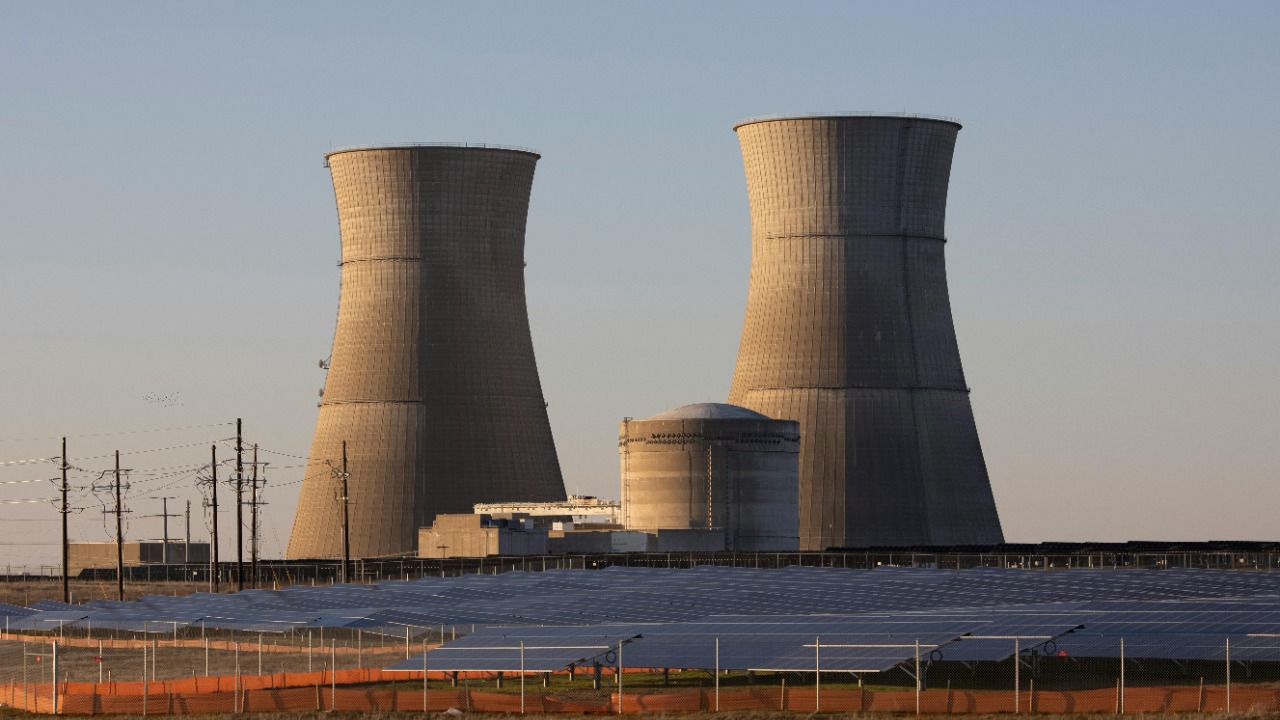

The US Nuclear Regulatory Commission is moving to streamline oversight of reactors in ways that closely track President Donald Trump’s push to accelerate nuclear power. At the same time, the administration has quietly rewritten core safety and environmental rules, reshaping how new plants are approved and how existing ones are policed. The result is a rapid, coordinated shift in nuclear governance that could boost investment but also narrow the margin for error around some of the country’s most hazardous infrastructure.
These changes are not happening in isolation. They sit on top of a broader Trump agenda that aims to quadruple nuclear generation, fast‑track advanced designs and pare back what the White House sees as unnecessary regulatory drag. The question now is whether the NRC’s evolving rulebook will preserve the safety and transparency that communities have long expected from the nuclear sector.
Trump’s executive orders set the pace for nuclear expansion
When President Donald Trump signed four executive orders on nuclear energy in late spring 2025, he effectively set a countdown clock for the entire sector. One order called for a quadrupling of US nuclear output and laid out requirements for deploying a new generation of reactors by July 4, 2026, turning that date into a political and industrial milestone that developers and regulators could not ignore, according to reactor deployment guidance. In May, President Trump framed these orders as a way to reinvigorate the nuclear industrial base and restore US leadership in advanced technologies, a message that resonated with utilities looking for long‑term, carbon‑free baseload power and with vendors eager for federal backing.
The orders did more than set targets, they rewired how the federal bureaucracy itself would work. Specifically, one directive told the NRC to coordinate with the Department of Government Efficiency, known as DOGE, to reorganize the agency and align its internal processes with the new regulations that would govern advanced reactors, as described in that order. Another created a Nuclear Reactor Pilot Program that directs the Secretary of Energy to oversee the construction and operation of at least three advanced units, turning policy into concrete projects through a federally backed build‑out, according to the pilot program mandate. In May 2025, President Trump’s team cast these moves as part of “Executive Orders Reshape Nuclear Energy,” arguing that, in May, the administration had delivered “8 Big Wins for Nuclear in the Trump Administration’s First Year” and citing “202” as a key internal metric for tracking progress, as reflected in the Department of Energy’s own nuclear wins summary.
NRC reorganization and inspection cuts align with White House goals
The NRC is now reshaping itself to deliver on those executive orders. In early February, the agency announced a major internal overhaul that it said was designed to support efficiency and innovation, explicitly citing Executive Order 14300, titled “Ordering Reform of the Nuclear Regulatory Commission,” and EO 14210, which begins “Imp” in its formal caption, as the legal backbone for the changes, according to the commission’s own reorganization notice. The restructuring consolidates offices, trims management layers and is intended to speed up licensing reviews for both conventional and advanced reactors, a shift that dovetails with the White House’s demand that the NRC become a more agile partner in nuclear expansion rather than a brake on it.
At the same time, the regulator is weighing concrete changes to how it oversees the country’s existing fleet. Recommendations made public Tuesday would reduce the time and scope of some annual inspections at the nation’s 90-plus reactors, a move framed as risk‑informed oversight that focuses resources on the most significant safety issues, according to a summary of those. Supporters argue that modern plants with strong performance records do not need the same level of routine scrutiny they did decades ago, while critics warn that cutting back on inspections at more than 90-plus units risks missing early warning signs of equipment degradation or security lapses.
Secret safety rewrites strip out detailed protections
Behind the public talk of efficiency, the Trump Administration has also been quietly rewriting the rules that define what “safe enough” means at nuclear sites. Jan reporting describes how the Trump Administration, the DOE and the nuclear industry have used this moment, during the 50th anniversary of the Nuclear Regulatory Commission, to push through changes that slash security standards and regulatory law, a shift that opponents say weakens the legal backbone of nuclear oversight, according to a detailed critique that begins, “Now here we are,” from Beyond Nuclear. Jan accounts of the internal directives say the Trump administration has secretly rewritten nuclear safety rules, with NPR obtaining copies of more than a dozen new orders that are not publicly available and that collectively remove hundreds of pages of requirements from the original documents, according to one summary of the.
Those orders go beyond trimming paperwork. The new directives strip out detailed instructions for firearms training, emergency drills, officer‑involved shooting procedures and limits on how many posts can be left unguarded at any given time, replacing them with broader language that gives plant operators more discretion, according to a separate Jan account of how new orders strip those specifics. Another Jan report notes that, gone are detailed requirements for firearms training, emergency drills and officer‑involved shooting procedures, with the administration arguing that the changes will reduce unnecessary burdens and costs, according to a description that begins with the word “Gone” in a public radio account. Jan reporting from another outlet underscores that these sweeping changes were made to accelerate development of a new generation of nuclear reactor designs and that they removed hundreds of pages in the original documents, according to a description of how the sweeping changes were carried out.
Environmental review carve‑outs for advanced reactors
In parallel with the safety rewrites, the Trump team has moved aggressively to narrow environmental review for new nuclear projects. Earlier this week, The Department of Energy announced that it is establishing a categorical exclusion under the National Environmental Policy Act for certain advanced reactors, meaning qualifying projects can skip full environmental impact statements if they fall within specified parameters, according to a Feb Nuclear News item. The Department of Energy Establishes National Environmental Policy Act Categorical Exclusion for Advanced Reactors: What It Is, Who It Is For and how it will be implemented through rulemaking that amends the Code of Federal Regulations, according to a Feb legal analysis that explains where this came and which projects might qualify.
The Trump administration has also moved to exempt new nuclear reactors from certain environmental reviews more broadly. Feb reporting describes how The Trump administration has secretly rewritten nuclear safety rules while The Department of Energy announced the change Monday in a notice that effectively shields some advanced designs from the most searching federal environmental scrutiny, limiting how communities can weigh in on potential projects in their area, according to an account of how Trump nuclear safety intersect with environmental review. A separate Feb piece notes that The Trump administration has secretly rewritten nuclear safety rules and that The Department of Energy announced the change Monday in a way that could reduce opportunities for local residents to challenge potential projects in their community, reinforcing concerns that the new categorical exclusion will tilt the process toward developers, as described in a follow‑up on environmental review impacts.
Advanced reactor push and the stakes for safety
All of these moves are framed as necessary to unlock a new wave of advanced nuclear technology. Jan analysis of Nuclear Reactor Development and Deployment notes that advanced nuclear reactor designs, such as small modular reactors and microreactors, have been singled out as key tools for meeting the administration’s deadline for new capacity, with developers racing to bring projects online that could meet the July 4, 2026 target, according to a discussion of Nuclear Reactor Development. Supporters argue that these designs promise enhanced passive safety features, smaller footprints and better compatibility with intermittent renewables, and that the old regulatory framework was never built with such technologies in mind.
More from Morning Overview