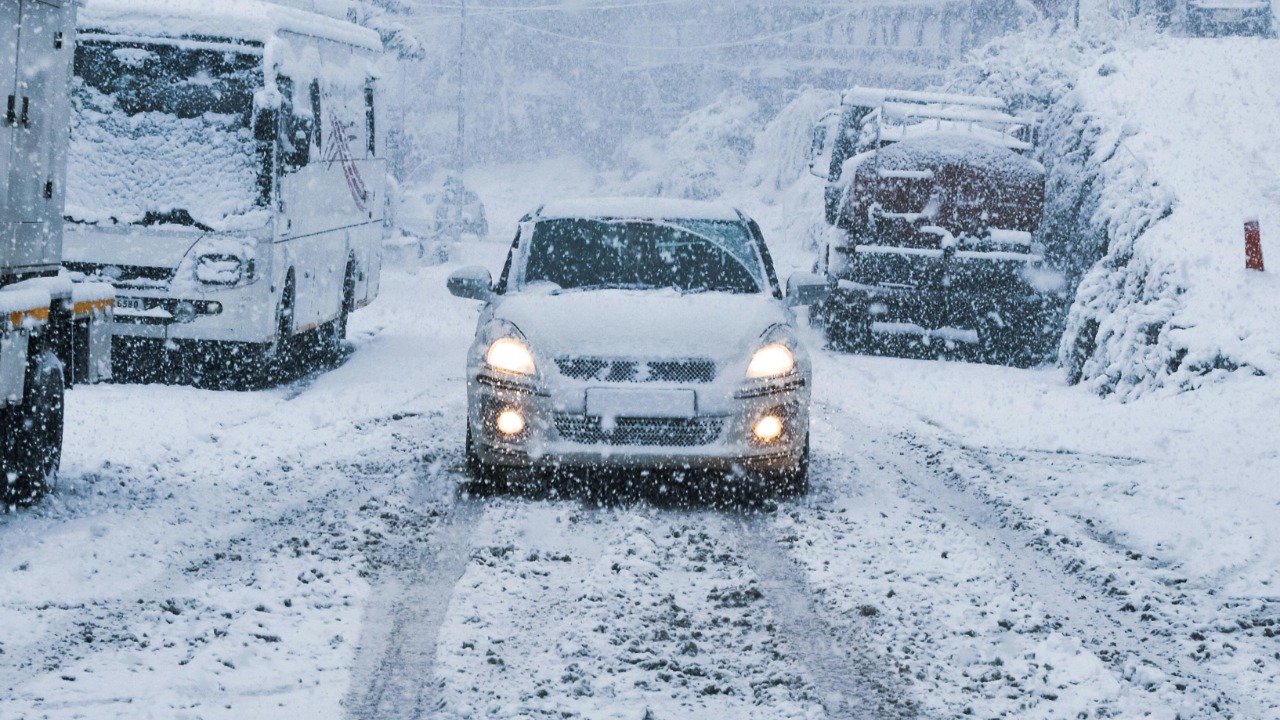

A “monster” winter storm named Storm Fern has pushed the United States to declare a power emergency in Texas, as plunging temperatures and ice drive up electricity demand faster than the grid can comfortably handle. The move is designed to keep the lights and heat on in a state that still bears scars from its last catastrophic freeze, even as the same weather system batters much of the country and leaves hundreds of thousands without power elsewhere.
At the center of the crisis is the uniquely isolated Texas grid, run by ERCOT, which is now operating under extraordinary federal orders to tap backup generators, curb industrial consumption, and prioritize residential heat. The question is not only whether Texas can ride out Storm Fern, but what this emergency reveals about how prepared the state and the nation really are for a future of more frequent deep freezes.
The emergency order that put Texas on notice
The Energy Department’s decision to declare a power emergency in Texas is a blunt acknowledgment that the state’s grid could not safely meet surging demand from Storm Fern without bending normal rules. According to Takeaways by Bloomberg AI, The Energy Department cited a sudden jump in demand and a shortfall in available generation, authorizing plants to run harder and, if necessary, to exceed some environmental limits to keep power flowing. In parallel, an official notice from Energy describes an “Energy Secretary Issues Emergency Order” to “Secure Texas Grid Amid Winter Storm Fern,” underscoring that the order is meant to protect Americans during the winter storm, not just balance a spreadsheet of megawatts.
On the ground, that emergency authority translates into direct instructions to ERCOT, the Electric Reliability Council of Texas that manages the state’s main power network. The Brief from the Department of Energy, cited in The Brief, allows ERCOT to direct data centers and other large energy users to switch to backup generation or cut consumption so that scarce grid power can be steered toward homes and critical services. A separate federal summary of the same decision, again from Bloomberg AI, stresses that the order is specifically about “the generation of electric energy,” a reminder that in a crisis, Washington is willing to intervene directly in how Texas runs its famously independent grid.
ERCOT’s tightrope: dashboards, data centers and demand spikes
ERCOT is now walking a narrow line between reassuring the public and quietly bracing for the worst. While the Electric Reliability Council of Texas has said the grid was running smoothly on Sunday, a federal order in the afternoon told it to cut power grid usage from data centers and other large users, according to a notice that begins, “Electric Reliability Council (ERCOT) grid was running along smoothly on Sunday.” That same report notes that the order is part of a broader federal push to preserve capacity as Storm Fern strains grids in the Midwest and Northeast as well. Texans can watch the tension in real time on the ERCOT live dashboard, which tracks current demand, available power and reserves; the dashboard, highlighted in a guide to monitoring ERCOT, is also being used to urge residents to lower demand on the grid during peak hours.
Federal and state officials are also signaling that industrial and commercial users will be expected to shoulder more of the burden. One Houston-focused briefing notes that “According to” the agency’s dashboard, it is unclear if the use of backup generators will be needed during the current arctic blast, but the emergency order explicitly empowers ERCOT to compel that shift if conditions worsen, as described in a summary that cites “According to the agency’s dashboard.” That kind of targeted curtailment is a far cry from the rolling blackouts that scarred the state’s last major freeze, but it is still a sign that the grid is operating close to its limits as Storm Fern’s cold lingers.
Storm Fern’s brutal grip on Texas and beyond
Storm Fern is not just another cold front, it is a sprawling winter system that has locked much of the country into a deep freeze and turned routine infrastructure vulnerabilities into life-threatening hazards. A widely shared update describes it bluntly as a “monster” winter storm, noting that Storm Fern has prompted governors in at least 13 to 14 states to declare a state of emergency as the system moves into the Northeast, a scale of disruption captured in an Instagram post on Storm Fern. In North Texas, a local forecast notes that a few more snow flurries were expected to linger into Sunday evening before residents were left with “bitter, deadly cold,” and that the overnight low “tonight should break the record,” according to a live blog on conditions in North Texas.
Those temperatures are not just uncomfortable, they are dangerous, especially when combined with ice. One regional update warns that “Icy road conditions and dangerous temperatures are forecast to last through Tuesday,” and that Temperatures will not make it out of the teens in some areas, a grim outlook detailed in a report that highlights “Icy” conditions, “Tuesday,” and stubbornly low “Temperatures.” Nationally, the same storm has already left around 120,000 power outages in its path on Saturday afternoon, including about 53,000 in Texas and neighboring states, figures that one report instructs to cite verbatim as “Around 120,000” and “53,000,” and that same piece notes the outages hit on “Saturday” in “Texas and” other states.
Power lines, plants and a grid under physical stress
Even with demand management and emergency orders, the physical grid itself is taking a beating from Storm Fern. Utilities are warning that ice accumulation can cause Crossarms to snap and Poles to break, especially where limbs slam into lines and heavy equipment, a risk spelled out in a storm center bulletin that notes “Crossarms may break and pole tops may break out as limbs hit the lines attached to them” and that damaged “Poles” supporting large power equipment can result in long outages. Those warnings are not theoretical; as snow, sleet, freezing rain and dangerously frigid temperatures swept into the eastern two-thirds of the United States on Sunday, the number of people without power climbed toward 1 million Americans, according to a national overview that begins, “As snow, sleet, freezing rain, and dangerously frigid temperatures swept into the eastern two-thirds of the US on Sunday,” in a piece on Sunday.
Industrial facilities in Texas are also preemptively shutting down to avoid catastrophic failures in the cold, a move that both reduces demand and, in some cases, crimps supply of fuels and chemicals. Goodyear Bayport (GT) shut down its chemical plant in Pasadena, Texas, on Saturday ahead of the cold snap, according to a notice posted on a Community Awareness Emergency Response website, and Exxon Mobil (XOM) reported operational impacts in a regulatory filing, as detailed in a market-focused account of how a deep freeze “knocks Texas energy and industrial operations offline” that highlights Goodyear Bayport, “Pasadena,” “Texas,” and “Saturday.” That same report notes that U.S. natural gas output has been curtailed by the freeze, even as some facilities try to offset the effect, a reminder that the power emergency is intertwined with broader energy supply chains.
More from Morning Overview