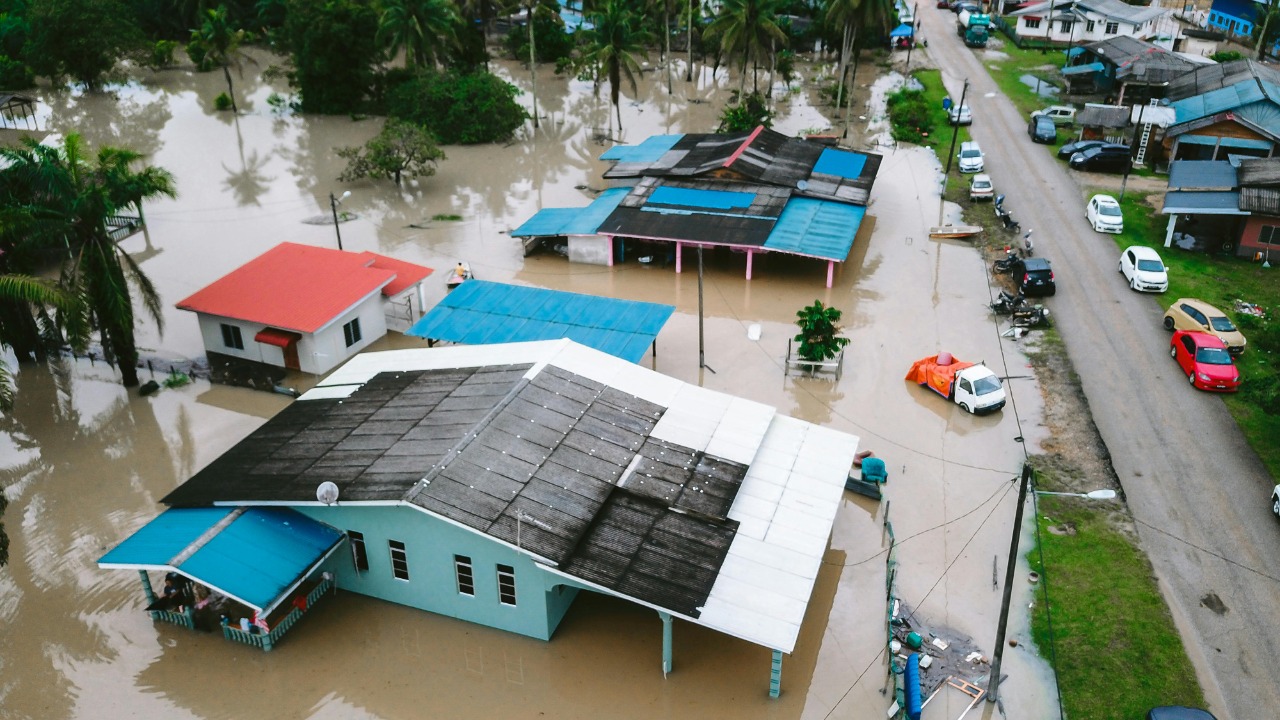

Across the United States, a quiet revolution in flood protection is unfolding in city parks, vacant lots, and waterfronts. Instead of trying to wall off every drop, planners are designing places that invite water in, hold it, and release it slowly so surrounding streets and homes stay dry. It is a counterintuitive strategy that treats storms as something to be managed in the open rather than forced into pipes.
From compact Hoboken to sprawling Los Angeles and historic Boston, cities are turning flood-prone neighborhoods into living laboratories for this approach. Nowhere is the shift more visible than in New Orleans, where a new generation of projects is deliberately making room for water in order to protect the people who live beside it.
New Orleans learns to live with water
New Orleans has always been defined by water, and by the risk that comes with sitting between the Mississippi River and Lake Pontchartrain. After Hurricane Katrina exposed how vulnerable the city’s levees and pumps were, planners began to argue that survival depended on working with the landscape instead of trying to overpower it. That shift is now visible in the New Orleans neighborhoods that are turning former swamps and vacant land into green infrastructure designed to hold stormwater on the surface.
In the district of The Gentilly, north of the French Quarter, that philosophy is being tested at neighborhood scale. The Gentilly district, once one of the first swamps to be pumped and drained to become a neighborhood, is now part of a broader Resilience District strategy that uses parks, canals, and vacant parcels to store water and relieve pressure on the city’s drainage system.
Gentilly’s Mirabeau Water Garden: a park that doubles as a basin
At the heart of that experiment is the Mirabeau Water Garden, a 25 acre urban stormwater park in the City of New. The design has four clear objectives: divert and temporarily store up to 10 million gallons of water to reduce flooding, infiltrate that water into the ground, improve water quality, and create a public landscape that educates residents about how their city works. By turning a large site in Gentilly into a sponge, the project is designed to take pressure off the drainage system during intense storms.
The Mirabeau Water Garden grew out of a global competition that highlighted green infrastructure as a cost effective way to manage risk. Technical analysis of the proposal describes how the 25 acre site will be sculpted to capture runoff, filter it through soils and wetlands, and then slowly release it back into the city’s network, effectively turning a single property into a neighborhood scale retention basin. In planning documents, the Mirabeau Water Garden is described as an ideal project to showcase how a park can be engineered to deliver both recreation and flood storage in a single, coherent design.
Hoboken’s hidden reservoirs under the playground
On the other side of the country, the compact streets of Hoboken have become a showcase for how dense cities can tuck flood protection into everyday public spaces. After repeated tidal and rain driven floods, the city began building “resiliency parks” that look like ordinary playgrounds and ball fields on the surface but hide large underground tanks and layered soils that can store millions of gallons of water. Local coverage of these projects notes that the parks are designed to capture stormwater, keep it off streets and basements, and then slowly release it back into the system once the peak has passed.
Officials and community members in Hoboken have celebrated the opening of a new resiliency park that doubles as a large open green space while also functioning as a detention system during storms. Reporting on these projects points out that while the parks are effective, they come with significant costs, and some advocates argue that lawmakers in New Jersey need to dedicate more funding to scale up this kind of infrastructure.
Boston’s waterfront parks instead of a giant wall
Farther north, Boston faced a stark choice as it assessed its growing flood risk. Engineers initially considered a massive sea wall across the harbor, a single piece of gray infrastructure that would have tried to block storm surges outright. Instead, city leaders embraced a different plan that uses a network of waterfront parks and open spaces to absorb and deflect water, effectively turning the shoreline into a flexible buffer rather than a hard barrier.
The strategy, detailed in climate adaptation plans, calls for reshaping low lying edges of the city into elevated parks, berms, and promenades that can take the hit from coastal flooding while protecting inland neighborhoods. Analysts have described how this approach, which treats the harbor as a dynamic system, allows Boston to “let it come in” at controlled locations instead of trying to keep every drop out. A related overview of adaptation work notes that this American city is building a network of waterfront parks as part of a broader effort highlighted by the This American Center on Adaptation.
Los Angeles and the rise of the sponge city
In the arid West, the idea of welcoming water has taken on a different urgency. Los Angeles is both flood prone during rare but intense storms and chronically short of water the rest of the year. To reconcile those extremes, the city has spent years replacing concrete with permeable surfaces, bioswales, and spreading grounds that soak up runoff and recharge aquifers. When a supercharged February storm brought record rainfall, new infrastructure designed to absorb water into the ground was put to the test, and reporting found that these projects helped capture a significant share of the deluge.
Analyses of the city’s evolution describe how Los Angeles is adapting to heavy storms by becoming a “sponge city,” a term that has also been used to describe dozens of pilot cities in China that are redesigning streets and parks to hold water that can later be “squeezed out” for use during dry periods. One account notes that Los Angeles had spent years replacing parts of its concrete cityscape with permeable patches of dirt, grass, and plants, which mitigated flooding and supported groundwater supplies. A broader look at global practice explains how China designated dozens of pilot sponge cities to prepare for storms like Super Typhoon Ragasa, underscoring how the concept has moved from theory to mainstream policy.
More from Morning Overview