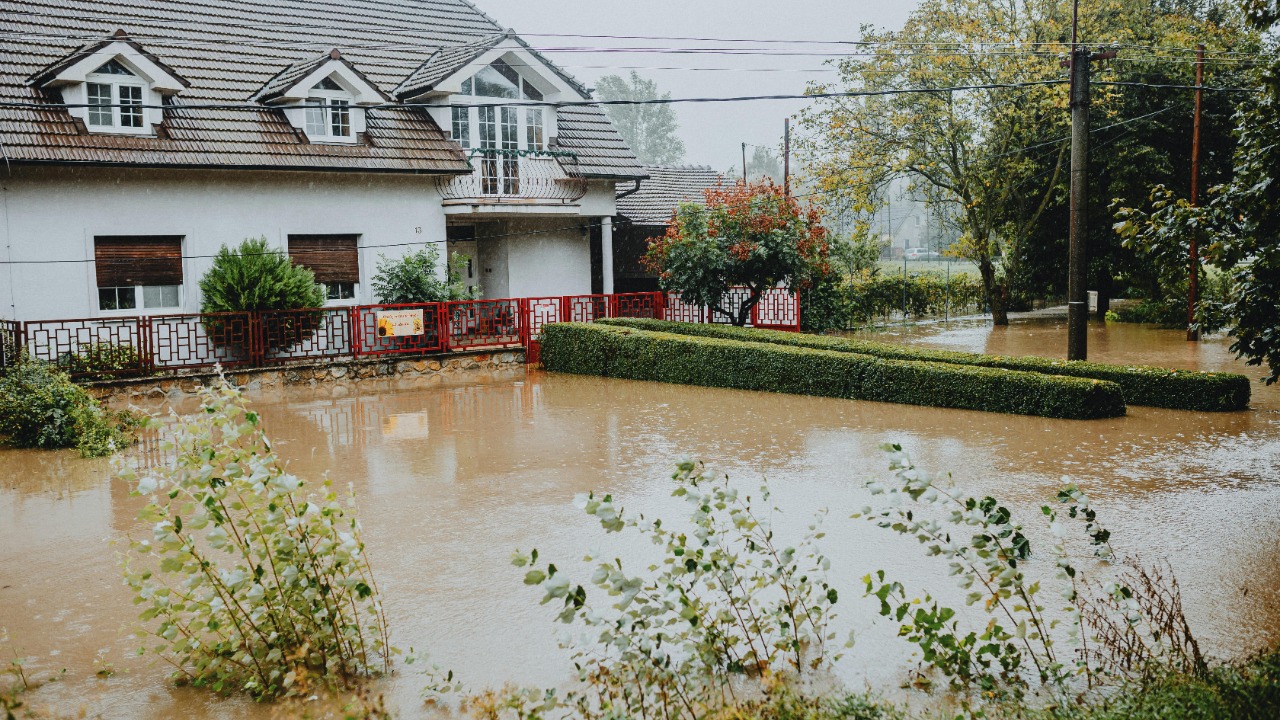

Across the United States, cities that once tried to wall themselves off from rising water are starting to do something more radical: invite it in. Instead of relying only on concrete pipes and pumps, planners are carving out parks, plazas, and even schoolyards that can safely flood, then slowly release stormwater back into the system.
Nowhere is this shift clearer than in Hoboken, New Jersey, a compact waterfront city that has turned flood‑soaked blocks into a living laboratory for what experts call “sponge city” design. By treating water as a permanent neighbor rather than an occasional disaster, Hoboken and a growing cohort of peers are sketching a blueprint for urban life in a wetter, hotter century.
From Superstorm victim to sponge city pioneer
Hoboken’s reinvention started with crisis. Wedged between the Hudson River and steep bluffs, the city has long been vulnerable to storm surge and intense rain, a reality that became painfully clear when Superstorm Sandy sent water pouring into streets, basements, and transit tunnels. In the years since, Hoboken has embraced a different playbook, threading green infrastructure into one of the densest cities in the country. That shift was supercharged when Hoboken received a $230 million grant through the U.S. Department of Housing to implement a comprehensive water management plan.
That money helped seed a network of “resiliency parks” that double as neighborhood amenities and hidden reservoirs. The newest, ResilienCity Park, transformed a former industrial site into ballfields, playgrounds, and rain gardens that sit atop a vast underground storage vault. During cloudbursts, that vault and others like it capture stormwater that would otherwise pool in low‑lying streets and back up into homes and businesses. On dry days, they disappear into the background of daily life, a quiet inversion of the old model in which flood protection meant hulking walls and fenced‑off basins.
How Hoboken’s parks quietly hold back the tide
What makes Hoboken’s approach feel so different is not just the hardware, but the philosophy behind it. Instead of treating every drop as a nuisance to be whisked away, the city is designing streets and open spaces to soak, store, and slowly release water. Beneath the turf of its resiliency parks, engineers have tucked in detention tanks and porous soils that can hold millions of gallons, turning ordinary recreation areas into emergency infrastructure. That dual role is especially valuable in a place as compact as Hoboken, New Jersey, where every square foot has to work hard.
The city’s strategy extends beyond a few showcase parks. New “green” features are being woven into streetscapes, from curbside bioswales to permeable pavements that let rain percolate into the ground instead of racing into storm drains. Local officials have framed these projects as part of a broader effort to turn disaster into opportunity, using the city’s painful flooding history to justify investments that also deliver playgrounds, trees, and cooler summer microclimates. Critics in New Jersey have raised concerns about cost and pace, arguing that lawmakers should dedicate more funding to such projects, but the basic idea that parks can double as flood defenses has taken firm root.
New Orleans shows what it means to live with water
Hoboken is not alone in rethinking its relationship with water. In New Orleans, Louisiana, a city literally built below sea level, planners have spent the past decade trying to move beyond a fortress mentality. The Greater New Orleans calls for an “integrated living water system” that stores rain where it falls, uses canals and parks as reservoirs, and drains only when necessary. Instead of pumping every storm out to sea as fast as possible, the plan envisions a landscape that holds water in place, reducing subsidence and easing pressure on levees.
That vision is slowly materializing in projects that mix green and gray infrastructure. The City of New Orleans has launched a program focused on Advancing Green Infrastructure, which uses rain gardens, tree trenches, and permeable surfaces to absorb runoff while supporting the fragile biodiversity that sustains life in the region. City documents describe About Green Infrastructure as a way of managing stormwater that works with nature rather than against it, complementing levees and pumps with a distributed network of small interventions. The water plan frames this as a way to alleviate chronic flooding and land loss by storing stormwater and using it as an asset rather than a threat.
Boston and Philadelphia trade walls for waterfronts and schoolyards
On the Atlantic seaboard, other cities are drawing similar conclusions. In Boston, Massachusetts, officials once floated the idea of a massive harbor barrier to keep storm surge at bay. Instead, they have pivoted toward a chain of waterfront parks and elevated promenades that can absorb and channel floodwaters. One plan, highlighted by climate adaptation groups, notes that to protect itself from floods, Boston considered a huge sea wall, but ultimately chose a network of open spaces that “let it come in” on controlled terms.
Inland, Philadelphia, Pennsylvania has been quietly turning its own streets and schoolyards into sponges. The city’s GreenPlan, launched in 2009, set goals to add trees, open spaces, trails, and green schoolyards that capture runoff while giving residents new places to gather. Those efforts dovetail with a broader shift toward “sponge city” thinking, in which rain gardens, porous pavements, and restored streams are treated as core infrastructure rather than decorative extras. Mapping tools that compare the share of trees and lakes to concrete, described in work by Kim Harrisberg, show how cities like Philadelphia can boost their “sponginess” by trading asphalt for vegetation.
Why “sponge cities” are gaining urgency
The appeal of these strategies is not abstract. As climate change loads the dice for more intense downpours, the limits of traditional drainage systems are becoming painfully clear. One recent series of storms, described in analyses of U.S. flooding, included an event on the 22nd that damaged nearly 600 homes and displaced about 1,200 people, followed two weeks later by an atmospheric river that dumped 5 to 10 inches of rain. Analyses of how communities can become “sponge cities” note that such back‑to‑back extremes are becoming more common as warmer air holds more moisture. In that context, relying solely on bigger pipes and pumps looks increasingly like an arms race that cities cannot win.
Advocates argue that the alternative is to redesign urban fabric so that it can safely flood in pieces, rather than catastrophically all at once. Research on dual‑use plazas shows how sports fields and public squares can be orchestrated by predictive algorithms to act as temporary detention ponds during emergencies. Reporting on global “sponge city” experiments, including work in Asia by firms like Turenscape at Benjakitti Forest Park in Bangkok, underscores how landscapes can be sculpted to hold water while remaining vibrant public spaces.
More from Morning Overview