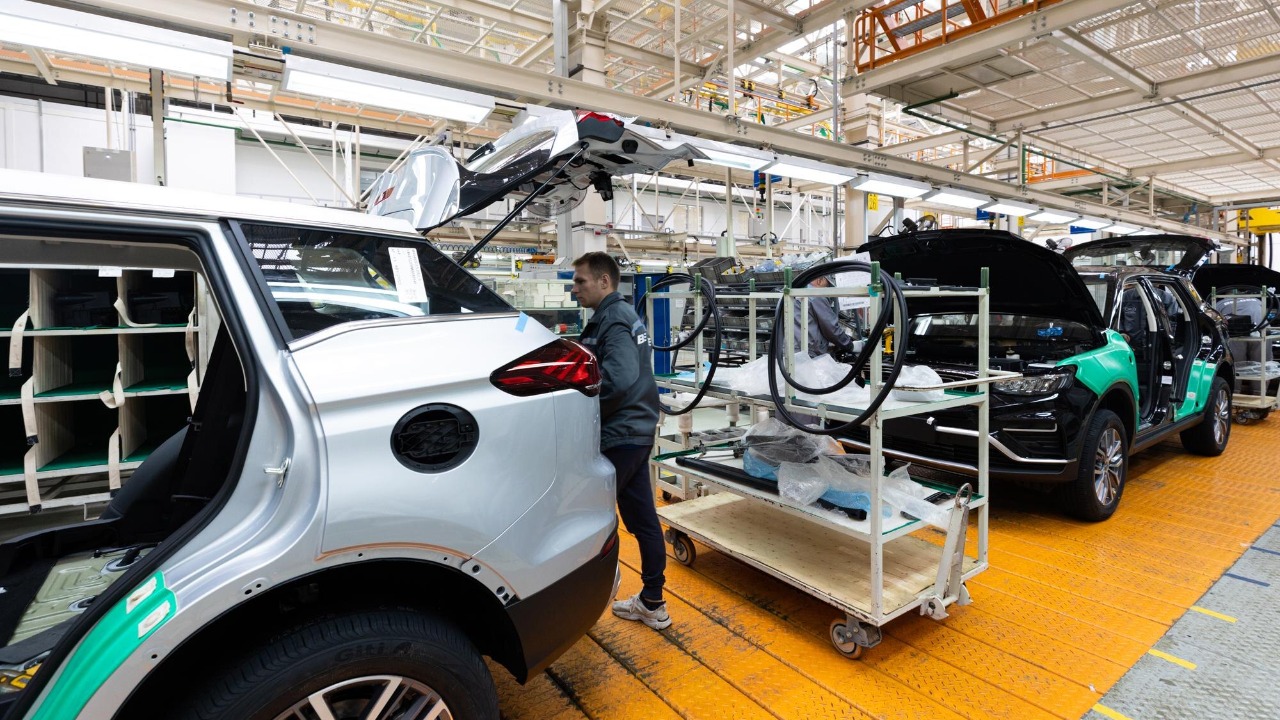

North American carmaking used to run on a simple assumption: whatever storms hit global trade, the U.S. and Canada would remain a tightly integrated, predictable production base. That assumption has now been shattered. Trade fights launched in Washington, retaliatory moves in Ottawa, and corporate restructuring decisions taken in Detroit and Europe are converging into a new phase of instability that is hitting Canadian workers, suppliers, and drivers as hard as anyone.
The chaos that began with tariffs and supply chain shocks aimed at rivals overseas is now ricocheting back into the cross-border auto ecosystem that U.S. brands once dominated. As market share erodes and plants idle, the spillover is no longer theoretical; it is reshaping where vehicles are built, how they move, and who ultimately pays the price.
Tariff wars turn a continental supply chain into collateral damage
The modern auto industry was built on the idea that parts and vehicles could move freely across the border between the United States and Canada, with engines cast in Ontario, transmissions assembled in Michigan, and finished SUVs shuttling back and forth to meet demand. That model has been thrown into doubt by a wave of protectionist measures that began as a way to pressure foreign competitors but quickly ensnared close allies. The 2025 decision by the United States to escalate a trade confrontation with its two closest neighbors turned a once-seamless production platform into a contested economic front line.
On February, the 2025 United States trade war with Canada and Mexico began when the United States, under President Donald Trum, imposed sweeping tariffs on vehicles and parts entering the country. Those measures were framed as a way to claw back jobs and punish companies that had shifted production abroad, but they also hit the very cross-border flows that keep North American assembly lines running. Earlier disruptions at key crossings, including a high profile bridge jam that snarled auto parts, had already shown how vulnerable the system was to any choke point. Once tariffs were layered on top, the cost and complexity of moving components between plants multiplied overnight.
Retaliation from Ottawa squeezes U.S. automakers in their safest export market
Ottawa’s response has been calibrated to hit where U.S. automakers feel it most: their historically comfortable position in the Canadian showroom. Canada It has moved beyond rhetoric and into targeted retaliation, cutting back the special treatment that some of Detroit’s biggest names once enjoyed. The federal government is reducing the number of vehicles that General Motors and Stellantis can import tariff free into Canada It, a shift that directly raises the cost of popular models that used to cross the border without penalty and that, according to officials, will see those exemptions cut by 50 per cent per year under the new regime, as detailed in a federal notice shared through Canada It.
That move builds on an earlier decision, reported after As CBC News first highlighted it, in which Ottawa signaled that two multinational manufacturers would no longer be exempt from paying Canada’s retaliatory tariffs on certain imports. The federal government made clear that the change was a direct response to U.S. measures, not a standalone industrial policy, and that it was prepared to keep tightening the screws if Washington did not ease up. By explicitly tying the fate of GM and Stellantis to the broader dispute, officials turned what had been an abstract trade fight into a concrete threat to U.S. brands’ pricing power and dealer networks north of the border, a shift that was underscored when As CBC News reported that the exemptions for those companies were being rolled back in a notice circulated through As CBC News.
Market share erosion shows Canadian buyers are voting with their wallets
The impact of this tit-for-tat is already visible in the sales data. U.S. automakers once treated Canada as a reliable outlet for everything from full size pickups to compact crossovers, but their grip on that market is slipping fast. Just 36% of passenger vehicles imported to Canada were manufactured in the U.S., a figure that captures how quickly buyers and dealers have shifted toward models built in Europe, Asia, or even Mexico as tariffs and uncertainty have made American made options more expensive or harder to source, according to reporting by Curtis Heinzl that noted that Just 36% share as a record low for U.S. brands in the country and highlighted how tariff turmoil has reshaped imports across Canada.
Behind that number lies a deeper structural problem for Detroit. The modern car is a global product, with components sourced from multiple continents and final assembly often split between several plants. The flurry of new tariffs imposed by President Donald Trump has made it harder to define what counts as a domestic vehicle at all, since a single model might be designed in California, use electronics from Asia, and be bolted together in Ontario. Trade experts have warned that the U.S./Can auto corridor is particularly exposed, because so many vehicles cross the border multiple times before they reach a dealer lot, a vulnerability that was highlighted in an analysis of how car tariffs complicate the U.S./Can supply chain and raise questions about which vehicles are truly imports under the rules set by Trump.
Plant cuts and border slowdowns deepen the shock for Canadian workers
For Canadian communities that have long depended on auto jobs, the trade war is colliding with a second shock: corporate restructuring that is pulling production away from key plants. General Motors idled its CAMI assembly plant that produces EV delivery trucks in Ingersoll, Ont, leaving workers in limbo for months and raising questions about whether the promised electric vehicle transition will actually deliver stable employment. At the same time, Stellantis is moving to a single shift at another Ontario facility, a decision that ripples through local suppliers and service businesses that rely on steady volumes from those lines, as detailed in a report on how General Motors and Stellantis decisions have sent Ingersoll into a new period of uncertainty.
These local shocks are compounded by broader disruptions at the border itself. In the final five months of 2025, land border crossings in B.C. into the United States were down an average of 38 per cent compared to 2024, a drop that reflects not only changing travel patterns but also the chilling effect of heightened inspections, paperwork, and political tension on cross-border movement. For auto suppliers that depend on just in time deliveries, a 38 per cent decline in traffic through key crossings is not simply a tourism statistic; it is a sign that the physical arteries of the North American auto trade are constricting, a trend captured in new data on how In the province saw the country’s biggest drop in cross border flows.
A new world disorder leaves Canada exposed on multiple fronts
The turmoil in the auto sector is part of a wider pattern that trade lawyers and economists have started to describe as a new world disorder in global commerce. Instead of a stable rules based system, companies now face a patchwork of sanctions, export controls, and retaliatory tariffs that can shift with each diplomatic flare up. One recent legal analysis framed this as a period of global chaos and global trade, noting that even smaller players such as Greenland have adopted blunt rhetoric, with Greenland’s rhetoric described as telling the U.S. to pretty much just “F’ off” in a sign of how frayed alliances have become, a tone that reflects the broader concerns catalogued in the Latest Posts section of a Global Chaos and briefing.
More from Morning Overview