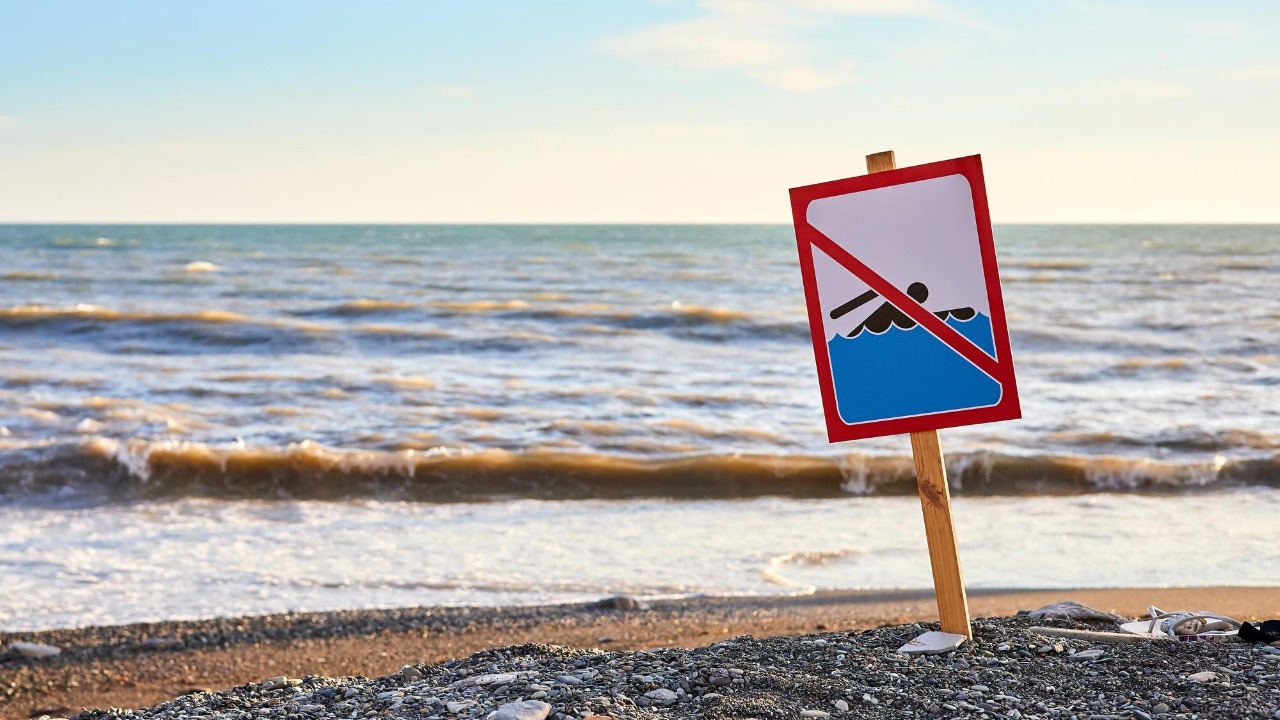

Officials along the West Coast are issuing an unusually blunt warning: the Pacific may look inviting, but for now people in parts of California and Oregon are being told to stay out of the ocean. A combination of powerful sneaker waves, cold water and polluted runoff has turned some of the region’s most popular beaches into zones where a casual stroll or quick dip can turn dangerous in seconds.
The alerts stretch from rugged stretches of the Pacific Northwest down to crowded urban shorelines, and they come with a clear message that this is not business as usual. I am looking at a convergence of marine hazards that affect both the physical power of the surf and the quality of the water itself, and together they explain why officials are urging restraint even as winter sunshine lures people back to the sand.
What the new West Coast alerts actually say
Along the Pacific, beach hazard alerts are now in effect for long swaths of California and Oregon, with forecasters warning that people should remain out of the water entirely in some locations. A regional alert circulated through Beach reports that hazard warnings have been issued to beaches along both states’ coastlines, with language that explicitly tells swimmers and surfers to remain out of the water. That kind of direct phrasing is reserved for periods when the risk of being swept away or knocked down is high even for strong swimmers.
Farther north, a detailed beach hazards statement is in effect for the South Central Oregon Coast and Curry County Coast, where Advance Local Weather relay that, On Monday at 2:21 p.m., the National Weather Service issued a statement valid from 10 p.m. that urges people to stay off rocks and out of the water to avoid hazardous conditions. A companion version of the same alert repeats that On Monday the National Weather Service emphasized that even people standing on jetties or low-lying coastal paths could be at risk from sudden waves. Together, these alerts frame a clear picture: the ocean is not just rough, it is unpredictable enough that officials are telling people to keep their distance.
Sneaker waves and “Large” impacts in the surf
The most immediate physical threat driving these warnings is the risk of sneaker waves, the kind of sudden, outsized breakers that arrive after a deceptively calm period and surge far up the sand. In a formal Beach Hazards Statement, forecasters list the expected IMPACTS as including Large, unexpected waves that can sweep across the beach without warning, pulling people into the sea from rocks, jetties and even from an ocean that looks calm. That language is not theoretical; it reflects a pattern of incidents in which people walking dogs, taking photos or exploring tidepools are knocked off their feet and dragged into deep water before they can react.
In Northern California, those risks are especially acute along the MENDOCINO shoreline, where The National Weather Service has issued a specific sneaker wave warning for the Mendocino Coast for Wednesday, highlighting the danger of waves that arrive in sets after long lulls. A broader social media alert labeled 🌊 BEACH WARNINGS: Sneaker Wave Danger Along California and Oregon Coastlines ACTION EYE NEWS LIVE | COASTAL | ALERT underscores that the same pattern is expected along much of the region, with Sneaker Wave Danger warning that ocean temperatures remain dangerously cold. Even a brief fall into the water, as another safety post notes, can trigger cold-water shock, rapid exhaustion, hypothermia or drowning, with Even a short immersion posing serious risk.
Polluted runoff and sewage spills add a hidden layer of danger
While the surf itself is hazardous, the water quality is also a major concern, particularly in Southern California after heavy rain. The Los Angeles County Department of Public Health has urged people to avoid ocean contact along county beaches after storms, with a notice issued on Thursday explaining that runoff can carry bacteria, chemicals and debris into the surf. A separate advisory explains that stormwater runoff can also transport physical hazards such as partially submerged tree limbs and logs into the ocean, with Stormwater described as a vehicle for both contamination and hard-to-see obstacles that can injure swimmers.
On social media, a clip labeled COUNTY BEACHES from ktla5news, which has 6,564 followers and 226 interactions, shows how officials responded After a storm hit Southern California on New Year’s week, with an Ocean Water Quality Rain Advisory declared for After the New Year storm in Southern California. Health officials have also reminded residents that, Note, County health officials advise against ocean water contact for up to 72 hours following a period of significant rainfall, a guideline shared in a Note that stresses how bacteria levels spike near storm drains, pipes, harbors and river mouths. In Santa Barbara County, the problem is even more acute at East Beach, where There are several signs along East Beach currently posted and the closure remains in effect after a sewage spill, with Buttitta explaining that Water sampling is ongoing because the area routinely shows high bacteria levels, according to a detailed update on East Beach and the continuing sampling of Water quality.
How the National Weather Service and local agencies coordinate
Behind these alerts is a network of meteorologists and public health officials who are trying to translate complex ocean and weather data into clear guidance. The National Weather Service issues the core marine forecasts and hazard products, including the Beach Hazards Statements that spell out the risk of Large, unexpected waves and strong currents. In Oregon, an updated beach hazards statement earlier in the year showed how this process works, with an advisory issued by the National Weather Service on Monday at 2 p.m. in effect until 6 p.m. for Clatsop County, illustrating how specific counties like Clats are targeted when conditions warrant.
Local agencies then layer on their own expertise and responsibilities. The Los Angeles County Department of Public Health, for example, uses rainfall data and bacterial testing to decide when to issue or lift advisories, as reflected in its Los Angeles County guidance. In Santa Barbara, county health officials rely on repeated sampling to determine when East Beach can safely reopen, a process detailed in the Buttitta explanation of ongoing Water testing. National park managers on the other side of the country offer a useful template for beach safety communication as well, advising visitors to Tune in to NOAA weather radio and monitor websites from NOAA and the National Weather Service in Eastern Dare County, a reminder that the same principles apply whether you are on the Outer Banks or the Pacific Coast.
What I would do if I were heading to the coast this week
Faced with this mix of hazards, I would treat the current warnings as a hard line, not a suggestion. If I were planning a trip to the Mendocino Coast or the South Central Oregon Coast, I would start by checking the latest Beach Hazards Statement and any sneaker wave advisories for the Mendocino Coast for Wednesday, as highlighted in Mendocino Coast for. If the guidance said to stay off rocks and jetties, I would stay on higher ground and keep a wide buffer between myself and the waterline, especially on beaches near Curry County or other exposed headlands. I would also assume that any log or piece of driftwood could be rolled by a Large wave, and I would keep children and pets well back from the surf.
Supporting sources: Officials urge beachgoers, 1/5/2026 KTLA The, East Beach Water.
More from Morning Overview