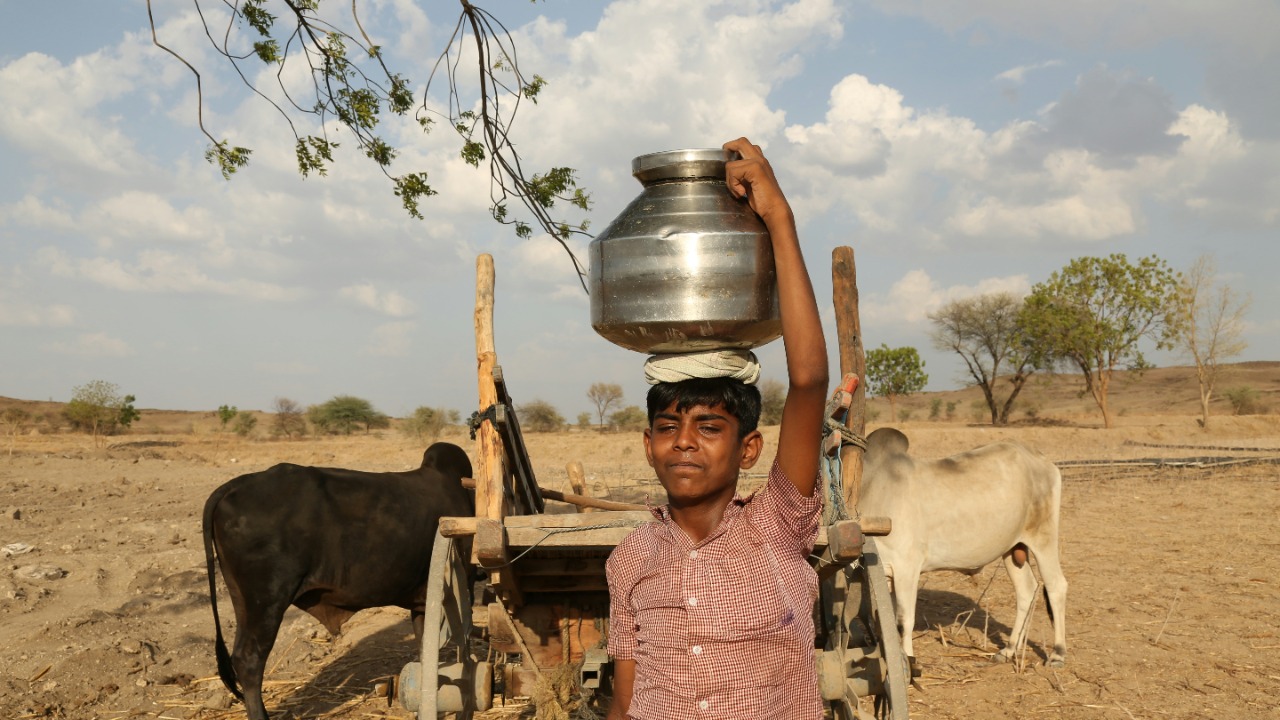

United Nations researchers say the planet has blown past a simple “water crisis” and into something more structural: a kind of hydrological insolvency where humanity is drawing down natural reserves faster than they can be replenished. In their words, the world is in “global water bankruptcy,” a condition that is already reshaping economies, migration and security. Understanding that phrase is not a matter of semantics, it is a blunt description of how deeply we are living beyond the limits of rivers, aquifers and glaciers.
At its core, water bankruptcy means the balance sheet of the planet’s water system no longer adds up. The new assessment, titled “Global Water Bankruptcy: Living Beyond Our Hydrological Means in the Post-Crisis Era,” argues that familiar labels like “shortage” or “stress” underplay the scale of the damage and the permanence of some of the losses. It is a warning that the basic assumptions underpinning where people live, how food is grown and how power is generated are being rewritten by decades of overuse, pollution and climate disruption.
What UN scientists mean by ‘water bankruptcy’
In financial terms, bankruptcy is what happens when debts so exceed assets that the system has to be restructured. The scientists behind “Global Water Bankruptcy: Living Beyond Our Hydrological Means in the Post-Crisis Era” use the same logic for rivers and aquifers, arguing that societies have been “liquidating the planet’s savings account” of stored water to prop up unsustainable growth. Their report, part of a project described as Global Water Bankruptcy, declares that withdrawals from key water stores now routinely exceed natural inflows and safe depletion limits. In other words, the hydrological books no longer balance.
The authors frame this as a “post-crisis” reality, not a future risk. They describe an “Era of Global Water Bankruptcy” in which the physical landscape has been fundamentally altered and the old baseline for water planning no longer applies. A companion summary of the same work notes that the assessment formally defines a new hydrological reality for billions of people, with persistent overuse of groundwater and surface water now baked into the system’s behavior. That “Report in brief” section, which distills the science for policymakers, stresses that the problem is not just scarcity in dry places but chronic overspending of water capital across entire regions, a pattern captured in the phrase Living Beyond Our.
A new hydrological reality for billions
UN officials are blunt that the world has moved beyond a conventional water crisis into a state of systemic overdraw. One overview of the findings explains that the World has entered an era of “global water bankruptcy” in which the climate and water landscape has been fundamentally altered. The same body of research, summarized by the United Nations University Institute for Water, Environment and Health, states that the report declares the planet has crossed a threshold where human demands routinely exceed renewable supplies. That declaration is reiterated in a detailed project page that describes how World Enters this new era as inflows and safe depletion limits are breached.
The human stakes are staggering. One synthesis of the data notes that the planet is entering an era in which billions of people are exposed to severe water stress, with hotspots stretching from parts of Africa to Asia and the American Southwest. Within that group, some 4 billion people face severe water scarcities for at least one month each year, and 3.5 billion lack safely managed drinking water. Another analysis of the same UN work stresses that “Decades of” intensive pumping, dam building and pollution by “Human” societies have left irreversible damage in some basins, locking in a harsher water future even if emissions fall. That warning is echoed in a separate explainer that asks what “water bankruptcy” means and concludes that the hydrological baseline has been “fundamentally altered,” a point underscored in the phrase What does this new era entail.
Drivers: climate, overuse and ‘liquidating the planet’s savings’
Behind the bankruptcy metaphor lies a familiar trio of culprits: climate change, pollution and relentless overuse. One assessment of the UN report states plainly that Climate change, pollution and decades of overuse have pushed the world into a state of “water bankruptcy,” leaving essential sources depleted and infrastructure in need of hundreds of billions of dollars in annual investment. Another summary of the science describes how defining a new hydrological reality means recognizing that warming, land use change and contamination are now directly undermining food security and political stability, a link highlighted in an analysis that describes Defining a new hydrological reality.
Agriculture sits at the center of this overdrawn system. An estimated 70% of water globally is used for agriculture, and 70% is a figure that captures how deeply food systems depend on rivers and aquifers. Where water resources are exhausted, it can mean collapsing economies, failed harvests and forced migration, a pattern described in detail in a report that begins, “Where water resources are exhausted, it can mean collapsing economies,” and goes on to link that stress to communities that already face shortages for at least one month each year. Another institutional summary, produced by CCNY and led by Kaveh Madani, characterizes this pattern as Liquidating the Planet, a phrase that captures how tapping deep aquifers and damming rivers has functioned like spending down a savings account rather than living off sustainable interest.
Unequal burdens, fragile states
Water insolvency is not distributed evenly. The UN summary of the new assessment stresses that the burdens fall disproportionately on poorer communities and marginalized groups, a point made explicit in a section titled Unequal burdens. Kaveh Madani, who directs the United Nations University Institute for Water, Environment and Health, has emphasized that the findings do not suggest worldwide uniform dryness but rather a patchwork in which some regions are pushed past breaking point while others still have relative abundance. Another UN project page notes that “World enters era of ‘global water bankruptcy’” as the climate and water landscape is transformed, and that the human toll is already significant.
That toll is not only economic. Water bankruptcy is becoming a driver of fragility, displacement and conflict, according to UN Under-Secretary-General Tshilidzi Marwal, who is quoted in a project summary that states, “Water bankruptcy is becoming a driver of fragility, displacement, and conflict,” and identifies him as UN Under-Secretary-General Tshilidzi Marwal. Another institutional release, which notes that the World enters this era in a report led by CCNY’s Kaveh Madani, underscores how “human-induced water stress” intersects with existing political tensions. A separate news analysis, framed around “Looming” water supply bankruptcy, warns that billions are at risk as aquifers decline and rivers shrink, a risk flagged in a piece that begins “Looming water supply ‘bankruptcy’ puts billions at risk, UN report warns” and is attributed By Reuters.
What a ‘post-crisis’ response looks like
If the diagnosis is bankruptcy, the prescription is restructuring. The UN University report argues that the world has entered an “Era of Global Water Bankruptcy” and that scientists have “Formally Define New Post” crisis conditions for billions, a framing captured in a project description that begins World Enters this new era. The same body of work, summarized in a separate link that repeats the phrase “World Enters ‘Era of Global Water Bankruptcy’ UN Scientists Formally Define New Post-Crisis Reality for Billions,” stresses that incremental efficiency gains will not be enough and calls for a fundamental rethink of how water is valued, allocated and protected. That includes recognizing that some aquifers and glaciers are effectively non-renewable on human timescales and should be treated as strategic reserves rather than everyday supply.
More from Morning Overview