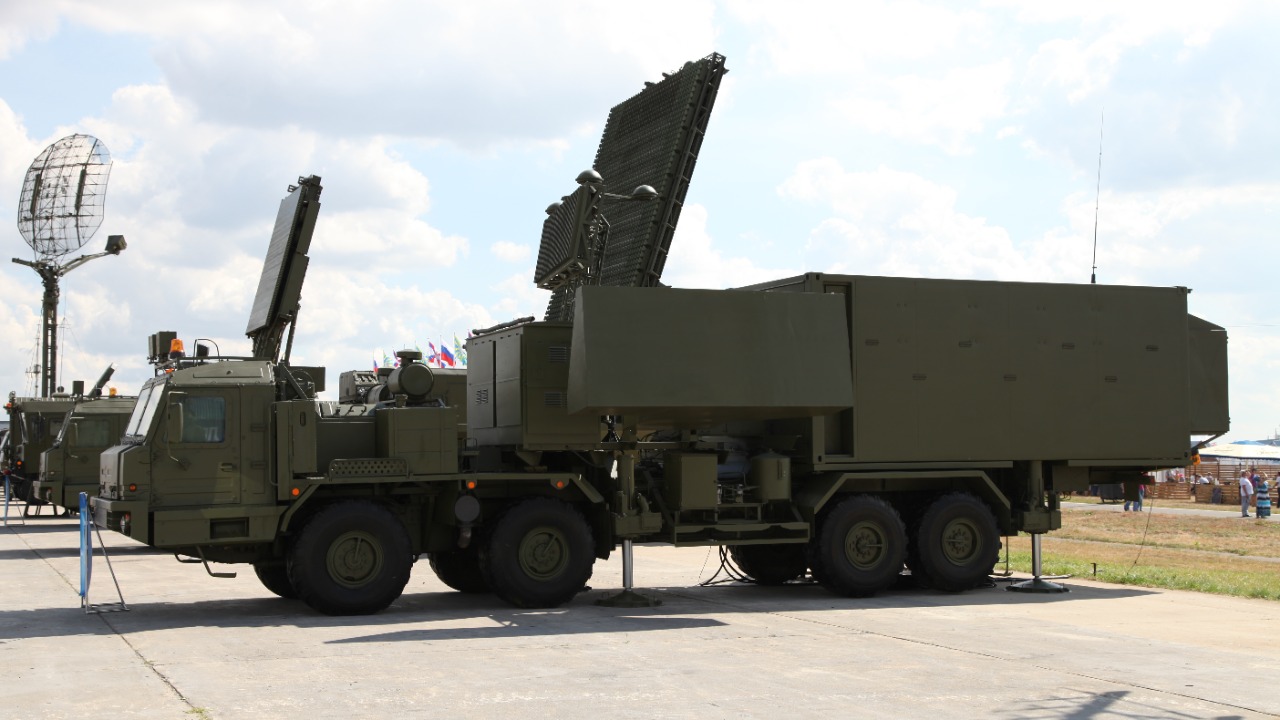

Ukraine’s campaign against Russian air defenses has shifted from isolated strikes to a sustained effort that is reshaping the air war. Kyiv’s security services now say they have destroyed or disabled billions of dollars in Russian systems, including a single Nebo-M radar complex in Crimea valued at about 100 million dollars, hit overnight in mid 2024. I see that one spectacular loss as part of a longer pattern in which Ukrainian forces are methodically eroding what the Kremlin once sold as an impenetrable shield.
From one $100 million radar to a $4 billion problem
The destruction of the Russian Nebo-M radar system in Crimea was not a one-off miracle strike, it was an early proof that Russian high-end air defenses could be hunted and killed. Video from the Kerch Peninsula shows Watch Ukrainian quadcopters launched from a sea drone closing in on the Russian Nebo-M radar system in Crimea, with Ukrainian sources valuing the complex at around 100 million dollars and describing it as a first of its kind operation using sea launched bomb drones overnight on 2 July 2024. That same system, identified as Nebo-M, had already been highlighted as a prized long range radar, and separate reporting on Ukraine’s use of sea launched bomb drones in Crimea describes how Ukrainian forces hit a Nebo command center and two radars on the Kerch Peninsula, underlining how vulnerable even Russia’s most modern sensors have become when Kyiv can get drones close enough.
What began with that single high value radar has since scaled into a broader campaign that Ukraine’s Security Service, the SBU, now says has inflicted about 4 billion dollars in damage on Russian air defenses. According to the Security Service, sustained long range strikes over the past year have destroyed or disabled Russian surface to air missile systems and radars across occupied territory, a tally that Aviation News reports as a 4 billion dollar hit that has increased the freedom of Ukrainian unmanned systems to operate. A separate assessment of the same campaign describes how 4 Billion in Russian Air Defenses Wiped Out has become a shorthand inside Ukraine for the work of an elite SBU formation, with that unit’s deep strikes portrayed as a contribution on par with the efforts of the entire Ukrainian Armed Forces in terms of strategic effect.
The SBU’s Alpha unit and the art of deep strikes
Behind the numbers is a specific organization that has turned sabotage of Russian air defenses into a specialty. Ukraine’s SBU has publicly claimed that its operatives have destroyed or disabled 4 billion dollars worth of Russian systems over the past year, stressing that these are not just battlefield attrition losses but targeted hits on key nodes that degrade Russia’s ability to see and intercept Ukrainian aircraft and drones. In its own account, Ukraine’s SBU said it had “destroyed or disabled” that amount of Russian hardware and framed the campaign as part of the wider War effort, arguing that each destroyed radar or launcher forces the Russian side to thin out coverage or pull assets away from the front.
Within the SBU, an elite formation often referred to as the Alpha unit has emerged as the spear tip of these operations, using a mix of drones, missiles and sabotage teams to punch deep behind enemy lines. Reporting on that Alpha unit describes how it has helped deliver the 4 billion dollar blow to Russian defenses, with operatives trained to identify gaps in radar coverage and exploit them with long range drones that can reach targets hundreds of kilometers away. One detailed profile of the unit notes that its members, highlighted under prompts like Follow Sin and Baker and framed as Every Sin Enter Sign in the article’s metadata, have become central to Ukraine’s strategy of hitting Russian air defense assets that were once considered safely out of reach.
Russian air defense under pressure on multiple fronts
The cumulative effect of these strikes is visible far beyond Crimea. Analysts who have been Summarizing another week of Russia’s air defense performance describe how Ukraine has breached what the Kremlin once marketed as a shield, with Russian cities now experiencing regular strikes from drones and missiles that slip through gaps in coverage. One commentary on Ukraine breaching the kremlin’s shield argues that Russia’s layered defenses are cracking under the strain of defending both the front line and deep rear areas, and that each destroyed radar or launcher forces commanders to make harder choices about which regions to prioritize.
At the same time, Russia is still trying to use its remaining air defenses and drones to pressure Ukrainian cities, which keeps the contest dynamic rather than one sided. A report on a Russian Drone Attack on Ukraine Intercepted by Air Defense on January 26 describes how, in the night of January 26, Russian forces used drones to strike at Ukrainian targets, only for Ukraine Intercepted Air Defense units to shoot down most of them, according to local officials quoted as saying that In the Russian attack, damage in places like Kharkiv was limited. The fact that Ukraine can now both intercept incoming Russian drones and send its own unmanned systems deep into Russian controlled territory illustrates how the balance in the air and drone war has shifted toward a more contested, attritional fight.
Battlefield evidence from Belgorod to Crimea
The pattern of Ukrainian strikes on Russian infrastructure and air defenses is also visible in the cross border attacks that have hit Russian regions like Belgorod Oblast. Ukrainian forces conducted a strike reportedly with HIMARS against Russian energy infrastructure in Belgorod Oblast on the night of January 25, an operation that analysts see as part of a broader effort to stretch Russian logistics and force Moscow to deploy more air defense assets away from the main front. The same assessment notes that Ukrainian units have used precision systems like HIMARS to hit Russian targets that support the war effort, even when those targets lie on Russian territory rather than in occupied parts of Ukraine.
Those cross border strikes sit alongside the earlier attacks on high value radars in Crimea, which showed that Ukrainian planners were willing to take risks to blind Russian sensors. Detailed coverage of the first successful attack on the Nebo complex in Crimea explains how Ukraine used sea launched bomb drones to hit a Nebo command center and two radars on the Kerch Peninsula, a move that degraded Russian coverage over the Black Sea and southern Ukraine. When combined with the Facebook footage that invited viewers to Watch Ukrainian quadcopters launched from a sea drone destroy the Russian Nebo system in Crimea, valued at around 100 million dollars, the picture that emerges is of a Ukrainian campaign that treats Russian air defense assets as priority targets wherever they can be reached.
What a $4 billion dent means for the next phase of the war
From my perspective, the most important question is what this 4 billion dollar dent in Russian air defenses actually buys Ukraine on the battlefield. The Security Service has argued that its long range strikes have increased the freedom of Ukrainian unmanned systems, a claim echoed in Aviation News coverage that credits Ukraine’s Security Service, the SBU, with opening corridors for drones and missiles to reach deeper into Russian held territory. If Ukrainian drones can now fly more freely, that translates into more pressure on Russian logistics hubs, ammunition depots and command posts, which in turn can slow or disrupt offensive operations against Ukrainian lines.
More from Morning Overview