
As negotiators from Kyiv touch down in the United States, the war they are trying to end is still raging most fiercely against Ukraine’s power plants and heating systems. The talks are framed as a chance to sketch the first outlines of a settlement, yet they are unfolding while Russian missiles and drones keep pushing the country’s energy grid toward collapse in the depths of winter.
The result is a stark split screen: Ukrainian officials in suits shuttling between conference rooms in Miami and Washington, and Ukrainian civilians in parkas lining up at emergency tents and darkened schools. That contrast is shaping both the urgency and the limits of the peace push now underway.
Kyiv’s delegation lands in a divided Washington
Ukraine’s leadership has sent some of its most senior figures to the United States for what is being billed as a decisive round of talks with President Donald Trump’s team. Head of the Presidential Office Kyrylo Budanov confirmed that he had arrived in the United States to lead a group focused on security guarantees and Ukraine’s economic development, underscoring that this is not a symbolic visit but a mandate to negotiate the architecture of any future deal Head of the. Ukrainian outlets have highlighted that Kyrylo Budanov, described as head of the Ukrainian President’s Office and former chief of military intelligence, is a central figure in this effort, a sign that Kyiv wants battlefield realities fully reflected at the table Kyrylo Budanov.
According to a U.S. summary of the process, a Ukrainian delegation has arrived in the United States for a U.S.-led diplomatic push to end the nearly 4‑year‑old war, with meetings set to stretch over several days and involve multiple agencies Ukrainian. The Institute tracking the conflict notes in its Toplines that US and Ukrainian officials held another round of peace negotiations in Miami, Florida, on January 17, and that Ukrainian Presi advisers expect further sessions in the coming days, suggesting a rolling process rather than a single make‑or‑break summit Toplines. For Kyiv, the challenge is to secure binding commitments while the political winds in Washington remain uncertain and the front line continues to shift.
Trump’s envoys and the shape of a possible deal
The American side is being shaped not only by formal diplomats but also by figures close to President Trump who have long cast themselves as deal‑makers. By Reuters reports that US businessman Jared Kushner was present at a press conference as Ukraine’s peace negotiators arrived, a reminder that Trump’s inner circle still sees personal relationships as a key channel for foreign policy By Reuters. That same account notes that the front line stretches roughly 1,200 km (750 miles), a scale that any ceasefire or monitoring arrangement would have to cover, making verification and enforcement central issues in the talks.
President Volodymyr Zelenskyy has framed the mission in pragmatic terms, saying on Friday that the delegation would try to finalise with U.S. officials documents for a proposed agreement that could lock in long‑term security guarantees and support for reconstruction Zelenskyy. A separate report on the same theme stresses that Mr. Zelenskyy said Friday that the delegation’s goal is to move beyond general principles and secure concrete texts that could be presented to the Ukrainian public and parliament Friday. The presence of both formal envoys and political confidants on the U.S. side suggests that any framework emerging from Miami and Washington will be as much a Trump project as a State Department one.
Russia escalates pressure on Ukraine’s energy grid
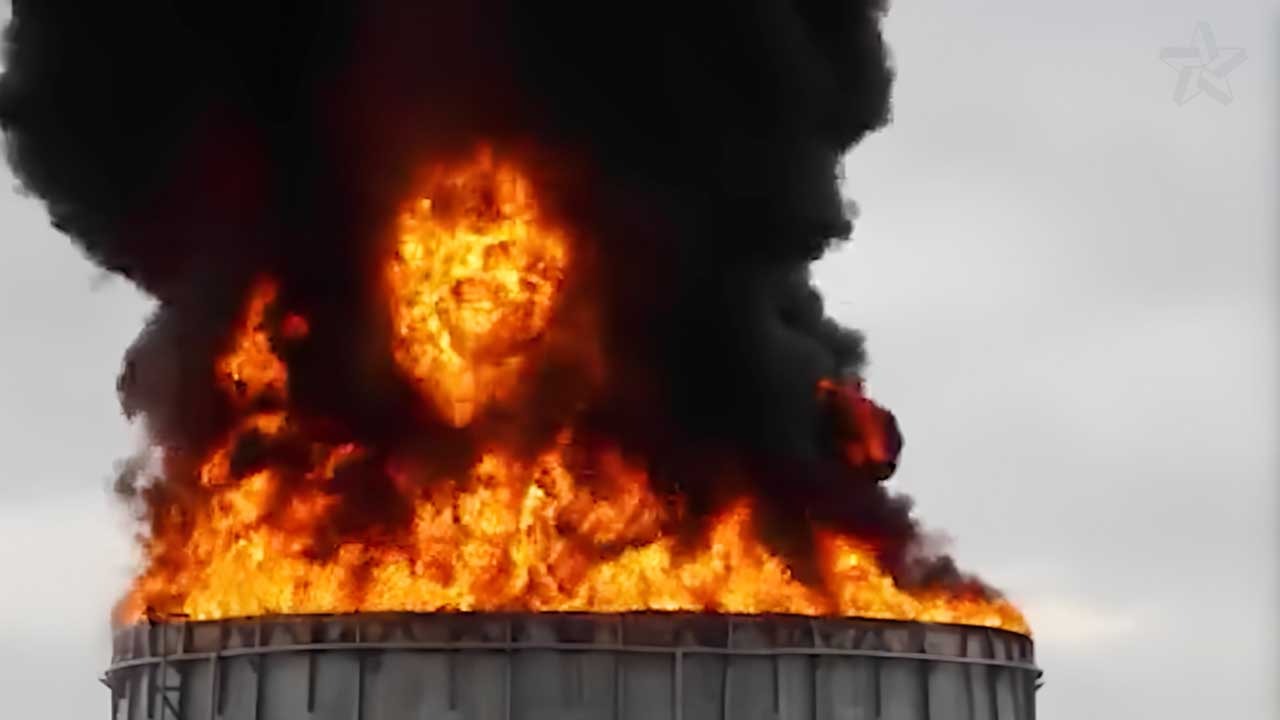
While negotiators talk, Russia is trying to improve its leverage by intensifying attacks on Ukraine’s critical infrastructure. Russian forces have shifted heavily toward drone warfare, and one detailed assessment notes that, Notably, the number of drones launched by Russia in December 2025, 5,649, was triple the number used a year earlier, a surge that has overwhelmed air defenses and forced Kyiv to ration interceptors Notably. A United Nations account of the latest barrages describes Deadly Russian strikes that have pushed civilians deeper into a winter crisis, with one wave involving 242 drones and 36 missiles aimed at power facilities and residential areas Deadly Russian.
The human impact is visible in neighborhoods like Saltivka in Kharkiv, where the same UN report carries a Caption describing the bombing of residential buildings in Saltivka and the struggle to restore basic services amid sub‑zero temperatures Caption. Another detailed narrative of the winter describes how Their power grid under attack, Ukrainians struggle with a long, cold season, relying on Emergency tents set up in residential neighborhoods for heat, phone charging and hot tea when rolling blackouts plunge entire districts into darkness Their. For Moscow, the strategy is clear: make daily life so hard that Kyiv feels compelled to accept tougher terms.
Blackouts, school closures and a grid at breaking point
The strain is perhaps most visible in Kyiv, where repeated strikes have forced authorities to shut schools and ration electricity. One report describes a residential area during a power blackout in Kyiv, photographed by Oksana Parafeniuk for The New York Times, and notes that city officials have had to close classrooms and move lessons online or into shelters because heating and lighting cannot be guaranteed Kyiv. A separate account from the capital shows snow covered, damaged Russian military vehicles on display in downtown Kyiv, Ukraine, on a Friday in Jan, a reminder of earlier battlefield victories that now sit uneasily alongside the vulnerability of the country’s civilian infrastructure Snow.
President Zelenskyy has been blunt about the scale of the shortfall. In a recent briefing cited by Ukrainska Pravda, he said the electricity consumption in Ukraine was 18 GW, while the system’s capacity was only 11 GW, a gap that can only be bridged through imports, emergency savings and rapid repairs Zelenskyy. Another analysis of the grid’s condition describes a grim outlook roughly halfway through the winter season, with technicians warning that repeated strikes have destroyed transformers and substations faster than they can be replaced and that the battered network faces an unprecedented challenge if Russia keeps up the tempo Jan. For families juggling work, school and survival, the question is less about geopolitics than about whether the lights will stay on tonight.
Energy as leverage at the peace table
Russia’s focus on power plants and heating systems is not just about battlefield tactics, it is also about shaping the context in which talks unfold. Russian attacks on Ukraine’s energy infrastructure have left thousands without power in freezing winter temperatures, and officials in Kyiv argue that Russia’s strikes are designed to break public morale and increase pressure on the government to accept concessions Russian. In a separate account of the same pattern, analysts note that Russia’s strikes have repeatedly targeted high‑voltage substations and thermal plants, forcing Ukraine to seek faster energy imports from European neighbors and emergency equipment from partners Ukraine.
Local officials describe the effect in stark terms. One mayor wrote on Telegram that “We’re talking about serious strikes on the system that keeps the city warm and lit,” warning that the damage has pushed temperatures in some apartments close to zero degrees Celsius (zero Fahrenheit) and that repairs could take weeks Telegram. The same report notes that these strikes have coincided with the Ukrainian delegation’s arrival in the US for peace talks, suggesting that Moscow is calibrating its attacks to maximize leverage at the negotiating table Jan. For Ukrainian negotiators, that means any discussion of ceasefire lines or political status is inseparable from demands for robust air defenses, energy support and clear red lines on future attacks.
More from Morning Overview