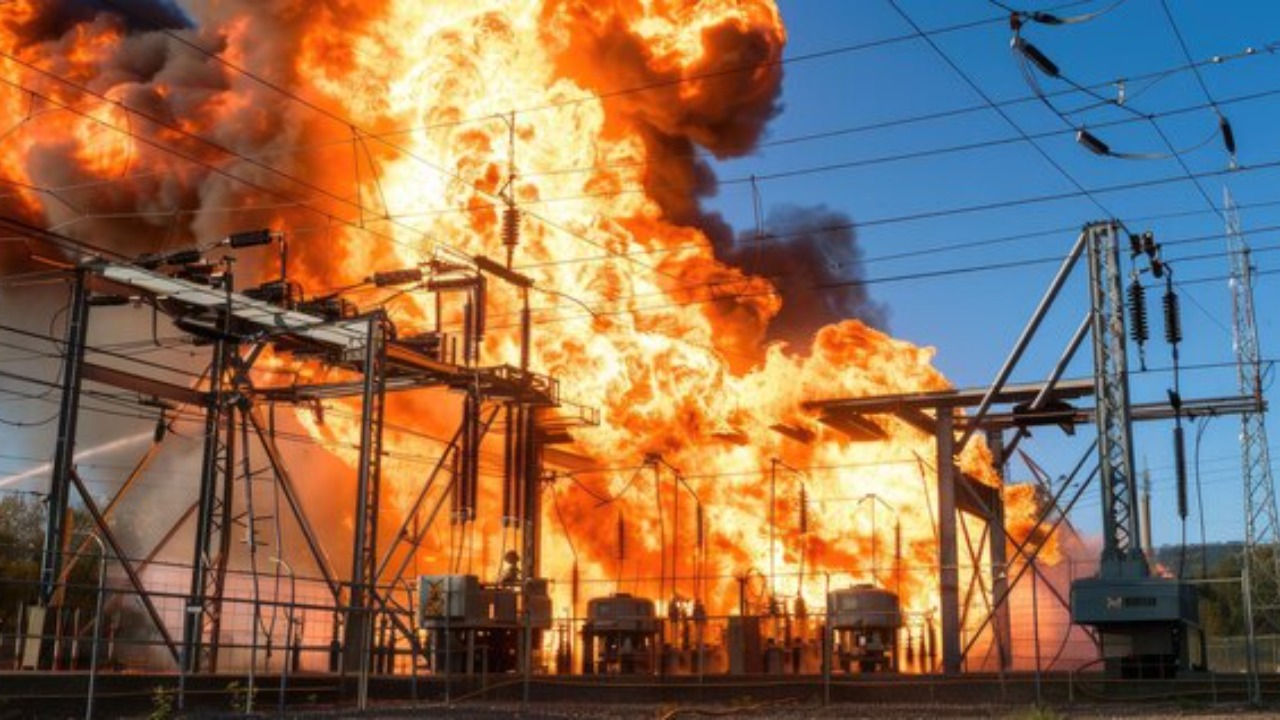

Ukraine is racing to harden its power grid after years of Russian strikes that have turned electricity and heat into weapons of war. Dozens of major substations and plants are already wrapped in concrete and steel, and officials are now preparing protective shields for roughly 120 additional facilities before the next deep freeze. The strategy blends heavy fortifications with a shift toward smaller, dispersed power sources that are harder to knock out in a single blow.
The stakes are stark. Some 50% of all of Ukraine’s hydropower installations have been damaged and 40% destroyed, and rolling blackouts have become a grim feature of daily life. The new wave of defenses is meant not only to keep the lights on, but to convince citizens and investors that the country can function even as the front line grinds on.
The battered grid and a race to shield 120 sites
Ukraine’s energy system is entering another winter already deeply scarred, with officials warning that the grid faces an unprecedented challenge after repeated missile and drone barrages. The national picture is bleak: Some 50% of the country’s hydropower installations have been damaged and 40% destroyed, eroding a backbone of flexible generation that once helped balance the system. Energy minister Illia Novikov has described the situation as “unprecedented,” with officials accusing Moscow of “weaponizing winter” to break public morale.
The pressure on the grid was laid bare when Ukraine Faces Severe on January 22, 2026, amid attacks and infrastructure damage that triggered emergency shutdowns across the entire power grid. In Ukraine, that day underscored how quickly a handful of successful strikes can cascade into nationwide outages. Against that backdrop, authorities are now accelerating plans to fortify dozens of existing power stations and to install shields at roughly 120 more, part of a broader effort to keep electricity and heat flowing in Ukraine even under sustained fire.
From ad hoc sandbags to layered concrete shields
Early in the full-scale invasion, many energy facilities relied on improvised defenses, from sandbags to shipping containers, that offered limited protection against modern munitions. Over time, military Experts on the General Staff worked with engineers to design second and third levels of protection for key nodes, focusing on blast walls, overhead covers and dispersion of critical components. These measures were targeted at Ukrenergo’s main high-voltage substations, where a single destroyed transformer can plunge entire regions into darkness.
The national grid operator has since moved from blueprints to concrete. Ukraine’s national power grid operator Ukrenergo has protected more than half of its power transformers with reinforced concrete shields and other barriers, after spending approximately 300 million to harden these assets. Officials say this is only the first wave, with plans to extend similar protection to dozens more substations and generation units so that the most valuable equipment is no longer exposed on open yards.
Fortifying 100 critical sites and Kyiv’s “energy ring”
National authorities have set a clear numerical target for this fortification drive. Ukraine is set to reinforce security at 100 critical energy and infrastructure sites by the end of 2025, a figure that has become a benchmark for progress. Officials repeated that goal in public updates, stressing that Ukraine is set to reinforce security at 100 critical energy and infrastructure sites as part of a nationwide program. A related statement in Oct made clear that the aim is to complete this work before the harshest winter months.
The capital has been a proving ground for this strategy. Trending Now, Kyiv’s five new cogeneration plants, described as a centerpiece of the city’s resilience strategy, are only partially operational, and Kyiv has already seen its “energy ring” disrupted by Russian strikes. Two of these facilities have been singled out as especially vulnerable, underscoring how even newly built assets can be at risk if fortifications lag behind. City planners now talk openly about wrapping these plants in the same kind of heavy shielding used at major substations, while also dispersing backup capacity across neighborhoods.
Mini power plants, battery parks and mobile CHP
Alongside static defenses, Ukraine is betting on a more distributed energy architecture that is harder to cripple in a single attack. National authorities have invested heavily in a network of fortified mini power plants, with National authorities allocating 220 million for these projects and aiming to fortify 100 critical infrastructure sites across Ukraine by late 2025. If Kyiv’s mini-CHP network succeeds, officials argue, it could serve as a template for other cities that need local heat and power even if long-distance transmission lines are cut.
Behind the scenes, Ukraine has also built a network of secret battery parks to shield its power system from Russian strikes, with locations kept classified to prevent Russian targeting. According to one account, WSJ reported that Six U.S.-made battery systems form part of this hidden backbone, allowing operators to smooth out supply during peak demand or after strikes. In parallel, Germany has pledged 33 units of mobile combined heat and power plants, with Details noting that One such mobile plant can supply heat and electricity to tens of thousands of people. A separate report from Jan quoted an official saying, “What is happening here every night constitutes war crimes,” as he argued that these mobile plants must be deployed as quickly as possible.
Decentralization, renewables and a fragile pause in strikes
The shift toward smaller, dispersed assets is not only about mobility, it is also about basic system design. A technical assessment for new gas engine plants notes that Deploying several smaller plants across various regions in Ukraine reduces the risk of widespread generation failure due to targeted attacks and increases the overall resilience of the power system. That logic is now being applied to renewables as well, after Russian attacks highlighted the vulnerability of centralized power plants. In response, Ukraine is accelerating its shift toward solar and other distributed sources that can keep critical services running even when large plants are offline.
All of this is unfolding against a volatile diplomatic backdrop. President Zelenskiy has said that a moratorium on strikes against energy infrastructure went into effect for a week starting at midnight on Friday, part of a tentative arrangement linked to U.S.-brokered talks. Another account noted that the pause began on a Friday at 12:45 pm EST, highlighting how closely foreign capitals are tracking every move. Yet even during this brief lull, some households remained without heating, and officials warned that the respite could end abruptly. For planners in Jan, the message is clear: fortifications and decentralization must advance regardless of any temporary ceasefire on energy targets.
More from Morning Overview