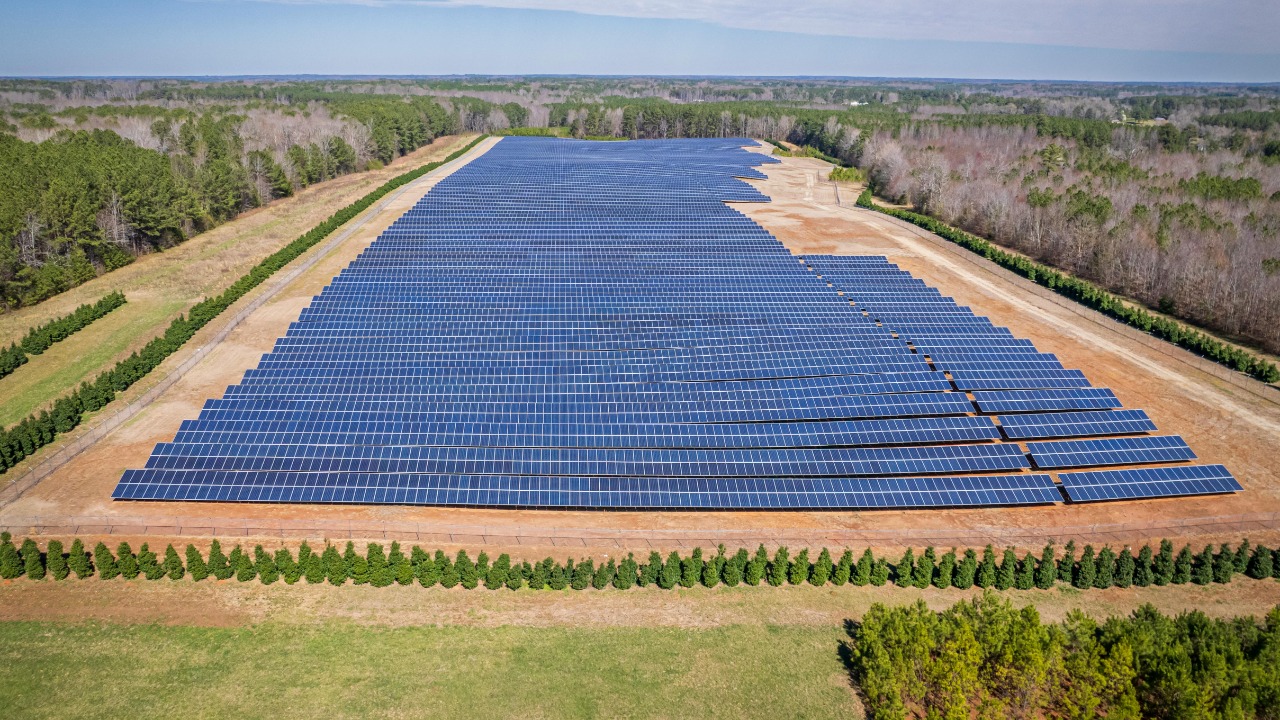

Solar power is expanding so quickly in the United States that it is almost matching the country’s rising appetite for electricity, reshaping how the grid grows even as demand climbs. Instead of fossil generation automatically filling the gap, new panels on rooftops, warehouses, and utility-scale farms are increasingly supplying the marginal kilowatt-hour. The result is a power system in which solar is no longer a niche add-on but a central force holding down emissions and wholesale prices even as consumption rises.
That balancing act is fragile. I see a sector racing to keep up with new data centers, electric vehicles, and heat pumps, while navigating policy reversals, trade fights, and manufacturing bottlenecks. Whether solar can keep nearly offsetting demand growth will depend on how quickly projects move from spreadsheets to steel in the ground, and whether federal and state rules give developers and manufacturers enough certainty to keep building.
Solar’s surge is catching up with rising electricity demand
The core story is simple: U.S. electricity use is climbing, yet solar capacity is growing so fast that it is nearly neutralizing that extra demand. Recent analysis of generation data shows that new solar installations have added enough output that, on a net basis, they have come close to offsetting the increase in power consumption across the grid, with one detailed review finding that solar growth was almost sufficient to cancel out rising energy use. In practical terms, that means many of the additional megawatt-hours Americans are consuming are already coming from sunlight rather than new fossil plants.
Solar is not acting alone. Wind and solar together have expanded faster than overall electricity demand in some recent periods, which has limited the need for new coal and gas generation and helped keep emissions in check. One industry assessment reported that combined solar and wind power has grown faster than electricity demand over the past year, underscoring how clean energy is increasingly driving net growth on the grid. I read that as a sign that the U.S. is closer than many expected to a tipping point where renewables, rather than fossil fuels, define the trajectory of power-sector expansion.
Record installations are turning solar into a mainstream power source
The numbers behind that shift are striking. Industry data for the first half of this year show that the United States installed a record volume of new solar capacity across residential, commercial, and utility-scale segments, with the latest solar market insight report detailing double-digit growth in quarterly additions. Those figures confirm what grid operators are already seeing in dispatch patterns: solar is no longer a marginal contributor but a major source of daytime power in regions from California and Texas to the Mid-Atlantic.
Developers are building at a pace that would have seemed implausible only a few years ago. One industry-focused review described how the U.S. solar sector delivered an impressive 2024 expansion, with utility-scale projects and distributed systems both setting new highs. I interpret that growth as evidence that tax incentives, corporate clean-energy procurement, and falling technology costs are all converging, turning solar into a default choice for new capacity rather than a boutique option reserved for early adopters.
Manufacturing is racing, but demand is racing faster
Behind the installation boom, U.S. factories are scrambling to keep up. Federal incentives have triggered a wave of announcements for new module, cell, and wafer plants, and domestic output is climbing. Yet detailed reporting on the supply chain shows that the growth of U.S. solar manufacturing cannot keep pace with soaring demand, leaving developers heavily reliant on imports to meet project timelines. That mismatch between domestic capacity and installation needs is one of the biggest structural risks I see for the sector.
The gap matters because it shapes how trade policy and tariffs ripple through the market. When local factories cannot fully supply the pipeline, any disruption to imported panels can quickly slow construction or raise costs. Analysts tracking factory buildouts and procurement contracts have highlighted how developers are juggling domestic and foreign suppliers to keep projects moving, even as they try to qualify for incentives tied to U.S.-made components. In my view, the inability of manufacturing to match installation growth is a key reason why policy uncertainty around imports looms so large over the next phase of solar expansion.
Policy reversals and trade fights are slowing, not stopping, growth
Federal policy has added a layer of volatility to that already tight supply picture. Earlier this year, the administration of President Donald Trump shifted course on some solar-related trade and industrial policies, including decisions that affected tariff exemptions and import rules. Market analysts tracking project pipelines concluded that the resulting uncertainty slowed, but did not stop, U.S. solar capacity growth, with some projects delayed or restructured rather than outright canceled. I read that outcome as a sign of how resilient demand for solar has become, even when policy winds change direction.
Trade disputes are compounding the challenge. Developers and manufacturers are navigating shifting rules on panel imports from Asia, investigations into alleged dumping, and debates over how strictly to enforce domestic-content requirements. One detailed examination of these dynamics warned that uncertain trade policies are casting a shadow over future solar growth, particularly for large utility-scale projects that depend on predictable pricing and delivery schedules. From my perspective, the sector is strong enough to keep expanding under these conditions, but not so strong that it can shrug off prolonged policy whiplash without consequences for timelines and costs.
Demand from data centers, EVs, and electrification is rising even faster
While solar races ahead, electricity demand is no longer flat. A new wave of data centers, artificial intelligence workloads, electric vehicles, and building electrification is pushing utilities to revise their load forecasts upward. Grid planners and analysts have warned that growing electricity demand collides with uncertainty in renewables policies, creating a risk that fossil plants could fill any gap if clean projects are delayed. I see that collision as the central tension of the next decade: whether clean supply can keep up with a digital and electrified economy.
Some recent assessments suggest that, at least for now, renewables are holding their own. One report found that solar and wind power has grown faster than electricity demand this year, which implies that clean energy is still outpacing the load growth driven by new technologies. Yet that margin is thin, and it depends on continued rapid buildout of both utility-scale projects and distributed systems on homes and businesses. In my view, the stakes are clear: if solar and wind can maintain that lead, the grid can decarbonize even as it expands; if they fall behind, emissions and reliability risks will rise together.
Solar’s grid role is expanding from niche to backbone
The cumulative effect of these trends is that solar is taking on a central role in U.S. power generation. Industry observers now describe solar energy as leading U.S. power growth, with one detailed review concluding that solar energy leads U.S. power generation with no signs of slowing down. That leadership shows up in interconnection queues, where solar dominates proposed new capacity, and in real-time operations, where midday solar output is reshaping price curves and reducing the run-time of some gas plants.
As solar’s share rises, grid operators are adapting. They are investing in transmission upgrades, flexible resources, and storage to manage the variability of solar output and to shift surplus midday generation into evening peaks. Legal and policy analysts have noted that, despite regulatory and market headwinds, the outlook for U.S. solar has bright spots, particularly where grid planning, permitting reforms, and storage deployment are moving in step with new solar capacity. I see that evolution as a sign that solar is no longer treated as an add-on to the existing system, but as a backbone resource that grid rules and infrastructure must be built around.
The next test: keeping momentum through policy and market uncertainty
Looking ahead, the question is not whether solar will keep growing, but how smoothly it can scale in the face of policy shifts and supply-chain constraints. Analysts tracking quarterly installations and project pipelines have emphasized that the sector’s recent performance, including the impressive 2024 expansion and strong early-2025 numbers in the solar market insight report, reflects both structural demand and time-limited incentives. I interpret that as a warning that maintaining today’s pace will require stable rules, faster permitting, and continued investment in domestic manufacturing.
At the same time, the broader clean-energy ecosystem is becoming more interconnected. The fact that solar growth has nearly offset rising energy use, that solar and wind have outpaced demand, and that solar now leads new U.S. generation are all facets of the same story: clean power is increasingly setting the terms of grid growth. In my view, whether that story continues to be one of near-equilibrium between demand and clean supply will depend on choices made in Washington, in state capitals, and in corporate boardrooms over the next few years, as they decide how aggressively to back the technologies that are already reshaping the American power system.
More from MorningOverview