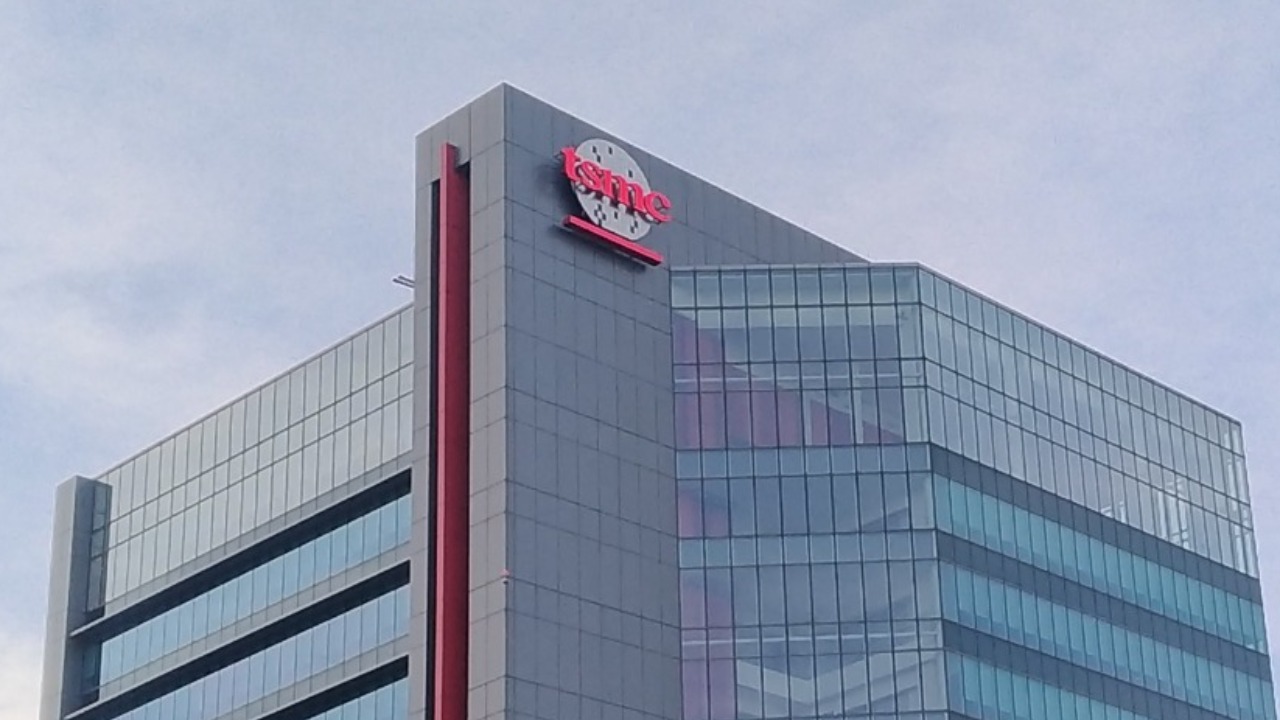

TSMC has turned a wave of artificial intelligence demand into the strongest earnings in its history, underscoring how central the Taiwanese giant has become to the global chip race. The profit surge is now feeding directly into an ambitious buildout of fabrication plants in the United States, with Arizona at the center and more sites under active consideration.
As the company leans into record cash generation, it is signaling that its next phase will be defined as much by geopolitics as by technology, from a proposed U.S.–Taiwan trade framework to pressure from Washington to localize cutting edge production. I see the latest numbers and expansion hints as a clear statement that TSMC intends to remain the indispensable foundry for the AI era while carefully diversifying beyond its home base.
Record earnings powered by AI demand
The latest quarter confirmed that TSMC is not just riding the AI boom, it is shaping it. The company reported net income of NT$505.7 billion for the December period, backed by previously disclosed sales of $33.1 billion, a combination that shattered market expectations and set a new bar for the foundry business. Those figures translate into a profitability level that most industrial companies can only envy, and they give TSMC enormous flexibility to invest ahead of rivals in capacity, process technology, and geographic diversification.
Behind the headline numbers is a structural shift in who needs TSMC and why. When the company that makes 90% of the world’s most advanced chips says AI demand will stay strong, that is effectively a forecast for the entire tech stack, from data center GPUs to edge accelerators in cars and smartphones. TSMC’s Record Earnings Revealed Something Massive About AI and its Future by showing that orders tied to training and inference workloads are not a short term spike but a multi year buildout, with management signaling that AI related revenue could grow significantly through 2028 and 2029. In that context, the latest profit surge looks less like a peak and more like a new baseline.
From historic results to a more aggressive outlook
The blockbuster quarter capped Record High Q4 and Full Year Results that have reset expectations for what TSMC can deliver in a single year. The company has described its recent performance as the strongest in its history, with double digit year over year growth in both revenue and earnings as AI, high performance computing, and premium smartphones converged to fill its most advanced lines. That momentum is feeding an Optimistic Outlook for the coming quarters, with management guiding to continued strength rather than a post cycle hangover, a stance that reflects both firm customer commitments and a still tight supply of leading edge capacity.
That confidence is visible in how TSMC is talking about capital spending and geographic expansion. The company has already lifted its 2026 capex outlook, indicating that it is prepared to invest as much as $165 billion over the current multi year plan to stay ahead of demand for advanced nodes, according to Record High earnings analysis. I read that as a signal that TSMC sees the AI wave as durable enough to justify building capacity that will not be fully loaded for several years, a strategic bet that only a handful of companies in the world can afford to make.
Arizona at the center of a bigger U.S. footprint
The clearest expression of that investment strategy is in the United States, where TSMC (NYSE:TSM) has already committed to a vast complex in Arizona and is now hinting at more. The company has described a plan to invest up to $165 billion in the U.S. over time, with two Arizona fabs already announced, one of which is operational, and a third facility in the United States being planned as part of a broader expansion. Executives have framed this as a response to what they call the rapid expansion of artificial intelligence, a trend that has pushed TSMC’s market share in advanced chips to roughly double that of Samsung Electronics, according to TSMC disclosures.
Meanwhile, the company has moved up the production timeline for its second Arizona plant to the second half of 2027, with construction on that fab already under way and local hiring accelerating. TSMC is set to expand its $165 billion U.S. investment as it refines the mix of process nodes that will be built in Arizona, balancing cutting edge capacity for AI accelerators with slightly older nodes that can serve automotive and industrial customers. The CFO has made clear that the Arizona cluster is not the end of the story, hinting that the company is evaluating additional U.S. locations as it responds to customer pressure for more geographically diversified supply, according to Arizona expansion details.
Signals of multiple new fabs and political tailwinds
Hints about the next wave of U.S. fabs are coming not only from TSMC but also from Washington. U.S. Secretary of Commerce Howard Lutnick said in a podcast released earlier this month that TSMC was set to invest more in the country, and that the company is speeding up capacity plans in response to both customer demand and U.S. policy incentives. According to people familiar with the matter, TSMC is evaluating as many as five more facilities in Arizona, a scale that would transform the state into one of the world’s largest semiconductor hubs and give the United States a far bigger share of leading edge production capacity, as reflected in Secretary of Commerce‘s comments.
Local stakeholders are already positioning for that possibility. The Arizona Technology Council has highlighted that TSMC may build several new fabs in Arizona as part of a proposed U.S.–Taiwan trade deal, a framework that could lock in tariff and regulatory advantages for cross border semiconductor supply chains. People familiar with the matter have described discussions that would see TSMC, Arizona, and Taiwan deepen their industrial ties, with Virtual Tech Spe events and other forums used to coordinate workforce development and infrastructure planning. If those plans advance, they would embed TSMC even more deeply into the U.S. manufacturing base, according to Arizona Technology Council reporting.
Strategic stakes for AI, supply chains, and Taiwan
What ties these threads together is the way TSMC’s financial strength is reshaping both technology roadmaps and geopolitics. With net income of NT$505.7 billion and sales of $33.1 billion in the latest quarter, the company has the resources to pursue parallel priorities: pushing the limits of process technology in Taiwan, building out a multi fab campus in Arizona, and exploring additional U.S. sites that could host future nodes. For AI developers, from hyperscale cloud providers to startups training large language models, that means a more resilient supply of the advanced chips they need, but it also means that access to TSMC capacity is becoming an even more critical competitive advantage.
For Taiwan and the United States, the stakes are even broader. TSMC’s Record Earnings Revealed Something Massive About AI and its Future by underscoring how central the island’s chip industry is to global growth, even as political leaders in Washington and Taipei explore a U.S.–Taiwan tariff deal that could anchor more production in North America. I see the hints of additional U.S. fabs, the explicit references to five more facilities in Arizona, and the raised capex outlook of as much as $165 billion as parts of a single strategy: keep TSMC at the heart of the AI supply chain while reducing the risk that any single geography becomes a point of failure. If that strategy holds, the profit surge investors are cheering today may be remembered as the moment TSMC locked in its role as the defining industrial power of the AI age.
More from Morning Overview