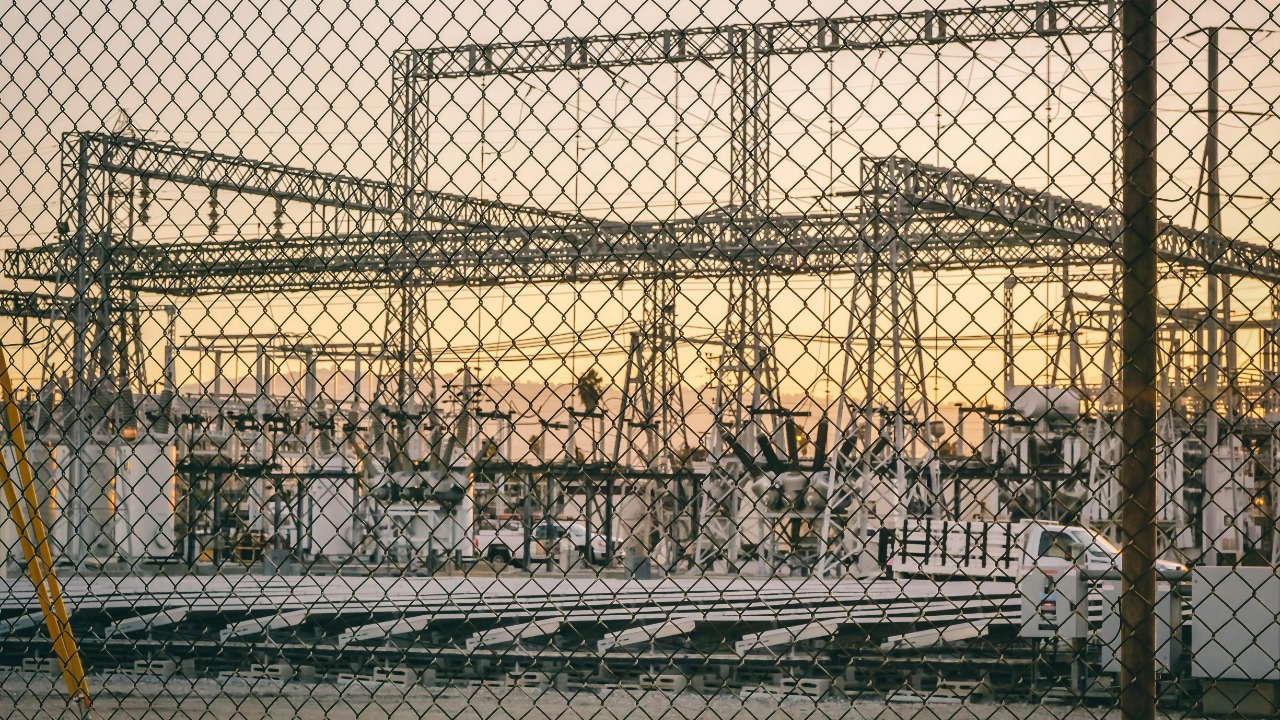

As Winter Storm Fern strained the Texas power grid, the Trump administration quietly turned a long‑running policy debate into an operational experiment. Instead of only asking homes and factories to conserve, federal officials moved to tap the vast backup generators sitting behind the state’s booming data center industry. The move effectively let ERCOT treat those private diesel and gas units as a reserve fleet, buying time to keep the lights on for everyone else.
The decision hinged on an emergency order that allowed the grid operator to lean on backup power that is usually walled off from public use. It also tested whether years of new Texas rules for data centers, from generator disclosures to fuel planning, were enough to turn a theoretical resource into real megawatts when temperatures plunged.
How the DOE order turned data centers into a shadow power plant
The U.S. Department of Energy framed its intervention as a straightforward reliability play, but the mechanics were anything but simple. In response to Winter Storm Fern, the Department of Energy issued an emergency directive that told large Texas data centers and other heavy electricity users to switch to their own backup generation so that grid power could be redirected to households and critical services. By ordering these facilities to fire up on‑site units, the agency effectively converted private emergency systems into a temporary extension of ERCOT’s capacity, freeing up reserves to meet surging demand across Texas.
In parallel, the same Department of Energy order explicitly empowered ERCOT to direct data centers and other large energy consumers when to move off the grid and onto their own equipment, turning what is usually a voluntary demand response into a coordinated emergency tool. Federal officials described the move as part of a broader effort to secure both New England and Texas during the storm, with the Department of Energy in WASHINGTON issuing two emergency orders to mitigate blackouts in New England and Texas during Winter Storm Fern, and to prepare for future events like Winter Storm Fern. That federal framing underscored that Texas was not being singled out, but it also highlighted how central the state’s data center fleet has become to national grid planning.
Trump administration’s bet on 35 G of untapped backup power
President Donald Trump’s energy team has been explicit that it sees backup generators as a strategic asset rather than a last‑ditch afterthought. In public comments around the emergency actions, officials in The Trump administration said they would continue taking action to ensure that the 35 G of untapped backup generation that exists across the country can be used to support the grid when needed. That figure, 35 G, is not a rounding error, it is a statement that the administration views backup units at data centers, hospitals, refineries, and other facilities as a fleet on par with major power plants, and wants regulators to treat them that way.
In Texas, that philosophy translated into a willingness to relax some environmental and operational constraints in the name of reliability, at least temporarily. The emergency order from the Department of Energy allowed ERCOT to call on backup generation resources that would normally sit idle, while federal officials signaled they were prepared to manage any adverse environmental impacts after the fact rather than risk cascading outages in the moment. By tying the Texas directive to a broader national strategy around backup generation, the Trump team effectively used the crisis to advance a policy argument it has been making for years, that backup power should be integrated into planning for extreme events instead of treated as an off‑limits safety net.
ERCOT’s new playbook: directing private backup in real time
For ERCOT, the emergency order was both a lifeline and a test of its ability to orchestrate assets it does not own. The Brief from federal officials made clear that the Department of Energy was authorizing ERCOT to direct data centers and other large energy users to rely on their own backup power so that grid electricity could be conserved for broader system stability. That meant ERCOT operators were suddenly in the business of telling private facilities when to start and stop their generators, a role that goes well beyond the traditional practice of asking customers to voluntarily curtail usage during tight conditions.
On the ground, that coordination leaned heavily on existing relationships and programs. As one industry professional noted in a public post, many data centers in Texas are already enrolled in demand response programs that pay them to reduce load when the grid is stressed, while others have the technical capability but have not signed up for those arrangements. The Department of Energy order effectively pulled both groups into the same emergency framework, with ERCOT using its new authority to direct backup usage for those that participate and to provide a clear pathway for those that do not. By formalizing that role, the Department of Energy gave ERCOT a sharper tool to manage crises, but it also raised new questions about how far a grid operator should reach into private infrastructure during an emergency.
Texas lawmakers laid the groundwork with SB‑6
Texas did not arrive at this moment by accident. Over the past few years, state lawmakers have been reshaping the rules that govern how data centers connect to and interact with the grid, culminating in SB‑6. On May, the Texas Legislature passed SB‑6, a sweeping measure that introduced significant changes to the planning, interconnection, operation, and regulation of large load facilities, including data centers, and that was later signed by Governor Greg Abbott. Among other things, SB‑6 tightened expectations around how these facilities disclose their power needs, coordinate with ERCOT, and plan for emergencies, reflecting lessons learned from earlier winter storms.
One of the most consequential pieces of that law is the way it handles Infrastructure Cost Sharing. Under SB‑6, data centers must now cover the full costs of connecting to the grid, including transmission, distribution, and any necessary upgrades, unless explicitly denied or modified by regulators. That shift pushes operators to think more carefully about where and how they build, and it gives ERCOT and utilities more leverage to insist on designs that support reliability rather than undermine it. By the time Winter Storm Fern hit, many of the largest facilities had already been forced to map out their generator fuel plans and interconnection impacts in far greater detail than before, which made it easier for ERCOT and the Department of Energy to understand what backup capacity was actually available when they needed to call on it.
Backup obligations, fuel plans, and the next Texas grid test
Even with SB‑6, Texas has stopped short of mandating that every data center install massive on‑site generation. The state’s approach has instead focused on transparency and operational commitments. Under the Backup Generation Obligations in SB‑6, operators are not required to build universal on‑site backup, but Operators must disclose what generation they have, how it is configured, and how it will be used during grid emergencies, and they must operate existing on‑site backup in line with those commitments. That disclosure regime gives ERCOT a clearer picture of which facilities can realistically move off the grid during a crisis and which will remain dependent on system power no matter what.
Fuel planning has become just as critical as hardware. Industry guidance following SB‑6 has stressed that data centers need robust generator fuel strategies, both because Infrastructure Cost Sharing has increased the financial stakes of grid connections and because regulators now expect facilities to maintain enough fuel to run through extended emergencies. The Department of Energy’s emergency order, which directed Texas data centers to deploy backup generation resources in order to preserve grid reserves, effectively put those plans to the test. If a facility had underinvested in fuel storage or logistics, it risked running out of backup power precisely when ERCOT needed it most, undermining both its own operations and the broader grid strategy.
More from Morning Overview