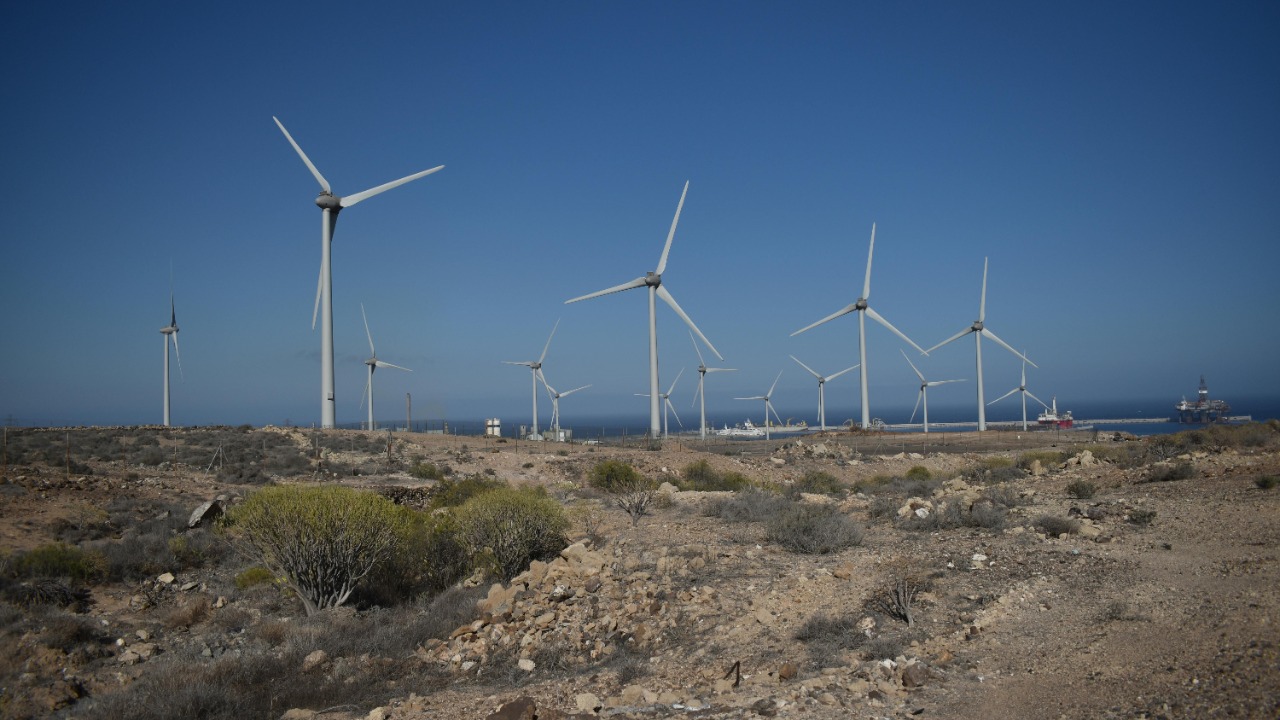

President Donald Trump has turned his long‑running dislike of “windmills” into a centerpiece of his energy message, insisting that turbines are unreliable, dangerous and a drag on national prosperity. At the World Economic Forum in Davos, Switzerland, he went further, arguing that countries investing heavily in wind are effectively choosing economic decline. His rhetoric now collides not only with global climate goals but also with court rulings, market data and the lived reality of regions that have built their economies around wind power.
As legal fights over offshore projects intensify and allies abroad double down on turbines, Trump is betting that attacking wind will resonate with voters worried about energy bills and industrial jobs. I see a widening gap between that political narrative and the evidence emerging from judges, financial analysts and even Republican‑leaning farm states.
From Davos tirade to “money‑losing windmills” mantra
Trump’s latest escalation came At the World Economic Forum in Davos, Switzerland, where he framed modern climate policy as a kind of economic self‑sabotage. In front of global executives and heads of state, Donald Trump derided European green policies as a “green new scam” and a “hoax,” arguing that energy “should make money, not lose it” and claiming that wind and solar had placed “strain” on Europe’s economy, according to remarks captured in WEF coverage. A separate account of his Davos appearance noted how he was TILTING at WINDMILLS, railing against turbines while the same meeting highlighted milestones in European wind and solar deployment, as summarized At the World Economic Forum in Davos, Switzerland. Speaking to another audience in Davos, Trump sharpened the line further, saying “there are windmills all over the place, and they are losers,” and asserting that “the more windmills a country has the more money that country loses,” according to a recording of his remarks on China.
Those themes have been building for years but have become more explicit in 2026. One climate policy tracker described a “Stupid” wind turbine rant, noting that Speaking at the World Economic Forum, or WEF, in Davos Trump made several dubious claims about turbine reliability and grid stability, even as Europe’s North Sea alone features more than 7,000 turbines, according to Davos reporting. In a separate Davos‑adjacent video, Trump contrasted his preferred fuels with renewables, saying “Nuclear will take three weeks” and insisting that most countries are “going oil and gas,” a line captured in a clip labeled Jan and Nuclear. The throughline is clear: in Trump’s telling, wind is not just flawed, it is a symbol of elite folly that he can attack to draw a sharp line between his energy agenda and that of his critics.
“They’re losers”: how Trump’s wind rhetoric hardened
Trump’s Davos language did not come out of nowhere. Earlier in January he told a national audience that “We have not approved one windmill since I’ve been in office and we’re going to keep it that way,” adding, “My goal is to not let any windmills be built,” according to a report that quoted him saying Trump assails “windmills” and wind energy as junk and that They are “losers” destined to become “a junkyard of steel,” a description attributed to Donald Trump in a piece labeled NATION. Another account of the same remarks stressed how Trump, They and Donald Trump were all tied to the same “losers” phrasing, underscoring how central that insult has become to his stump speech on energy, as detailed in a follow‑up on Trump. The repetition is deliberate: by branding turbines as “junk,” he invites supporters to see wind farms not as infrastructure but as blight.
His language has also veered into the apocalyptic. Over the summer, at his golf course in Turnberry, Scotland, Trump complained about seeing turbines “on the horizon” and declared that windmills are “killing us,” according to a clip described as a bizarre moment in which he suggested that “they will not let you bury the propellers,” even though, as the same report noted, wind power is one of the safest forms of electricity generation, a contrast highlighted in coverage from Turnberry, Scotland. That “killing us” line resurfaced in legal filings when opponents of his offshore freeze pointed out that Judge Brian Murphy of the Massachusetts Superior Court explicitly declined to weigh such political commentary, even though President Trump has frequently criticized wind turbines and claimed that they are killing people, according to a summary of the case involving Murphy. The more Trump repeats these claims, the more they shape his administration’s regulatory posture, even when courts treat them as political noise rather than factual input.
Courts push back on the offshore wind freeze
That gap between rhetoric and law is now defining Trump’s offshore agenda. Legal observers note that Legal tests await Trump’s offshore energy agenda in 2026, particularly around Offshore wind, where The Trump administration’s anti‑offshore‑wind directives have triggered a wave of lawsuits from developers and states, according to an overview of pending cases in Legal. One flashpoint is the Vineyard Wind project off Massachusetts, where a federal judge recently allowed construction to resume in New York State’s analogous offshore build and then in New England, marking the second time a court has cleared a major project to move forward despite administration resistance, as described in a broadcast about a project in New York State. In Massachusetts, another judge cited the potential economic losses arising from delays in constructors and the developers’ strong likelihood of succeeding on the merits when he delivered what was described as another blow to Trump’s offshore wind freeze, a decision that underscored how President Trump has frequently criticized wind turbines even as courts weigh the concrete costs of stalled projects, according to an analysis of the freeze.
The Vineyard Wind litigation in particular shows how judges are filtering out political theater. In one ruling, Unlike some of the other judges in these cases, though, Murphy said he did not consider the many comments from high‑ranking officials, focusing instead on statutory criteria and project‑specific evidence, according to a detailed account that quoted Unlike Murphy. When another federal judge allowed Vineyard Wind to resume construction, The White House blasted the ruling and a spokesperson said “President Trump has been clear: wind energy is the scam of the century,” vowing ultimate victory on the issue, according to a statement from The White House. Yet the same Massachusetts decision emphasized the benefits of manufacturing and electricity generation that would flow from the project, a point highlighted in another summary of how President Trump has frequently criticized wind turbines while judges weigh the broader economic stakes for coastal communities and supply chains tied to offshore manufacturing.
Europe shrugs off the “green new scam” label
Trump’s claim that “the more windmills a country has the more money that country loses” is also running into a hard reality abroad. In Brussels, European governments are moving in the opposite direction, with BRUSSELS, Jan 23 (Reuters) reporting that European countries including Germany, Britain and Denmark will reinforce their plans to massively expand wind capacity, even as Trump blames “money‑losing windmills” for Europe’s economic decline, according to a draft strategy described as a commitment by European governments including Germany, Britain and Denmark to keep investing in European wind. In Davos, Trump again singled out Europe, with one energy trade outlet summarizing his line as Trump claims “money‑losing windmills” to blame for Europe’s economic decline, even as President Donald Trump gave that speech against a backdrop of European plans to pour more capital into turbines, according to a report focused on Europe. A related summary of his remarks noted that Trump, Europe and President Donald Trump were all invoked as he argued that wind was dragging down European competitiveness, a framing that contrasted sharply with the region’s own draft plans to reinforce its offshore and onshore Trump build‑out.
More from Morning Overview