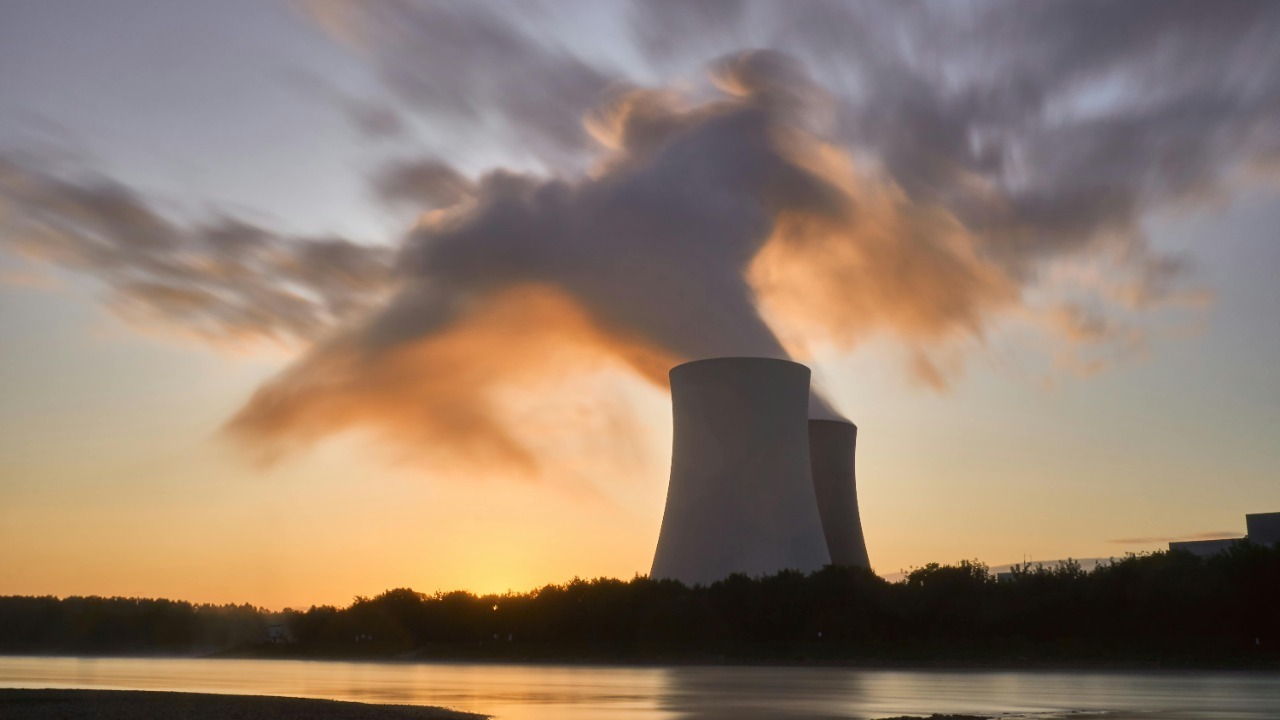

President Trump’s energy team has quietly delivered one of its most sweeping deregulatory moves yet, telling developers of a new generation of nuclear reactors that they are safe enough to bypass traditional environmental scrutiny. Instead of the lengthy public assessments that have governed atomic power for decades, these projects will be able to move ahead with far less review, on the theory that advanced designs can withstand even severe accidents on their own. The decision lands at a moment when the administration is betting heavily on nuclear power to feed energy-hungry AI data centers and revive a domestic reactor industry.
Supporters inside the government frame the shift as a pragmatic update to outdated rules, while critics see an attempt to dismantle hard‑won safeguards behind closed doors. I see it as a test of how far a White House can stretch claims of “inherent safety” to justify sidelining communities, scientists, and even some nuclear experts from decisions that will shape the country’s energy and environmental future for generations.
The new exemption and what it actually does
The Energy Department has now carved out a special category for advanced nuclear projects, declaring in an official notice that these reactors are so inherently safe they can be excluded from the usual environmental review process. In that notice, the Energy Department pointed to passive safety systems and designs meant to contain even extreme malfunctions without large releases of radiation. That language is the legal hook for skipping the detailed environmental impact statements that have long been standard for nuclear plants, and it effectively shifts the burden of proof from developers to the public.
According to multiple accounts, the Trump administration has already been working behind the scenes to make this possible, with officials having secretly rewritten key nuclear safety and environmental standards before unveiling the exemption. One detailed report notes that Trump administration has overhauled those rules, then used the claim of robust safety systems to justify the new carve‑out. When the White House finally announced that Trump exempts new nuclear reactors from environmental review, it did so against the backdrop of these already rewritten standards, a sequence that one account describes by noting that the announcement followed those changes.
A broader campaign to loosen nuclear rules
The exemption is not a one‑off decision, it is part of a broader effort inside the Trump White House to pare back what officials see as unnecessary nuclear red tape. Earlier this year, advocates warned that Radical changes to nuclear safety and security rules for new reactors were being developed in response to a White House Executive directive, and that those changes had not yet been publicly released. In parallel, a separate account describes how BRUMFIEL reported that, in a statement to NPR, the Department of Energy said it would make those rules public only “later this year,” underscoring how much of the rewrite has unfolded out of view.
On the policy side, the administration has been laying the groundwork since In May 2025, when In May President Trump signed a suite of directives described under the banner of Executive Orders Reshape. Those orders, which one Energy Department summary touts as “8 Big Wins for Nuclear in the Trump Administration’s First Year,” are explicitly framed as a way to “reinvigorate the nuclear industrial base” and include a reference to the figure 202 in its promotional material. A separate legal analysis notes that one of those directives Directs the Secretary to streamline National Laboratory processes at DOE for reactor testing, a move that dovetails neatly with the new exemption.
What is being lost when reviews disappear
To understand the stakes, it helps to remember what environmental review actually does for nuclear projects. Under longstanding law, new reactors have typically been required to produce a written, public assessment of how a severe accident could unfold and what it would mean for surrounding communities. One detailed account notes that the law also requires extensive analysis of accident scenarios and that this framework was reinforced by a nuclear power measure Trump signed last May, a point underscored in a report explaining that law also requires documentation. Another summary of the same decision stresses that the law also typically required a written, public assessment of the possible consequences of a nuclear accident, a requirement that is now being set aside for these advanced designs.
By declaring that environmental review is not needed, the administration is stripping away one of the few formal venues where local residents, independent scientists, and state officials can interrogate the assumptions behind new reactors. Several public radio reports emphasize that the decision to exclude these projects from conducting environmental reviews means there will be less transparency and fewer chances to challenge siting decisions, with one noting bluntly that Environmental review not is now the official line. Parallel coverage from another outlet reiterates that environmental review not needed is the phrase used to justify skipping the usual assessment process, while a third report from another region echoes that environmental review not needed is now the standard for these projects, again highlighting the loss of public assessment.
Industry hopes, AI demand, and expert pushback
Inside the nuclear industry, the exemption is widely seen as a long‑anticipated win. One analysis notes that the exclusion had been expected, according to Adam Stein, the director of nuclear energy innovation at the Breakthrough Institute, who has argued that advanced reactors need a clearer path to deployment. Another report from a regional outlet similarly notes that the exemption had been expected and that Stein, again identified as director of nuclear energy innovation at the Breakthrough Institute, saw it as a logical extension of the administration’s pro‑nuclear agenda. Supporters also stress that the goal is to develop new sources of electricity for power‑hungry AI data centers, with one report explaining that the goal, supporters say, is to supply those facilities and that these areas are already straining local grids.
Yet even as the administration leans on the promise of inherent safety, some nuclear experts warn that the underlying rule changes have not been fully aired. One detailed account notes that the exemption announcement came just days after NPR revealed that officials at the Department of Energy had secretly rewritten environmental and safety regulations, while another report from a different region repeats that NPR had disclosed how the Department of Energy quietly changed those rules. A separate summary of the national story underscores that Trump exempts new nuclear reactors from environmental review and that this announcement followed the rewritten standards, a sequence captured in the description that Trump exempts new only after those internal changes. Another passage from the same coverage notes that Trump administration has altered the regulatory baseline, while a separate excerpt highlights that, in its notice, the Energy Department explicitly cited inherent safety systems as the reason to skip review.
A long history of nuclear risk and a shifting climate stance
From a historical perspective, the decision to lean so heavily on claims of inherent safety marks a sharp turn away from the cautious approach that shaped nuclear regulation in the second half of the twentieth century. One scholarly analysis notes that Several landmark policy actions from the 1950s to the 1980s, including legislation, regulatory risk assessment exercises, and Supreme Court decisions, were designed to contain the atom while still allowing a profitable private nuclear industry to emerge. That history is a reminder that safety reviews were not bureaucratic accidents, they were deliberate tools to manage a technology whose risks are uniquely long‑lived and geographically expansive.
More from Morning Overview