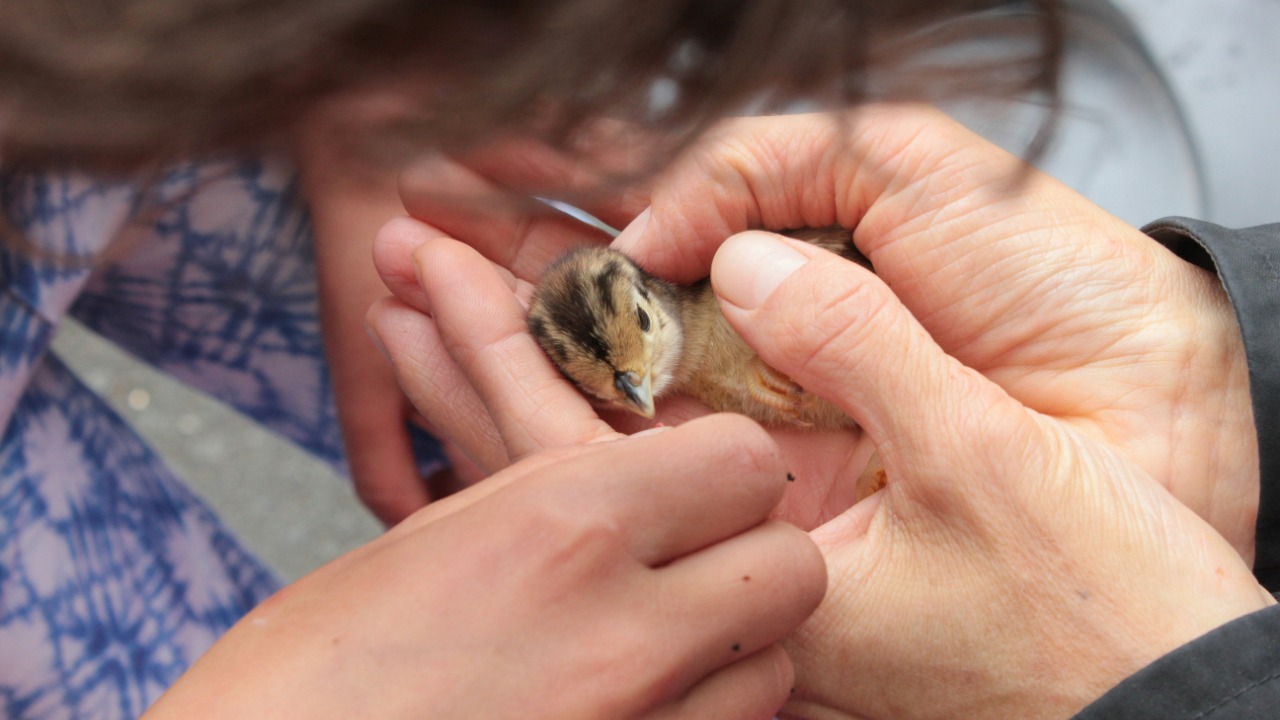

Tiny radio transmitters, some no bigger than a pencil eraser, are quietly rewriting what scientists thought they knew about bird survival. By following individual birds through storms, smoke and sprawling migration routes, these tags are exposing a hidden strategy: many species cope with a harsher world not by charging through it, but by pausing, rerouting or shrinking their daily lives in ways that were almost impossible to see before. I now see these devices less as gadgets and more as a kind of truth serum, forcing long‑held assumptions about bird resilience to match the birds’ actual behavior.
The new tracking technology is also revealing how fragile that survival trick has become. As habitats fragment and climate shocks intensify, the same instincts that once kept birds safe can strand them in degraded stopovers, trap them under wildfire smoke or push them into human‑dominated landscapes where the old rules no longer apply. The story emerging from these tags is not only about birds’ ingenuity, but about how close that ingenuity is to its limits.
How “nanotags” turned birds into individuals, not dots on a map
For decades, bird tracking meant colored leg bands, a handful of satellite collars and a lot of guesswork. The shift to tiny radio transmitters has turned that sketch into a high‑resolution portrait, letting researchers follow specific birds as they navigate real‑world hazards. In coastal wetlands, scientists now glue button‑sized “nanotags” with delicate wire antennas to the backs of semipalmated sandpipers, then listen for each bird as it departs, lands and lingers along the flyway. Those nanotags have shown that even small shorebirds depend on a chain of specific stopover sites, and that when any link is weakened by development or pollution, survival drops sharply.
The same principle is now being scaled up across continents. A growing network of automated receiving stations listens for tagged birds as they pass, turning scattered detections into continuous life histories. In one large project, tens of thousands of tiny tags have been deployed on migrants ranging from songbirds to raptors, revealing that individuals often take dramatically different routes and schedules even within the same species. Those tagged birds, including Swainson’s thrushes studied with specialized antennas that automatically upload data, have shown that what looked like a single migration line on a map is actually a braided set of paths, each with its own risks and rewards, as documented in detailed tracking of secret lives and in focused work on Swainson thrushes.
The quiet survival trick: staying put when the air turns toxic
One of the most striking behaviors exposed by these tags is what birds do when the sky itself becomes dangerous. At Hastings Natural History Preserve in California, researchers fitted Acorn Woodpeckers with tiny radio transmitters and watched what happened when wildfire smoke blanketed the landscape. These gregarious birds normally live in family groups and often visit their neighbors, a social pattern that helps young birds find mates and establish territories. When the smoke rolled in, tagged Acorn Woodpeckers abruptly shrank their world, spending more time at home, venturing shorter distances and visiting fewer neighbors, a pattern captured in tracking of They, the Acorn woodpeckers and the social ties Which normally sustain them.
That retreat looks like a simple choice to hunker down, but it carries hidden costs that only continuous tracking can reveal. By cutting back on visits to neighboring territories, birds lose chances to scout new food sources, locate safer nest cavities or disperse young that might otherwise be crowded out. Over a single smoky week, that trade‑off might be survivable. As megafires and long smoke seasons become more common, the same instinct to stay put could trap birds in poor air for longer stretches, undermining their health and breeding success. The fact that researchers could quantify those shifts in movement, rather than infer them from absence or anecdote, is a direct result of the new generation of solar tags that keep transmitting even through prolonged crises.
Backpacks, solar cells and the race to keep tags light enough
Turning birds into reliable data carriers without harming them has required a parallel revolution in hardware. Early radio tags were bulky and battery‑hungry, limiting their use to large species and short projects. Today, researchers can fit solar‑powered “backpacks” on surprisingly small birds, using harnesses that distribute weight and panels that recharge in daylight. In New Hampshire, scientists from the University of New Hampshire gently placed such solar‑powered radio tags on wild birds at a preserve, a scene captured in a field video of Birds with tiny backpacks and in a separate clip that simply delights in seeing Yes, birds wearing gear as UNH researchers work.
On the engineering side, companies have pushed miniaturization to the edge of what physics allows. Michael Lanzone, CEO of Cellular Tracking Technologies, helped develop Life Tag, a line of very small, fully solar‑powered wildlife tags that can operate for years without a battery change. These devices, described as the first really small, totally solar‑powered wildlife tags, are light enough for small songbirds yet powerful enough to broadcast to receivers at key migration bottlenecks, turning each bird into a moving sensor that reports when it passes a major concentration point. The commercial rollout of these Life Tag units has effectively opened up long‑term tracking for species that were previously off‑limits because any extra weight would have been lethal.
From single birds to global networks of towers
Tracking one bird at a time can reveal intimate details, but the real power of radio tags emerges when they are paired with dense listening networks. The Motus Wildlife Tracking system is a prime example, combining ever‑smaller transmitters with a grid of automated towers that scan for passing tags. Each tower can detect any compatible tag within range, so a bird tagged in one country can be picked up hundreds or thousands of kilometers away without any extra work from the original research team. As more towers join the network, the coverage expands, turning local projects into a shared, continental‑scale experiment in movement ecology, a transformation captured in reporting on how Enter the Motus has changed bird monitoring.
Government agencies are plugging into this revolution as well. The U.S. Fish and Wildlife Service has highlighted how automated radio telemetry can detect birds that would otherwise pass unnoticed, from secretive marsh species to migrants that fly at night. By pairing tags with strategically placed receivers, biologists can now identify migration corridors, stopover hotspots and mortality black holes where tagged birds vanish at suspiciously high rates. These insights are feeding directly into conservation planning, helping managers decide where to restore wetlands, where to adjust wind turbine placement and where to focus enforcement against illegal hunting, all informed by the new ability to detecting birds in motion rather than only at rest.
What tiny tags reveal about navigation, risk and the limits of adaptation
Beyond mapping routes, the tags are exposing how birds actually make decisions in a changing world. Classic experiments showed that young migrants learn to find north by watching the apparent nighttime rotation of the stars around the North Star, then combine that celestial compass with an internal map of the Earth’s magnetic field. Newer work suggests that this magnetic sense may rely on quantum reactions in specialized molecules in the eye, a mechanism that could be disrupted by light pollution or electromagnetic noise. When researchers overlay that basic orientation system with real‑world tracks from radio‑tagged birds, they can see where instinctive headings collide with altered landscapes, forcing detours or risky crossings, a synthesis that draws on detailed work on the North Star and quantum‑based navigation.
More from Morning Overview