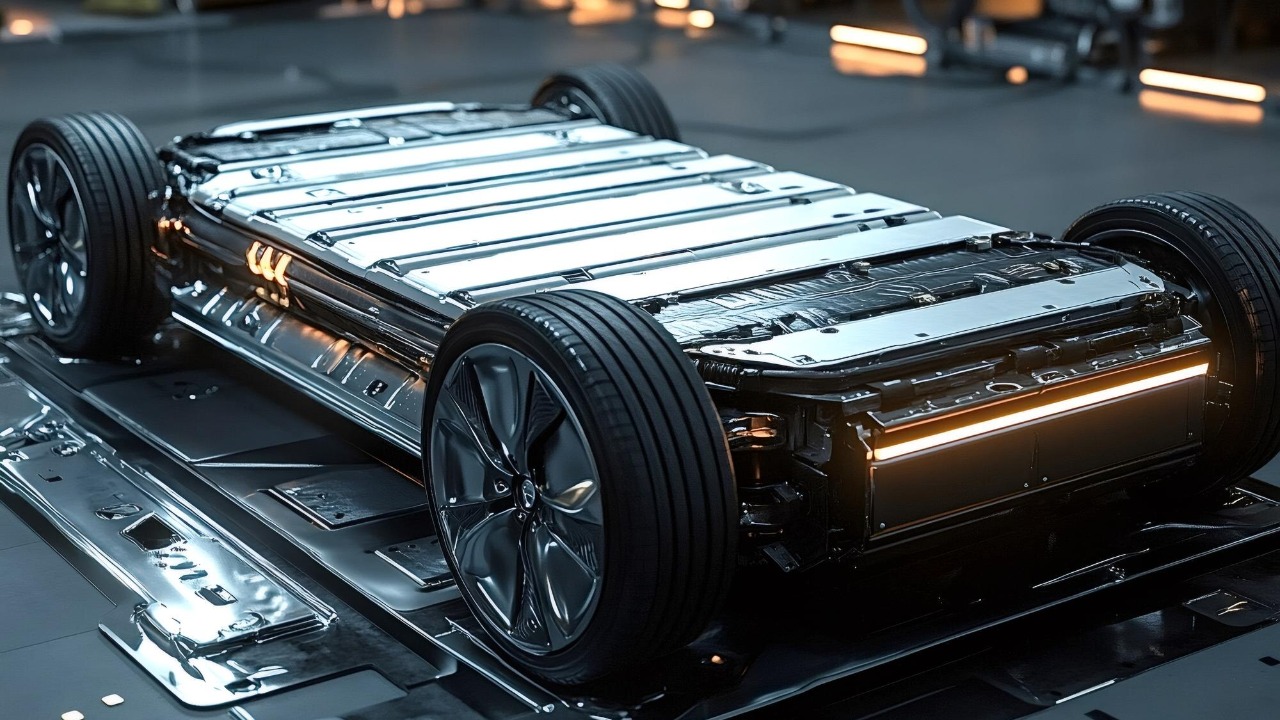

Every few years, a battery breakthrough arrives promising to rewrite the rules of technology, from electric cars to smartphones to the grid. The latest claim, centered on a solid-state design from a little known outfit called Donut Lab, is bold even by that standard, hinting at a step change in performance that could ripple across the entire economy. If it holds up outside the lab, the way we build vehicles, robots, and even data centers could shift faster than most policymakers or investors are prepared for.
The stakes are unusually high because this is not just another incremental tweak to lithium-ion chemistry. The pitch is a production-ready cell that charges in minutes, lasts far longer than today’s packs, and fits into existing manufacturing and product plans. That combination, if real, is exactly the kind of inflection point that can unlock the next wave of consumer devices, industrial automation, and AI infrastructure.
Inside Donut Lab’s audacious solid-state promise
The current frenzy began when Donut Lab publicly claimed it had a solid-state electric vehicle battery ready for production, rather than a distant prototype. The company used the run-up to CES to describe a Solid design that slots into a wider electrification platform, signaling ambitions that go beyond a single car model. In a sector where most solid-state projects are still stuck in pilot lines, that alone set off a wave of scrutiny from engineers and investors who have heard similar promises fall short.
What pushed the story into overdrive was the claim that this so-called Donut Battery can be charged in roughly five minutes while still delivering the energy density needed for long-range vehicles. In a detailed video, Lab CEO Marko walks through how the Donut Battery is meant to reach that benchmark in a production context, not just in a coin cell on a bench. If that performance translates into real cars and motorcycles, it would erase one of the last psychological barriers to mass EV adoption: the fear that charging will always be slower and less convenient than filling a tank.
The hype cycle, the skeptics, and the “three month” test
As with any sweeping claim in battery science, the backlash arrived quickly. Industry watchers pointed out that solid-state cells have a long history of looking perfect in controlled conditions, only to degrade rapidly when scaled up. One widely shared analysis framed the situation starkly, arguing that this battery is either about to change the world in roughly three months or make its champion look foolish, a reference to a piece that drew 58 separate performance claims and attracted 226 online Comments dissecting every technical detail. That level of public fact-checking is unusual even in the hype-prone EV space, and it reflects how much is riding on whether Donut Lab can deliver.
The company has not helped its own case by leaning into bold marketing language, but it has at least put some stakes in the ground. Donut Lab has tied its roadmap to specific applications and partners, rather than vague future licensing deals, which means the market will know relatively quickly whether the technology is real. If early deployments fail to match the promised cycle life or safety profile, the same online communities that amplified the story will turn on it just as fast, and the “three month” window for proof will close.
From concept to products: motorcycles, robots, and heavy machines
What makes this moment different from past solid-state waves is the number of concrete product plans already attached to next generation cells. Unlike the many solid-state battery concepts that remain stuck in laboratories or distant roadmaps, Unlike the earlier generation of announcements, Donut Lab is already tied to Verge Motorcycles’ lineup beginning in Q1 2026, which gives the industry a near term proving ground. If riders can fast charge a high performance bike repeatedly without killing the pack, that will be a powerful real world validation.
At the same time, established players are racing to show they are not being left behind. ProLogium used CES to mark its 20th anniversary and unveil a Superfluidized Technology Platform that stretches from EVs to Humanoid Robots, Construction Machinery, and Energy Storage, backed by plans to invest billions of dollars in scale. That breadth matters, because it hints at a future where the same core chemistry powers everything from warehouse cobots to grid scale backup, simplifying supply chains and accelerating learning curves.
The parallel race: sodium, silicon, and incremental revolutions
Even if Donut Lab stumbles, the broader battery landscape is shifting underfoot. Sodium-ion cells, long dismissed as a niche, are now being treated as one of the year’s defining breakthroughs, with Sodium chemistry finally moving into commercial products. But the appeal is not just technical; sodium avoids some of the geopolitical and environmental constraints that dog lithium, which is why companies like HiNa Battery are racing to put sodium packs into scooters, stationary storage, and low cost vehicles.
On a different front, silicon anodes are quietly rewriting what conventional lithium-ion cells can do. A recent announcement from Porsche-backed Group14 Technologies and Technologies and New based Sionic Energy described a silicon based design that could boost EV performance and accelerate silicon’s broad market adoption. These advances may not grab headlines like a five minute charge, but they are already being baked into upcoming model years from brands that prefer evolutionary gains over risky leaps.
Why this matters far beyond electric cars
The impact of a truly transformative battery will not stop at the curb. AI workloads, cloud gaming, and edge computing are all pushing data centers and telecom networks to their power limits, and operators are looking for ways to buffer demand without building new fossil plants. Industry analyses of AI adoption note that, Furthermore, advancements showcased in cutting edge innovation labs are, by definition, ahead of widespread adoption, which means the supporting infrastructure often lags behind. Better batteries are one of the few tools that can close that gap quickly, smoothing out peaks in demand while new transmission lines and renewable projects catch up.
Finance is already living through a version of this story. In capital markets, AI systems that once lived in research groups are now embedded in live trading and risk platforms, with one provider noting that, Fast forward to today, this technology is in real world deployment by customers who barely notice that it originated in a completely different field. If solid-state and sodium cells follow a similar path, they will quietly underpin new services, from autonomous delivery fleets to always-on AR glasses, long before most consumers realize what changed.
More from Morning Overview