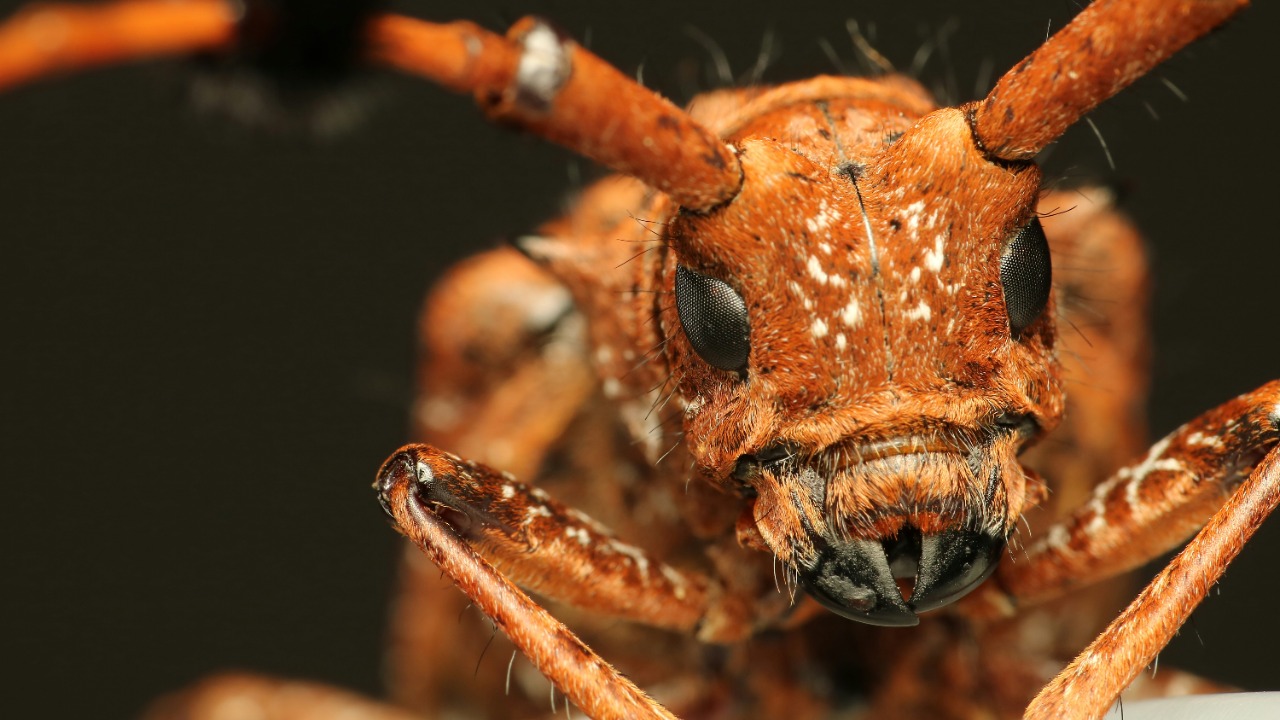

Some wasps are unsettling, and then there are species so extreme that even the scientists who study them reach for words like “horror,” “vampire,” and “nightmare.” These insects combine outsized weaponry, mind‑bending parasitic tricks, and, in some cases, a talent for turning our own infrastructure into part of their life cycle. Taken together, they show how far evolution is willing to go in the arms race between predator and prey.
From giant stingers and sickle‑shaped jaws to radioactive nests and flesh‑eating larvae, the most disturbing wasps on record are not just creepy curiosities. They are also warning signs about how human activity, climate shifts, and global trade are helping some of nature’s strangest specialists spread into new places, including backyards across the United States.
The original “nightmare” wasp and its monstrous relatives
When entomologists first described a wasp with a stinger longer than its own body, the images were so startling that the insect was instantly branded a living nightmare. In coverage of this discovery, one report noted that Most of us already have a healthy fear of wasps, and this species, with its exaggerated weapon jutting from an otherwise ordinary frame, did nothing to calm those nerves. The wasp’s anatomy is not a random horror‑movie flourish, though. That elongated structure is an ovipositor, a precision tool that lets the female drill into wood or other substrates to inject eggs directly into hidden hosts.
Researchers who examined the insect in more detail emphasized just how visually jarring it is. In one account, observers said You can see the stinger protruding straight out from the body, a rigid spike that looks oversized even by wasp standards. Another description stressed that the insect appears almost normal until your eye hits that single, grotesquely extended feature. A separate report framed the discovery with a blunt reaction, opening with “Eeek” and calling the stinger “terrifying,” a rare case where scientific description and gut‑level revulsion line up perfectly.
Horror in the backyard: the Mississippi “Alien” wasp
If the giant‑stinger species looks like a prop from a creature feature, the parasitic wasp uncovered in Mississippi behaves like one. In a suburban yard, scientists identified a tiny insect whose life cycle plays out like a scene from a sci‑fi film, with larvae erupting from a host’s body. Local coverage dubbed it the Horror wasp, a label that stuck because even the researchers admitted the insect’s behavior was unnerving. The species targets flies, turning them into living incubators before its offspring burst out, killing the host.
Detailed reporting on the same discovery compared the wasp’s emergence to an Parasitic xenomorph from the film “Alien,” underscoring how the larvae literally burst from a fly’s abdomen. Another account of the same species stressed that it was found in a New species of “horror” wasp that impregnates fruit flies, with reporter Ben Cost noting that scientists initially did not think it was real. For entomologists, that disbelief is telling. These are experts used to parasitoids that eat hosts from the inside, yet this Mississippi, backyard find still managed to shock them.
Vampires, giants and the “king of wasps”
The Mississippi insect is not the only wasp whose lifestyle reads like body horror. In the Amazon, researchers from Utah documented a species described as a Terrifying new “vampire” WASP in the rain forest Amazon. Reports on this insect say it stings, sucks blood and then lets its larvae eat their prey from the inside out, a triple threat that justifies the capitalized reference to WASP in the coverage. The combination of hematophagy and internal consumption is rare even among parasitoids, which is why this Amazon find quickly joined the informal pantheon of nightmare species.
Elsewhere in South America, another newly described insect, Capitojoppa amazonica, earned attention for a different kind of exaggeration. Found in the National Reserve of Allpahuayo, Mishana, Peru, this parasitic wasp has a giant head compared with related species in the genus Joppa, a feature that gives it a cartoonishly top‑heavy profile. On the other side of the world, in Indonesia, scientists working on the island of Sulawesi described a giant venomous wasp whose adults grow no longer than about 2.5 inches but whose females carry long, sickle‑shaped jaws. Those jaws, combined with its size, led some to call it a “king of wasps,” a reminder that in this group, evolution can scale up both weapons and body plans.
When wasps go nuclear, metallic or airborne
Not all unsettling wasp stories are about anatomy. At the Savannah River Site, a sprawling nuclear complex in the southeastern United States, workers discovered that local insects had literally built radioactivity into their homes. Video coverage described radioactive wasps at Savannah Riverside the US Department of Energy facility, with nests that had picked up contamination from the environment. A separate report specified that Department of Energy officials were managing four wasp nests with very low levels of radioactive contamination, below what federal regulations allow. The levels were not high enough to pose a public health crisis, but the image of glowing‑adjacent nests clinging to infrastructure at a nuclear site is the kind of detail that sticks in the public imagination.
Other species are unnerving because of how they move through the human world. Reporting on two rare parasitic wasps noted that they likely hitchhiked on a plane to get to the United States, with one account explicitly referring to Two Rare Parasitic a Plane to Get here, a reminder that global air travel is as much a conveyor belt for tiny stowaways as it is for people. In China, researchers described a new “metallic” cockroach wasp in the genus Ampulex, noting that this reproductive behavior, in which the wasp effectively zombifies a cockroach and leads it to a burrow, is exhibited by all members of the group, including the new species Ampulex fronticarinalis. These cases show how wasps can exploit both our infrastructure and other animals’ nervous systems, turning concrete and cockroaches alike into tools.
Flesh‑eating invaders and the deep history of parasitic horror
Even in temperate suburbs, the line between ecological curiosity and public anxiety is getting thinner. Reports from across the United States have warned that flesh‑eating parasitic wasps tied to oak tree galls are now being found in multiple regions for the first time, from New York to the Pacific Northwest. One account framed it as a Warning about flesh‑eating wasps, noting that Scientist interviews made clear experts do not yet know how they arrived. Another report on related insects highlighted that Scientists Discover New U.S. while studying oak gall wasps, underscoring how often these unsettling finds emerge from routine fieldwork. For homeowners, the idea that something described as flesh‑eating is quietly expanding its range is understandably alarming, even if the primary targets are other insects.
To understand why these behaviors keep surfacing, it helps to look backward. Fossil evidence shows that parasitic wasps have been perfecting their gruesome strategies for tens of millions of years. A report on a specimen preserved in amber described a bizarre parasitic wasp that lived among dinosaurs, noting that the insect was preserved in 99 million‑year‑old amber and had evolved a mechanism to shelter its young. Modern species like the Brazilian social wasp Polybia paulista, highlighted in a list of the Scariest Wasps From, produce powerful venom that can cause serious reactions in humans, while others like Megalara garuda use their size and mandibles to subdue prey while it is still alive. Taken together, the fossil record and today’s rogues’ gallery show that what looks like horror to us is, for these insects, a finely tuned survival strategy.
More from Morning Overview