

The Earth rotates at approximately 1,000 miles per hour at the equator, propelling us through space at incredible speeds. Yet, we experience no sensation of this motion, leading to questions about why our planet’s spin and orbit feel imperceptible in daily life. Understanding the mechanics behind Earth’s movement reveals why we remain blissfully unaware of our planet’s dynamic journey through the cosmos.
Earth’s Rotational Speed and Constant Motion

At the equator, the Earth spins at a remarkable speed of about 1,000 miles per hour. This constant velocity is akin to being inside a smoothly cruising airplane, where passengers feel no motion despite the high speed. The uniformity of Earth’s rotation, without sudden accelerations or decelerations, makes it indistinguishable from stillness for those on the surface. This phenomenon is explained by the principle that a constant speed relative to our frame of reference prevents any detectable sensation of movement (Sky at Night Magazine).
Moreover, the rotational speed varies by latitude, slowing to nearly zero at the poles. This variation further illustrates why motion feels absent everywhere on Earth. As we move away from the equator, the rotational speed decreases, yet this change remains imperceptible due to the gradual nature of the transition. The uniformity of Earth’s rotation across different latitudes ensures that no sudden shifts are felt, maintaining the illusion of stillness (EarthSky).
Another factor contributing to our lack of sensation of Earth’s rotation is the immense size of the planet. The vastness of Earth means that the curvature and rotation are not easily perceived by the human senses. Our sensory systems are not equipped to detect such large-scale movements, which occur over a massive area and at a constant speed. This is similar to how passengers on a large ship do not feel the motion of the ocean unless the seas are particularly rough. The stability and size of the Earth create an environment where the rotation is too subtle to be felt directly by individuals (EarthSky).
Orbital Motion Around the Sun

In addition to its rotation, Earth travels around the Sun at an orbital velocity of roughly 67,000 miles per hour. This steady path through space creates no relative motion effects for those embedded within the system. The vast scale of the solar system journey, covering about 584 million miles annually, doesn’t translate to felt acceleration due to gravitational equilibrium. This balance ensures that the forces acting upon us are evenly distributed, negating any sensation of movement (Forbes).
The combined effects of Earth’s rotation and orbit contribute to our overall galactic motion without perceptible forces acting on the human body. As we orbit the Sun, the gravitational pull keeps us securely bound to the planet, preventing any disorienting effects. This seamless integration of rotation and orbit allows us to traverse the cosmos without the slightest hint of our planet’s dynamic journey (Space.com).
In addition to the Earth’s orbit around the Sun, our solar system itself is moving through the Milky Way galaxy at an astonishing speed of about 514,000 miles per hour. This galactic journey is part of an even larger cosmic dance, as the Milky Way is also moving through the universe. Despite these incredible speeds, we remain unaware of this motion due to the lack of external reference points in space. The vast distances and the uniformity of motion across the solar system mean that there are no sudden changes in speed or direction that would alert our senses to this movement. This cosmic ballet is a testament to the intricate balance of gravitational forces that govern our universe (Forbes).
Principles of Inertia and Reference Frames
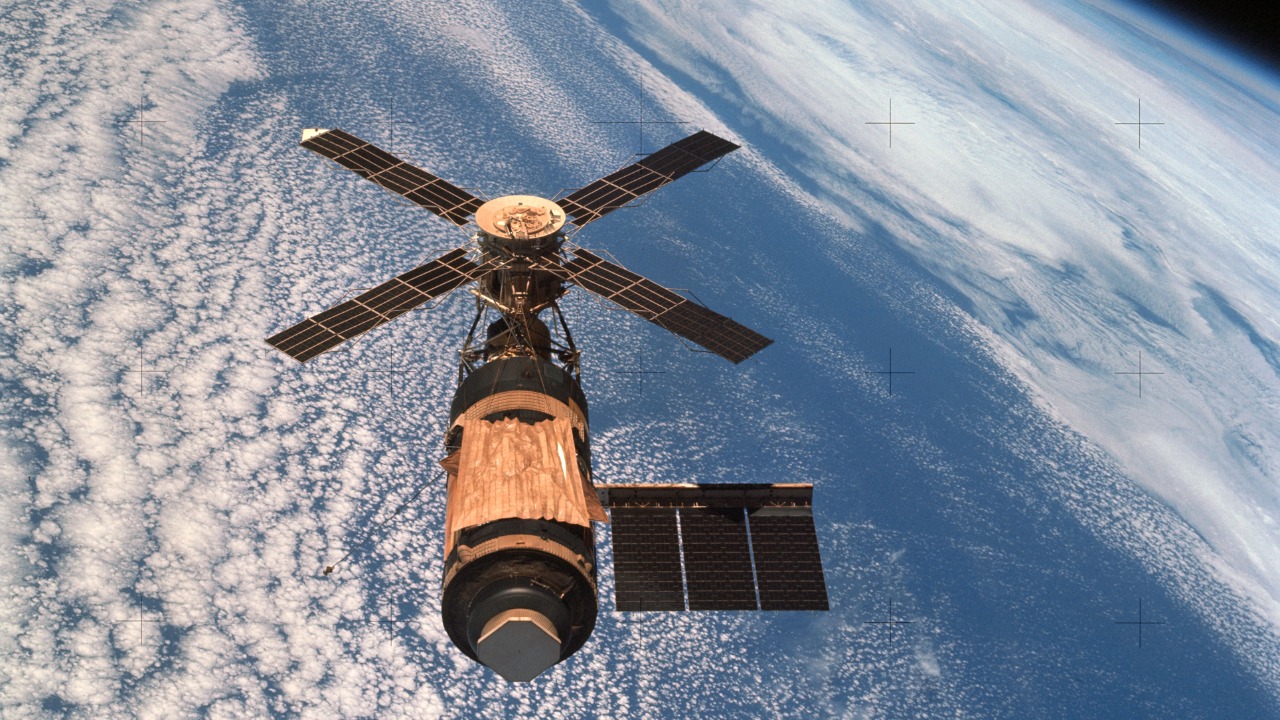
Newton’s first law of motion states that objects in uniform motion remain so unless acted upon by an external force. This principle explains why Earth’s movement feels static. As the Earth rotates and orbits at constant speeds, no external forces disrupt this motion, allowing us to remain unaware of the planet’s dynamic activity. The concept of inertia ensures that we continue in our state of rest or uniform motion, oblivious to the high-speed journey through space (Forbes).
Inertial reference frames play a crucial role in our perception of motion. The Earth serves as our local frame where all motion is relative. Unlike a spinning merry-go-round, where the rotation is easily felt, Earth’s rotation is undetectable due to the lack of external forces acting upon us. Gravitational binding further ensures that the planet’s gravity keeps everything co-moving, preventing the disorienting effects seen in non-inertial systems (The Conversation).
Furthermore, the concept of relative motion is crucial in understanding why Earth’s movement is imperceptible. In physics, motion is always measured relative to a frame of reference. Since we are moving along with the Earth, everything around us shares the same frame of reference, making it impossible to detect the motion without an external point of comparison. This is similar to being in a car traveling at a constant speed; without looking outside, you cannot feel the motion. The Earth’s gravity ensures that we are all part of the same inertial frame, reinforcing the illusion of stillness (The Conversation).
Everyday Evidence and Observable Effects
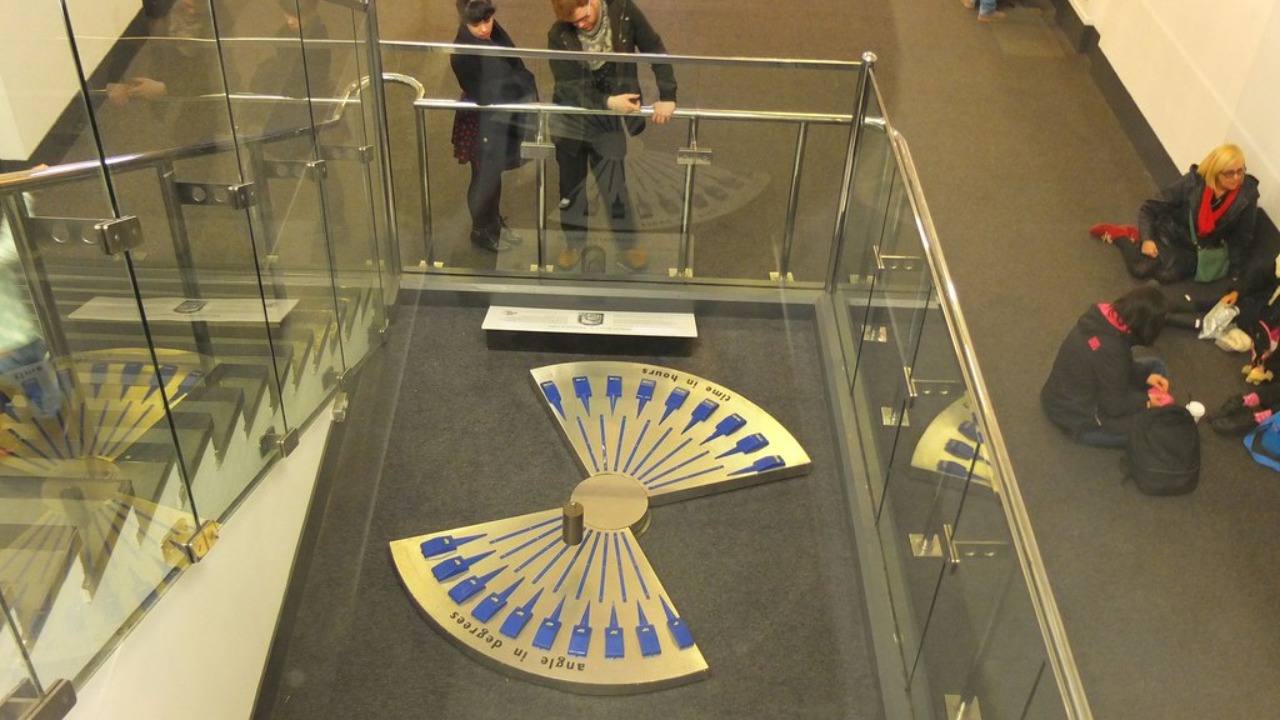
While we may not feel Earth’s motion directly, there are indirect proofs of its movement. The Foucault pendulum, for instance, demonstrates rotation without personal sensation. As the pendulum swings, it reveals the Earth’s rotation by the way it shifts direction over time, a result of the ground moving beneath it. This observable effect provides tangible evidence of the planet’s spin (Space.com).
Atmospheric and oceanic effects, such as the Coriolis force, subtly influence weather patterns and projectile paths. Although these forces don’t create a direct feeling of spin for individuals, they are crucial in shaping the dynamics of our environment. The lack of air resistance or friction in space allows for seamless orbital travel, contrasting with the resistance experienced during vehicle travel on Earth. This distinction clarifies why Earth’s motion remains imperceptible to us (Sky at Night Magazine).
Additionally, the phenomenon of day and night is a direct result of Earth’s rotation. As the planet spins on its axis, different parts of the world are exposed to sunlight, creating the cycle of day and night. This daily rhythm is a subtle yet powerful indicator of Earth’s motion. Similarly, the changing positions of stars and constellations in the night sky throughout the year are evidence of Earth’s orbit around the Sun. These celestial movements provide observable proof of the dynamic nature of our planet, even if we cannot feel the motion directly (Space.com).