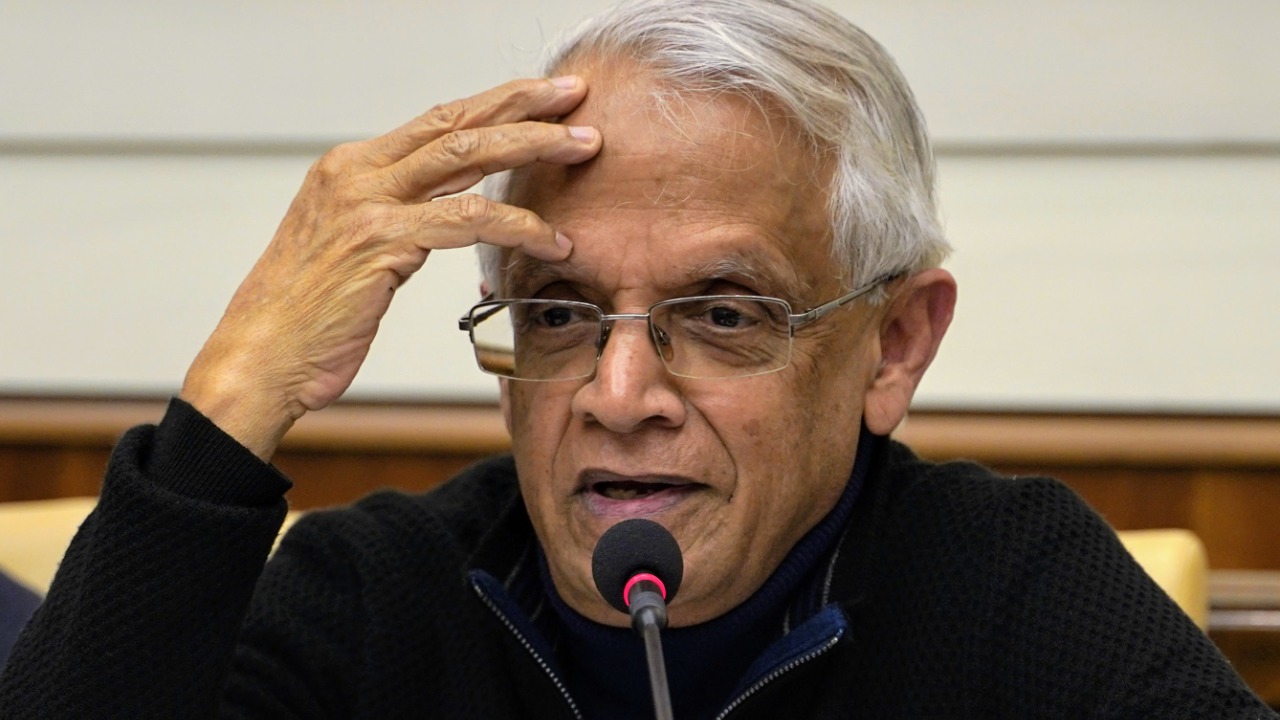

Long before climate policy became a staple of global summits, a young researcher stumbled onto a powerful driver of warming that most of the world had overlooked. His work revealed that the planet was not only threatened by carbon dioxide, but also by a quieter, faster-acting set of gases that behaved like a hidden weapon in the atmosphere. That discovery has since reshaped how scientists, diplomats and campaigners think about what it will take to keep global heating in check.
His path was anything but linear. Trained in engineering and drawn into atmospheric science almost by accident, Veerabhadran Ramanathan helped expose a second front in the climate fight, one that now underpins efforts to cut short-lived pollutants and strengthen global agreements. The story of how he did it, and how others built on his insight, shows why evidence, not ideology, still matters most in climate debates.
The young researcher who saw what others missed
When Veerabhadran Ramanathan began probing the chemistry of the sky, he was not setting out to rewrite the foundations of climate science. He was a young scientist, just 26, focused on the physics of radiation and the behavior of trace gases, following curiosity more than any grand plan. In an era when carbon dioxide dominated the conversation, he noticed that another family of compounds, chlorofluorocarbons, had an outsized ability to trap heat, molecule for molecule far more potent than CO₂, and he realized that their rapid growth could have enormous consequences for long term global warming. That insight, rooted in basic calculations rather than sweeping theory, marked the start of a new chapter in understanding how human activity was heating the planet, as later reporting on Ramanathan makes clear.
Ramanathan has recalled that once he had worked through the numbers, he simply prepared the manuscript and sent it off, without fully grasping how disruptive it would be. He later described how he “just sent the paper off,” and the journal Science published the findings, propelling his work into the spotlight and onto the front page of major newspapers. What began as a technical analysis of radiative forcing quickly turned into a global wake up call: the world was sitting on a stockpile of industrial chemicals that were not only shredding the ozone layer but also supercharging the greenhouse effect. In that moment, the “hidden warming weapon” moved from the margins of academic journals into the center of climate politics.
From lab calculations to global recognition
The speed with which Ramanathan’s work traveled from a desk calculation to international recognition underscores how hungry the scientific community was for a fuller picture of the climate system. Once the Science paper appeared, the idea that chlorofluorocarbons were a major driver of warming, not just an ozone threat, began to ripple through research institutes and policy circles. Accounts of his career describe how the impact of his climate research quickly eclipsed his income, a reminder that the value of such work is measured less in salary than in the scale of its influence. Coverage of Ramanathan notes how his findings helped shift the focus of climate policy toward a broader suite of pollutants.
Recognition did not stop at citations or conference invitations. Over time, Ramanathan’s work on short-lived climate pollutants and atmospheric brown clouds earned him some of the field’s highest honors, including a major prize worth 8 million Swedish krona, around 900,000 dollars, that highlighted the real world impact of his research. Reporting on his career notes that this award, detailed in coverage from KRDO, recognized not only his early chlorofluorocarbon work but also his later efforts to connect climate science with vulnerable communities, including research in the Maldives that documented how low lying nations were already feeling the effects of rising seas and shifting weather. The arc from a single paper to a lifetime of applied science shows how one accidental discovery can evolve into a sustained campaign to protect those on the front lines.
The Maldives, Jan, and the human face of a chemical threat
Ramanathan’s research did not remain confined to models and satellite data. He took his work into the field, including to the Maldives, where the abstract curves of radiative forcing translate into flooded shorelines and saltwater intrusion. In that island nation, he helped document how atmospheric brown clouds and greenhouse gases were altering regional climate patterns, intensifying the risks for communities that had contributed little to the problem. Reporting on his career notes that he spent time in the Maldives, using the archipelago as a natural laboratory to show how global emissions and local pollution interact. Those campaigns helped put a human face on the chemistry he had first mapped out as a young scientist.
Along the way, his work intersected with a broader cast of characters, including policymakers and advocates who helped translate complex science into diplomatic leverage. Coverage of his story references Jan as part of the narrative around how his findings were communicated and debated, a reminder that climate breakthroughs rarely belong to a single person. They emerge from conversations, collaborations and sometimes conflicts among scientists, journalists and officials who decide which risks to elevate. By grounding his fieldwork in places like the Maldives and engaging with figures such as Jan, Ramanathan helped ensure that the story of short-lived climate pollutants was not just a tale of molecules, but of people whose futures depended on rapid action.
Turning science into policy: the Montreal Protocol and beyond
The discovery that chlorofluorocarbons were powerful greenhouse gases arrived just as the world was grappling with their role in destroying the ozone layer. That timing proved crucial. It meant that when governments negotiated the Montreal Protocol on Substances that Deplete the Ozone Layer, they were not only phasing out chemicals that punched a hole in the sky, they were also, perhaps unknowingly at first, tackling a major source of warming. Over time, advocates and analysts began to emphasize this dual benefit, arguing that strengthening the treaty could deliver some of the fastest climate gains available. One of the figures at the center of that push has been Durwood Zaelke, who, as president of the Institute for Governance & Sustainable Development, has worked to maximize the climate mitigation potential of the Montreal Protocol on Substances that Deplete the Ozone Layer through what he describes as an accelerated schedule or leapfrog strategy, as detailed in profiles of Zaelke.
At Zaelke’s helm, the Institute for Governance & Sustainable Development has argued that cutting short-lived climate pollutants like hydrofluorocarbons, which replaced some chlorofluorocarbons but still pack a powerful warming punch, is one of the most effective ways to slow temperature rise in the near term. The organization’s president and founder, profiled on the IGSD site, has framed this work as a complement to long term carbon dioxide reductions, not a substitute. That approach builds directly on the scientific foundation laid by Ramanathan and others who showed that focusing solely on CO₂ would miss a large share of the problem. It also reflects a broader shift in climate strategy, from a narrow emphasis on one gas to a portfolio approach that targets multiple pollutants across different time scales.
Climate diplomacy, public debate, and the fight over facts
As the science of short-lived climate pollutants has matured, so too has the politics around it. High profile gatherings now compete with traditional United Nations conferences for attention, including events that celebrate progress on ozone and climate policy. In one widely shared post, Durwood Zaelke described a major meeting focused on the Montreal Protocol as the “hottest climate bash,” underscoring how a treaty once seen as a niche environmental accord has become a central arena for climate ambition. That kind of rhetoric reflects a real shift: the recognition that phasing down chemicals like hydrofluorocarbons can deliver climate benefits measured in tenths of a degree, a scale that matters enormously for vulnerable countries.
More from Morning Overview