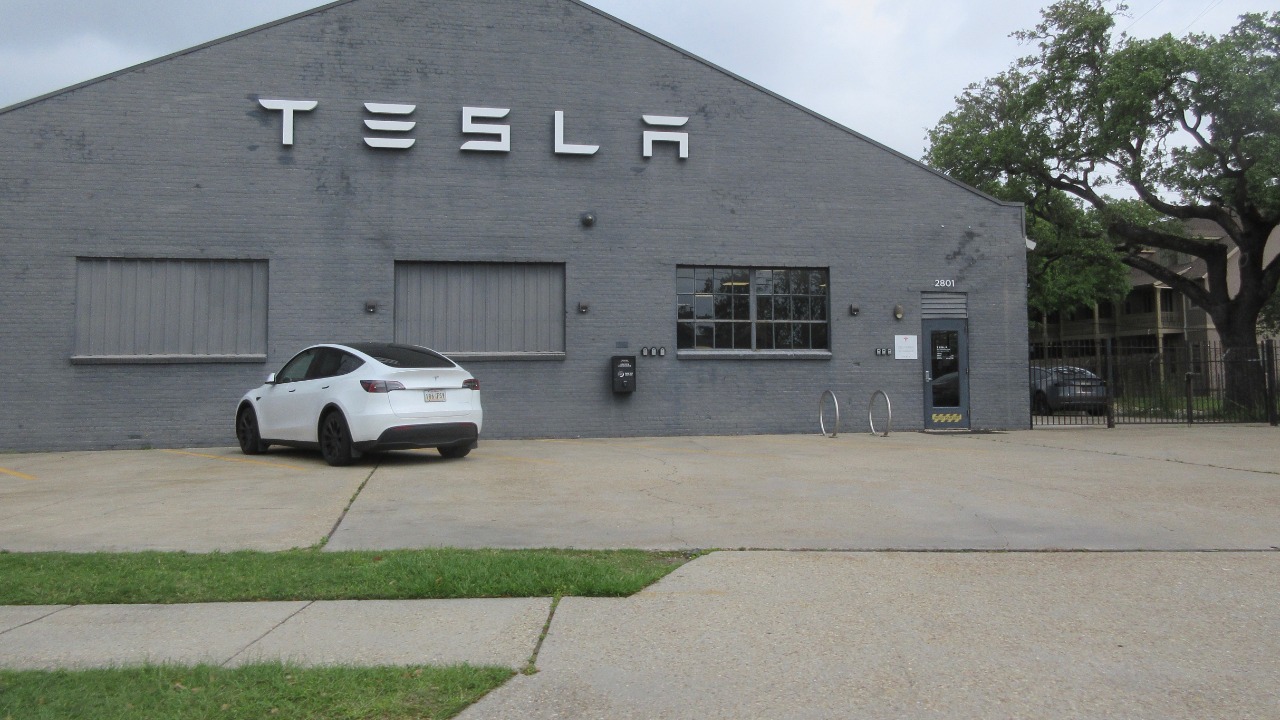

Tesla’s once-relentless growth has stalled, and the company is now confronting a sustained slide in global demand that is reshaping both its balance sheet and its reputation. Deliveries are falling in key markets, price cuts are losing their punch, and rivals are catching up on technology that used to be Tesla’s exclusive edge. I see a company that is still central to the electric vehicle story, but no longer dictating the plot.
The downturn is not a blip in a single quarter, it is a broad-based retreat that stretches from North America to Europe and parts of Asia. As registrations shrink and inventory builds, Tesla is being forced to rethink its product mix, its pricing strategy, and even the role of its chief executive in the brand’s appeal. The question now is not whether sales are slipping, but how far the slide goes before Tesla finds a new footing.
Global sales skid from growth engine to warning sign
The clearest signal that Tesla’s momentum has broken is the shift from steady growth to outright contraction in worldwide deliveries. Earlier this year, the company reported that its global sales had fallen by a double‑digit percentage compared with the previous year, putting it on track for its first annual decline in deliveries since it became a mass‑market automaker. That reversal, after years of expansion, is the backdrop for the current debate over whether Tesla has hit a temporary rough patch or a more structural ceiling in demand, a concern underscored by reports that the company is now struggling to course‑correct its sales skid.
What makes this downturn more than a statistical blip is how widely it is being felt across regions and customer segments. Industry trackers describe a broad slump in Tesla registrations, with declines in both entry‑level models like the Model 3 and higher‑priced vehicles such as the Model S and Model X, and that weakness is now being framed as a global phenomenon rather than a localized setback. A widely shared business update on professional networks has highlighted how Tesla’s deliveries have plummeted worldwide, reinforcing the sense that the company is facing a synchronized demand problem rather than isolated softness in one or two markets.
From quarterly dip to full‑year decline
When Tesla first reported a drop in quarterly deliveries, it was easy to treat the numbers as a pause after years of rapid expansion. That narrative became harder to sustain once analysts pointed out that global sales had fallen by 13 percent over a key period, a decline steep enough to put the company on course for a full‑year contraction in deliveries. In my view, a 13 percent slide is not just a cyclical wobble, it is the kind of move that forces management to revisit assumptions about pricing power, product cadence, and the depth of the order book, especially when the company had been built on the expectation of relentless volume growth, as reflected in reports that Tesla’s sales fell 13 percent and left the automaker on course for an annual drop.
The pattern that emerges from recent quarters is one of repeated shortfalls against earlier expectations, even as Tesla has leaned heavily on discounts and incentives to keep factories running. Analysts who track retail registrations and dealer data describe a “sales slump” that is visible in both new orders and the pace at which existing inventory is being cleared, suggesting that the company’s traditional levers are not restoring the old growth trajectory. Consumer‑facing auto coverage has echoed that view, noting that Tesla is now confronting a worldwide sales slump that is forcing buyers to reassess the brand’s once‑automatic appeal.
Regional weak spots expose Tesla’s vulnerabilities
Behind the global totals, the geography of Tesla’s slowdown reveals where the brand has become most fragile. Markets that once served as showcases for the company’s dominance, including parts of Western Europe and specific U.S. states, are now among its worst performers, with local sales charts showing sharp year‑over‑year declines. Reporting on Tesla’s weakest territories has highlighted how some of these regions have shifted quickly from being growth engines to becoming worst‑performing markets, a reversal that underscores how quickly consumer sentiment can turn when competitors arrive with fresher models and more aggressive incentives.
Norway is a telling example of how far Tesla’s dominance can erode once rivals catch up on range, charging speed, and price. The country was one of Tesla’s earliest and most enthusiastic adopters, with Model S and Model 3 registrations once topping local charts, yet recent data show that Tesla’s share of new electric vehicle registrations there has fallen sharply as Chinese and European brands gain ground. Coverage of the Norwegian market has described how Tesla’s sales are falling in Norway, turning a former flagship market into a cautionary tale about relying too heavily on early‑mover advantage without a steady stream of new products.
Backlash, brand fatigue, and a tougher EV market
Sales figures alone do not explain why Tesla is losing altitude, and the company’s brand has clearly taken hits that go beyond product cycles. Over the past year, critics and former customers have pointed to a mix of political controversy around Elon Musk, concerns about customer service, and fatigue with a lineup that has changed little in its core silhouettes since the Model 3 arrived. Reporting on the global downturn has tied part of the sales slide to a backlash against Musk personally and to intensifying pressure on the broader electric vehicle segment, noting that Tesla’s global sales have fallen amid a Musk backlash and EV market pressure that is making some buyers more cautious about going electric at all.
At the same time, the broader EV landscape has shifted from scarcity to abundance, and that has eroded Tesla’s ability to command premium pricing or rely on long waitlists to signal desirability. Mainstream buyers now see a crowded field of electric crossovers and sedans from legacy automakers and Chinese upstarts, many of them undercutting Tesla on price or bundling in features like bidirectional charging and more conventional interiors. Analysts who track consumer registrations have described a global decline in Tesla registrations that reflects both this intensifying competition and a cooling of the brand’s once‑cult‑like status, with one detailed analysis of global data pointing to a broad decline in Tesla registrations that aligns with the company’s recent delivery shortfalls.
Investor confidence diverges from showroom reality
One of the more striking aspects of Tesla’s current predicament is the gap between its weakening sales and the resilience of its stock price. Even as deliveries have fallen and analysts have cut their forecasts, investors have at times pushed the shares higher on the belief that Tesla remains more of a technology and software platform than a conventional automaker. I see that divergence as a bet that future products, from autonomous driving software to energy storage, will eventually matter more than the current slump in Model 3 and Model Y volumes, a view reflected in coverage of how Tesla’s sales decline has coincided with a surge in its stock and persistent investor confidence in Elon Musk.
That optimism, however, sits uncomfortably alongside the operational challenges that are now playing out in factories and showrooms. When a company is cutting prices, trimming production schedules, and still watching its market share erode, the risk is that financial markets are pricing in a turnaround that proves slower or more expensive than expected. Commentators in business media and on financial platforms have started to question whether Tesla can keep justifying a premium valuation while its core automotive business is shrinking, a tension that is increasingly visible in the contrast between upbeat trading days and the sobering reality of a sustained sales slump discussed by analysts who focus on fundamentals rather than narrative.
Tesla’s response: price cuts, new models, and strategic pivots
Faced with falling demand, Tesla has reached for a familiar tool kit of price cuts, promotional financing, and promises of new models, but the impact so far has been limited. Repeated reductions in sticker prices for the Model 3 and Model Y have narrowed margins without restoring the kind of order backlog that once defined the brand, and the company has had to balance short‑term volume goals against the risk of training customers to wait for the next discount. Reports on the company’s internal deliberations describe a management team trying to steer through a sales skid that requires course correction, including potential shifts in production priorities and renewed emphasis on software‑based revenue streams.
New products are part of the answer, but they are arriving into a far more crowded market than the one that greeted the original Model S or Model 3. The Cybertruck, for example, has generated intense attention but remains a niche product relative to the mass‑market crossovers that drive most of Tesla’s volume, and the long‑promised cheaper compact model has yet to reshape the sales curve in the way some investors had hoped. Industry coverage of Tesla’s worldwide sales slump has emphasized that the company can no longer rely on a single blockbuster launch to reignite growth, and that it will need a more sustained cadence of updates, from refreshed interiors to improved driver‑assistance features, to win back buyers who now have dozens of credible EV alternatives.
What the sales slide means for the EV transition
Tesla’s retreat from hyper‑growth has implications that reach beyond its own shareholders, because the company has been a bellwether for the broader shift to electric vehicles. When the most recognizable EV brand in the world is cutting prices and still losing volume, policymakers and competitors alike have to ask whether the adoption curve is flattening faster than expected. Analysts who follow the global EV rollout have tied Tesla’s declining sales to a more cautious phase in the transition, one in which infrastructure gaps, higher interest rates, and political pushback are slowing the pace of change, a dynamic captured in reporting that links Tesla’s global sales fall to mounting pressure on the EV market as a whole.
At the same time, Tesla’s struggles do not mean the electric future is off the table, only that it may arrive in a more uneven and competitive way than early forecasts suggested. Legacy automakers are still rolling out new battery‑powered models, Chinese brands are pushing aggressively into Europe, and governments are largely sticking with emissions rules that favor electrification, even if timelines are being tweaked. In that context, I see Tesla’s current downturn as a reminder that early leadership is not a guarantee of permanent dominance, and that the next phase of the EV era will be defined less by single‑company narratives and more by how a crowded field of manufacturers responds to the same set of economic and political headwinds that have turned Tesla’s once‑explosive growth into a sustained global decline.
More from MorningOverview