
Taiwan is quietly preparing for a new wave of US weapons deals, signaling that the December packages were only the start of a longer rearmament cycle. As Chinese military pressure intensifies around the island, Taipei is trying to lock in both hardware and financing from Washington while deepening trade ties that make its security a shared economic interest.
What is emerging is not a single blockbuster agreement but a pipeline of arms, money, and market access that could reshape the balance of power in the Taiwan Strait. I see a strategy that links artillery and missiles to tariffs and semiconductors, tying Taiwan’s defense more tightly than ever to its role in the global economy.
Four new deals in the queue
Taiwan’s Defense Ministry has made clear that the December arms announcements were only one slice of a broader agenda. Officials have said that more US arms sales to Taiwan appear to be on the way, with Taiwan’s deputy defense minister describing four additional deals that are still awaiting congressional review in Washington, a sign that the pipeline extends well beyond what has been publicly detailed so far, as reflected in recent Jan briefings. I read that as a deliberate message to both domestic and foreign audiences that the island is not passively waiting on US decisions but actively structuring a multi-year procurement track.
Local reporting has reinforced that point, noting that the Defense Ministry has spoken of four more US arms sales in the works for Taiwan, a formulation that underscores how central the United States remains to the island’s force modernization plans and how much of that agenda still sits in the legislative pipeline in Washington, according to Defense officials. When I put those statements alongside the broader pattern of US support, it suggests Taipei is trying to create a rolling queue of approvals rather than one-off purchases, so that any delay in one package does not freeze the entire modernization effort.
From HIMARS to loitering munitions
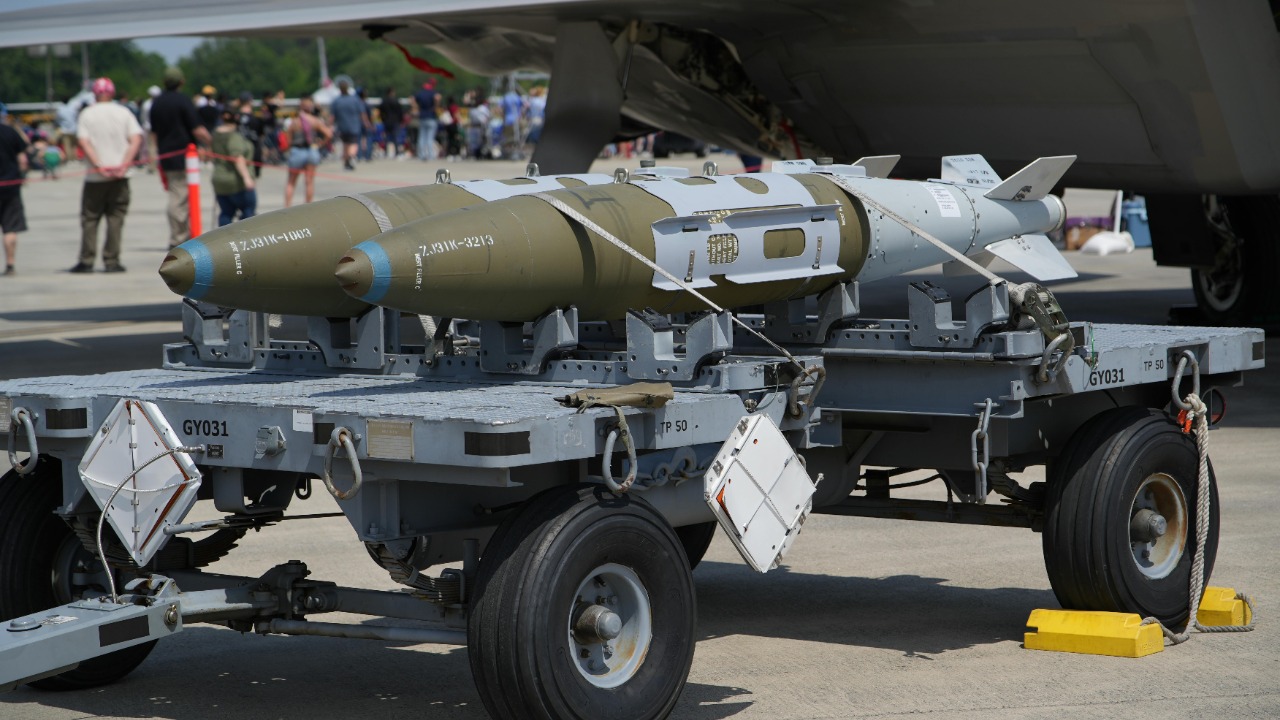
The shape of the December packages offers a window into how Taiwan intends to fight if deterrence fails. The announced December arms sales cover eight items, including Lockheed Martin HIMARS rocket systems and Altius loitering munitions, a combination that points to a strategy built around long-range precision fires and dispersed, hard-to-target strike assets that can survive a first blow and still hit back, according to details shared about the Lockheed Martin HIMARS and Altius systems. I see that mix as tailored to complicate any amphibious assault or blockade, giving Taiwan the ability to strike staging areas, ports, and ships at range while also fielding expendable drones that can hunt high-value targets.
Officials in Taipei have framed these purchases as part of a broader response to escalating Chinese military pressure, describing how Taiwan is set to receive additional US arms packages as Beijing steps up activity around the island and tests its air and maritime defenses, a trend highlighted in recent analysis of rising China threats. When I connect those dots, the logic becomes clear: Taiwan is investing in systems that can be rapidly deployed, integrated with US training, and used to impose high costs on any invading force, rather than relying on a small number of vulnerable legacy platforms.
Congressional money and political cover
The weapons pipeline is being matched by a surge of political and financial backing on Capitol Hill. The US House of Representatives has passed a bill providing US$2.3 billion in military financing for Taiwan, a package that would help Taipei pay for some of these purchases and signals that lawmakers are willing to put substantial money behind their security rhetoric, according to a report that highlighted the role of the $2.3 billion measure and the symbolism of the United States Capitol. I read that financing as a bridge between Taiwan’s budget constraints and the scale of the arsenal it is being encouraged to field.
Earlier legislative moves laid the groundwork for this moment. The House has already approved support for Taiwan that includes cooperation on joint development of drones and US training programs for Taiwan’s forces, part of a broader COOPERATION agenda that embeds the island more deeply into US defense planning, as described in coverage of the House backing for Taiwan. When I place that alongside the more recent bill in which the House passed US$2.3 billion in military financing for Taiwan, with Staff writer, with CNA noting that The US House of Representatives is also tying this support to a wider Indo-Pacific strategy, including the defense of the first island chain, it becomes clear that these arms deals are being framed as part of a regional architecture rather than a bilateral favor, as reflected in the detailed description of the $2.3 package and its implications for Taiwan.
Not everyone in Washington or Beijing sees this trajectory the same way. Chinese state-linked commentary has criticized the US House of Representatives for passing its version of the National Defense Authorization Act, or NDAA, which includes new aid to the Taiwan region and is portrayed as a destabilizing move that crosses Beijing’s red lines, according to a pointed account of how US House of handled the NDAA. I see that backlash as part of the strategic calculation in Taipei and Washington, where each new tranche of support is weighed not only for its military value but also for how it will be read in Beijing.
Trade deals as strategic ballast
While the weapons pipeline grabs headlines, Taiwan and the United States are also building economic ties that serve as a form of strategic ballast. Taiwan’s premier has hailed a new trade deal with the United States as the “best tariff deal” enjoyed by countries at a similar level, describing how the agreement cuts duties and opens markets in ways that deepen interdependence even as China protests, according to remarks delivered in TAIPEI about the benefits for Taiwan. I see that economic layer as a way of making any conflict over the island more costly for all sides, since it would disrupt not only security cooperation but also lucrative trade flows.
Another agreement has gone even further, with Washington and Taiwan sealing a deal to lower tariffs and boost chip investment that gives the United States improved access to the island’s strategic semiconductor industry, over which China claims sovereignty, and that adjusts specific tariff lines, such as cutting some duties from 20 percent to 15 percent, according to detailed accounts of how Washington is engaging Taiwan despite China’s objections. When I line that up with the security assistance, it looks less like a set of isolated deals and more like a comprehensive effort to tie Taiwan’s economic future to its ability to defend itself.
The scale of the latest commercial pact underscores that point. The United States and Taiwan have signed a $250 billion trade deal that cuts tariffs on Taiwanese goods, a move that not only benefits exporters on the island but also signals to other partners, such as Japan and South Korea, that Washington is willing to put serious economic weight behind its Indo-Pacific commitments, according to coverage of how $250 billion in trade will reshape access for Taiwanese products. I read that as a signal that Taiwan’s value to the United States is not only as a security partner on the first island chain but also as a central node in global supply chains that Washington is keen to protect.
More from Morning Overview