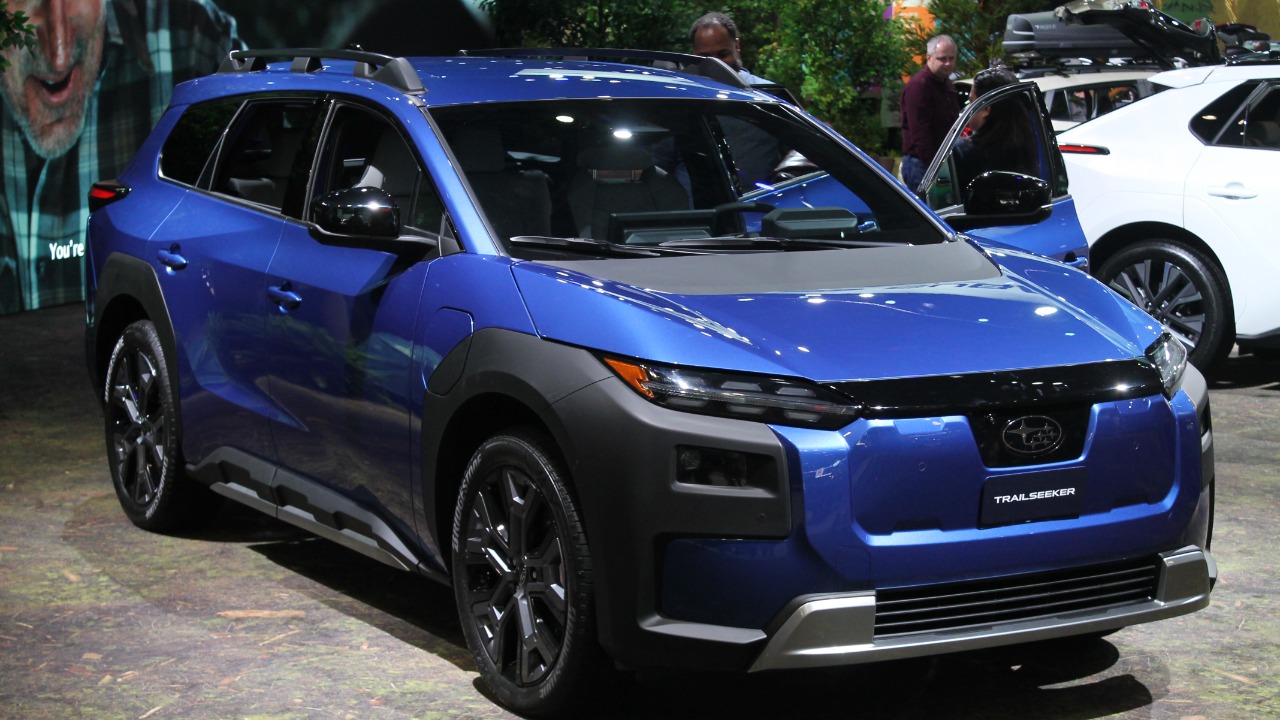

Subaru is trying to solve a problem most EV makers pretend does not exist: electric cars are quick and efficient, but for drivers raised on three pedals and a gear lever, they can feel oddly sterile. The company has now patented a simulated manual transmission that goes so far as to let an electric car bog and stall if the driver mishandles the clutch and shifter. Instead of chasing more performance, Subaru is spending real engineering effort on recreating the drama and satisfaction of a perfectly timed shift.
The idea lands at a moment when Toyota and Subaru are both experimenting with ways to keep manual-style driving alive in a battery powered future. Their engineers are not trying to bolt a traditional gearbox to an electric motor, which would be heavier and less efficient, but to digitally mimic the sensations that enthusiasts miss. Subaru’s new patent is the most extreme expression of that push so far, turning a fake stick shift into a teaching tool, a nostalgia machine and, potentially, a new kind of driver aid.
How Subaru’s “clutch to nowhere” actually works
At the heart of Subaru’s plan is a fully simulated gearbox that uses software, sensors and actuators instead of gears and synchros. The company’s filing with the U.S. Patent and Trademark Office describes a system where the clutch pedal, H pattern shifter and even the feeling of engagement are generated electronically, with no mechanical link between the pedals and the drive motor. One report dubs it a Clutch To Nowhere, because pressing the pedal sends signals to a controller rather than moving a pressure plate.
Through the document, Subaru lays out how this virtual transmission would still give drivers a familiar pattern to row through. The lever would move across an H gate, and the third pedal would have realistic resistance, but the car’s brain would decide how much torque to send to the wheels based on the chosen “gear” and pedal position. Through the patent, Subaru explains that the system could also switch to a conventional, non shifting mode, letting the driver relax and let the EV behave like a normal single speed car when they are not in the mood to play.
The wild part: an EV that can stall on purpose
The detail that grabbed attention is Subaru Just Patented a Way to Make You Stall an Electric Car on purpose. In the patent, the company outlines logic that cuts power if the driver selects an inappropriate gear or releases the clutch too abruptly, mimicking the lurch and loss of momentum that happens when a combustion engine dies. One analysis of the filing notes that Subaru Just Patented a Way to Make You Stall an Electric Car with a Fake Stick Shifter, turning what most drivers see as a mistake into a deliberate feature.
In a conventional EV, there is no engine idle to drop and no clutch to mismanage, so the car simply surges forward whenever the accelerator is pressed. Subaru’s system changes that by programming in a virtual power band and a stall threshold, so that choosing “sixth” at a walking pace or dumping the clutch at low speed would cause the Electric Car to shudder and stop. Another breakdown of the patent stresses that this Fake Stick Shifter behavior could be applied whether the vehicle is all electric or a hybrid, with the Subaru Just Patented logic sitting on top of either powertrain.
A broader push to “save” the manual in EVs
Subaru is not alone in chasing this idea. Jan, Toyota and Subaru are both exploring a future where manual shifting does not disappear with the internal combustion engine, but instead is recreated in software. One social media explainer notes that Toyota and Subaru are both working on manual style transmissions for electric cars that keep the fun of shifting without the weight and drag of real gears.
Jan, Last, Toyota and Subaru published patents for systems that promise to simulate the experience of driving a manual transmission, right down to the sensation of a clutch biting point and the need to coordinate hands and feet. One analysis points out that Last week’s filings from Toyota and Subaru are part of a coordinated push to reassure enthusiasts that they will still be able to row their own, even when they are in an EV.
Toyota’s prototype and how it differs
Toyota’s approach has already moved beyond paper. The company’s system, which has been lurking in a Lexus UX 300e prototype for a few years, is reportedly close to production. In that car, the driver uses a shifter and clutch pedal to select virtual gears, while the software modulates torque to mimic the feel of a combustion engine’s rev range. A recent summary notes that Toyota has been testing this in a Lexus UX, using the prototype as a rolling lab for its manual EV ideas.
Where Subaru leans into the possibility of stalling, Toyota appears more focused on giving drivers a sense of control and rhythm without punishing them too harshly. Jan, Toyota and Subaru just patented manual style transmissions for electric cars, and it sounds wild at first glance, but the systems do not require a physical gearbox at all. One breakdown of the social media posts about these patents highlights that Toyota and Subaru just want to recreate the sensation of shifting gears, not the mechanical complexity that used to come with it.
Why Subaru thinks a fake stall is worth the trouble
Subaru’s Interesting Patent reflects a brand that has long sold itself on driver engagement, from rally inspired WRX sedans to manual Crosstrek crossovers. By adding a real clutch pedal to an electric car, the company is betting that some buyers will accept a steeper learning curve in exchange for a more involving drive. One analysis of Subaru’s Interesting Patent notes that the automaker is already thinking about how this idea could scale to potential mass production, treating the simulated manual as a core part of future enthusiast models rather than a gimmick. That perspective is backed up by a report explaining that Subaru sees this as more than a one off experiment.
There is also a training angle. For new drivers who never learned on a manual, a simulated gearbox that can stall without risking engine damage could be a safe way to practice coordination. Subaru’s New Manual Transmission Could Put a Clutch Pedal in the Cars that Need it Most, with one report noting that the patent was uncovered in the Patent and Trademark Office for vehicles that might otherwise lose their enthusiast edge. That same analysis argues that Subaru’s New Manual a Clutch Pedal in the Cars that Need Most driver involvement, turning the fake stall into a feature that adds appeal rather than frustration.
More from Morning Overview