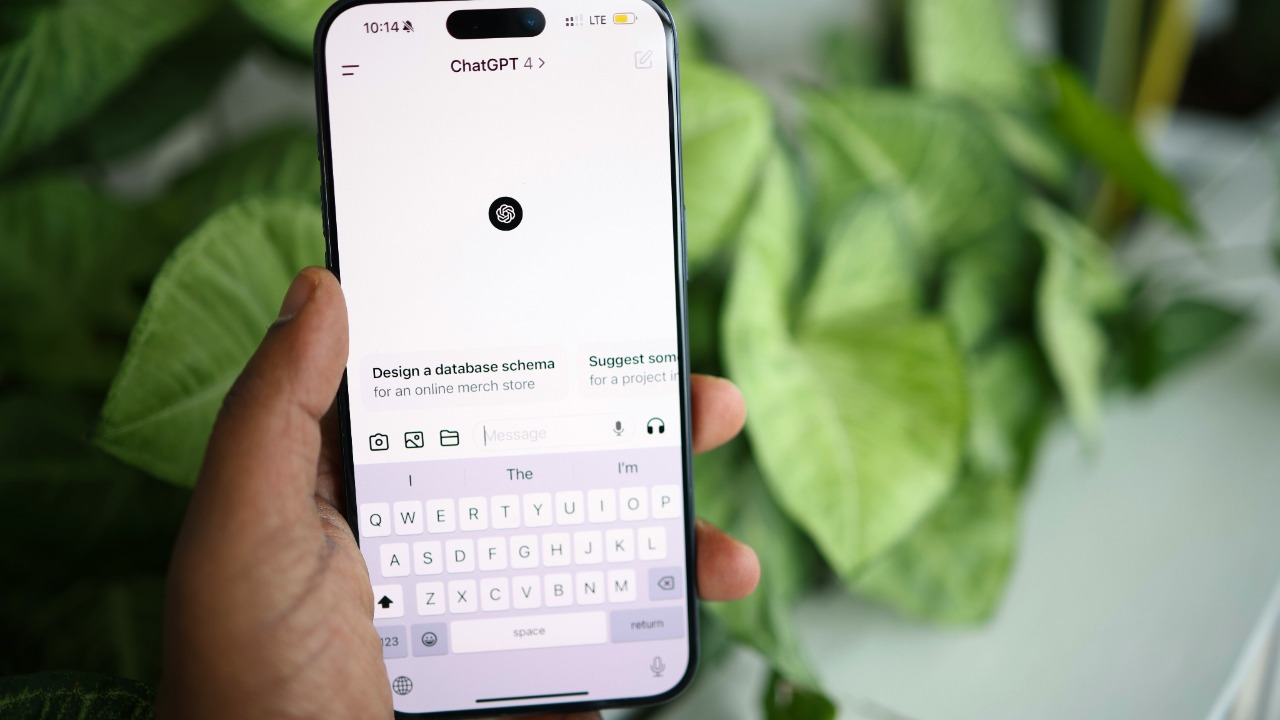

The final season of Stranger Things was always going to be polarizing, but few expected the discourse to fixate on a browser tab. After a fleeting glimpse of what looked like a ChatGPT window in the companion documentary, some viewers leapt to the conclusion that artificial intelligence had secretly written the show’s ending. Now the filmmaker behind that documentary is pushing back, insisting the speculation has outpaced the facts.
As the debate over AI in Hollywood intensifies, the uproar around Stranger Things has become a flashpoint for broader anxieties about technology, creativity, and trust in storytellers. I see the clash over those blurry screenshots as less a smoking gun and more a case study in how quickly fan theories can harden into “truth” when emotions around a beloved series are already running hot.
How a split-second screenshot lit the fuse
The controversy traces back to One Last Adventure: The Making of Stranger Things 5, a behind-the-scenes project that follows the production of the final season. In one sequence, fans noticed what appeared to be AI-related browser tabs on a computer screen, and within hours social media was flooded with claims that the documentary, and even the finale itself, had been written with ChatGPT. The title One Last Adventure, attached to The Making of Stranger Things 5, quickly became shorthand online for a supposed confession that the creative team had turned to generative tools.
Those claims rested heavily on low resolution screenshots and freeze frames, which some viewers treated as definitive proof that the writers had outsourced their work. Reports described how the Stranger Things documentary, One Last Adventure, showed alleged AI tabs and unfinished script pages that “ignited backlash” and “sparked widespread debate” about whether the production had relied on ChatGPT at all, even as the footage itself remained ambiguous and contested among fans who scrutinized every pixel of the making-of material.
Martina Radwan’s firm denial of an AI-written finale
Into that swirl stepped Martina Radwan, the director of One Last Adventure: The Making of Stranger Things 5, who has now directly addressed the uproar. Radwan has been explicit that the fan theories are off base, stressing that viewers are “assuming” far more than the footage actually shows and that the leap from a visible tab to a fully AI-written script is not supported by anything she witnessed. In her account, the documentary is a record of human collaboration on a massive production, not a covert advertisement for generative software.
Radwan’s comments also intersect with a separate wave of speculation that Ross and Matt Duffer, the creators of Stranger Things, had used AI to write the finale. She has pushed back on that narrative as well, responding to claims that “Ross, Matt Duffer used AI to write finale of Stranger Things” by emphasizing that people are reading intent into images and anecdotes that do not prove an AI authored the script and that viewers are, in her words, “assuming” more than the evidence supports, a point she underscored when discussing Ross, Matt Duffer and the finale speculation.
Fans, fury, and the power of a paused frame
Part of why the AI rumor caught fire so quickly is that it landed in a fandom already on edge about the show’s conclusion. Stranger Things has been a flagship series for Netflix, with viewers following its young cast from Hawkins’ first Demogorgon encounter to the sprawling, apocalyptic stakes of season 5, and the final episodes were always going to be dissected frame by frame on the show’s Netflix home. When some fans were disappointed by the ending, the idea that a machine might have been involved offered a convenient explanation for choices they disliked.
That frustration spilled over once the documentary aired, with viewers sharing zoomed-in screenshots and insisting they had caught the Duffer brothers red-handed. One widely circulated reaction captured the mood: “I didn’t like the ending either but if you look at a higher resolution screenshot it’s not ChatGPT. Just because one person says …” before the commenter went on to argue that the outrage was built on misinterpretation rather than fact, even as others said they had contacted Netflix for comment about the supposed AI clue in the documentary.
What the documentary actually shows about AI and creativity
When I look past the screenshots and focus on Radwan’s own description of her film, a more nuanced picture of technology on set emerges. She has spoken about how the documentary captures the creative team wrestling with big thematic ideas, including the notion that “She represents magic, and magic has to die for everyone to move on. But you hold it in your…” as a way of framing the emotional stakes of the story. In that context, AI appears less as a secret scriptwriter and more as part of a broader conversation about how new tools and old myths coexist in modern Hollywood.
Radwan has also acknowledged that the industry is in the middle of a larger reckoning over technology, noting that the people she filmed were aware of debates about AI in general and that those concerns inevitably seep into how audiences interpret any glimpse of a browser tab or software window. Her comments suggest that the documentary’s fleeting references to tools and screens are being read through the lens of a much bigger fight over technology in general in Hollywood, a point she has made while discussing how “They do say it in the sense of, like, ‘She represents magic’” and how that metaphor sits alongside anxieties about technology.
From blurry tabs to “scandal”: how the rumor snowballed
Once the initial screenshots circulated, coverage of the Stranger Things documentary framed the moment as a potential “ChatGPT script scandal,” amplifying the idea that the Duffer brothers had crossed a line. Radwan has pushed back on that framing, pointing out that “Nobody has actually proved that it was open” and that the presence of a tab on a monitor does not establish that any AI-generated text made it into the final shooting script. Her argument is essentially that the burden of proof has been flipped, with fans demanding denials rather than presenting concrete evidence that the writers relied on generative tools for Stranger Things.
That distinction matters because the rumor has been presented as one of the biggest controversies the Duffer brothers have ever faced, even though the core claim remains unverified based on available sources. Radwan’s insistence that nobody has shown the tab was active, or that any AI output was used, is a reminder that screenshots can be misleading, especially in an editing environment where multiple windows and references might be open at once, a point she has stressed while addressing how the Stranger Things documentary and the Duffer “ChatGPT script” narrative turned into a scandal.
More from Morning Overview