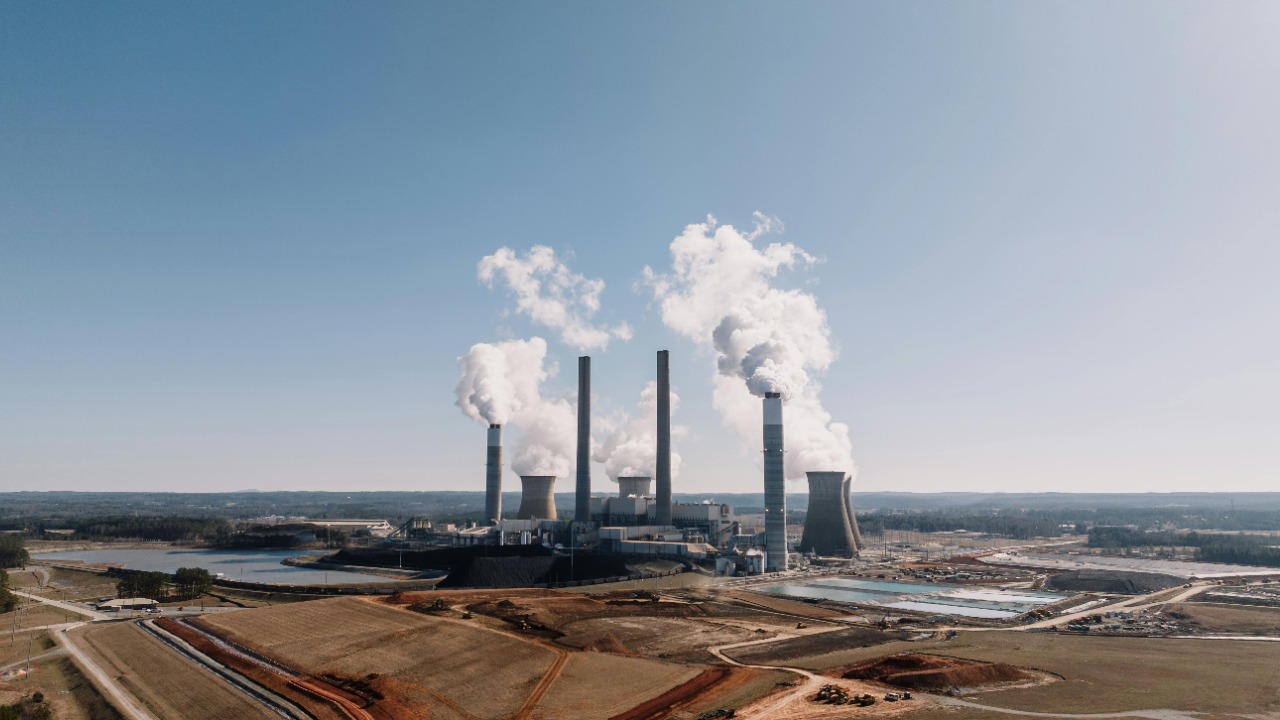

Across the United States, hulking coal plants that once symbolized industrial might are being stripped down and rebuilt as engines of a cleaner grid. Instead of blasting carbon into the sky, these sites are starting to host solar arrays, batteries, natural gas turbines, and even next generation nuclear reactors. I see a pattern emerging that is less about nostalgia for coal country and more about using its infrastructure and workforce to solve the power crunch of the AI era.
The shift is not theoretical. States from Illinois to Wyoming are actively courting developers to reuse coal sites, while federal agencies and local communities experiment with ways to turn retired smokestacks into anchors for new jobs and reliable low carbon power. The result is a quiet but consequential reimagining of the energy map, with old coal plants becoming some of the most valuable real estate in the transition.
The coal-to-clean pivot starts in coal country
The most striking part of this trend is where it is happening first. In places like Illinois, long dependent on fossil fuel jobs, at least nine coal burning plants are on track to be reborn as solar farms and battery storage hubs that still plug into the same regional grid connections. That kind of reuse avoids the political and technical headaches of building entirely new transmission lines, which is one reason developers are flocking to these sites. Reporting on these projects shows how quickly a shuttered plant can move from stranded asset to backbone of a more flexible grid once the economics line up.
Other traditional energy states are following similar paths, though with different mixes of technology. In Alabama and neighboring regions, utilities are weighing combinations of solar, storage, and gas turbines that can ramp quickly to meet peak demand. A federal overview of these efforts notes that local Communities are trying to keep tax bases and skilled workers in place by layering new energy projects onto familiar industrial footprints. I see that as a pragmatic response to climate policy, not an ideological conversion, and it is precisely why the coal to clean pivot is gaining traction in statehouses that once resisted decarbonization.
Solar, storage, and data centers chase coal’s grid connections
One reason these sites are suddenly coveted is simple: they already sit at the heart of the power system. Developers like AES are converting old coal plants and nearby minelands into large renewable projects in places like Minnesota and Pueblo, Colorado, precisely because those parcels already have high voltage lines and substations. A detailed look at these conversions describes how resistance to new greenfield wind and solar projects, from land use fights to permitting delays, is pushing more investment toward brownfield coal sites where the grid is already built.
At the same time, the tech sector’s hunger for electricity is turning retired coal plants into magnets for data centers and flexible generation. Coverage of this surge notes that Gas, solar, and storage are all being built at former coal sites to serve new industrial loads. In Pennsylvania, where coal once dominated, state level reporting shows that In Pennsylvania the vast majority of conversions are likely to be natural gas because of subsidies approved there in 2021, even as some projects add solar and batteries on the same footprint. I see that mix as a reminder that “repurposed coal” does not automatically mean fully renewable, but it does mean a faster path away from the dirtiest fuel.
States test coal-to-nuclear as a reliability play
Beyond renewables and gas, a growing number of states are eyeing nuclear power as the most direct way to replace coal’s around the clock output without sacrificing reliability. A federal analysis of coal to nuclear projects notes that Many States are Considering Coal to Nuclear Transitions, and that More than 10 states have expressed interest in reusing coal sites for reactors. A separate industry survey counts eleven states that have publicly explored this option, including Arizona, Kentucky, Maryland, Wyoming, West Virginia, North Carolina, Wyoming again in the context of a specific demonstration plant, and Pennsylvania. That list underscores how coal heavy regions are now positioning themselves as nuclear pioneers.
On the ground, the concept is moving from white papers to local politics. In Colorado, a small city facing the closure of its coal fired plants and nearby mines by 2031 is actively considering a nuclear replacement on the same site. Federal experts argue that Considering Coal sites for reactors can cut costs and timelines because the land, water access, and grid hookups are already in place. One policy analysis goes further, estimating that New nuclear plants could be 35 percent cheaper to build if they repurpose retired coal plants. I read that as a sign that the coal to nuclear idea is not just about symbolism, it is about hard math on capital costs and permitting risk.
Policy, politics, and the fight over what “clean” really means
As states race to reuse coal sites, they are also fighting over what counts as a climate solution. In Pennsylvania, for example, detailed reporting on data center driven projects shows that Gas, solar, and more at coal power sites are being shaped by subsidies approved there in 2021, which tilt the playing field toward fossil fuel generation. A separate national look at the same trend notes that In Pennsylvania the vast majority of conversions are likely to be natural gas, not renewables, because of those incentives. I see that as a cautionary tale: the same coal site can either accelerate decarbonization or lock in decades of new emissions depending on how lawmakers write the rules.
Other states are trying to steer conversions more explicitly toward low carbon power. In Massachusetts and New Jersey, policymakers are exploring how to fold coal site reuse into broader offshore wind and transmission planning, while local authorities in other regions weigh land use and environmental justice concerns. A climate focused outlet has highlighted how a growing number of states are repurposing old coal plants to create new jobs and supply clean, renewable energy, framing these projects as a way to repair some of the damage coal left behind. That analysis, accessible through Jan and a follow up piece at States, argues that the most successful projects are those that involve workers early and invest in retraining rather than assuming new industries will simply appear.
From Illinois to Wyoming, a national map of reinvention
Zooming out, the geography of coal plant reuse is starting to look like a patchwork of regional experiments. In Jul, detailed reporting showed how, In Illinois alone, at least nine coal plants are slated to become solar and battery facilities feeding regional grids, a model that other Midwestern states are now studying. A companion piece on the same projects, accessible via In Illinois, emphasizes how those conversions keep using existing grid interconnections, which is increasingly seen as the scarcest asset in clean energy development. In the Mountain West, Wyoming is hosting a high profile demonstration that would place an advanced nuclear reactor at a former coal plant in Kemmerer, a project highlighted in an industry overview at Eleven states considering coal to nuclear transitions.
Even states without a heavy coal legacy are watching closely. Searches for Arizona and Kentucky energy plans show how both are weighing coal site reuse as part of broader strategies, while West Virginia and Massachusetts explore different mixes of renewables, storage, and nuclear. Even coastal states like New Jersey are looking at how former coal plants can serve as landing points for offshore wind cables and grid upgrades. A climate business outlet, accessible via Learn, frames this as a national competition to capture federal funding and private capital for coal site reinvention. I see that competition as healthy: it is forcing states to decide whether these once dirty landmarks will anchor a cleaner grid or simply host the next generation of fossil fuel infrastructure.
More from Morning Overview