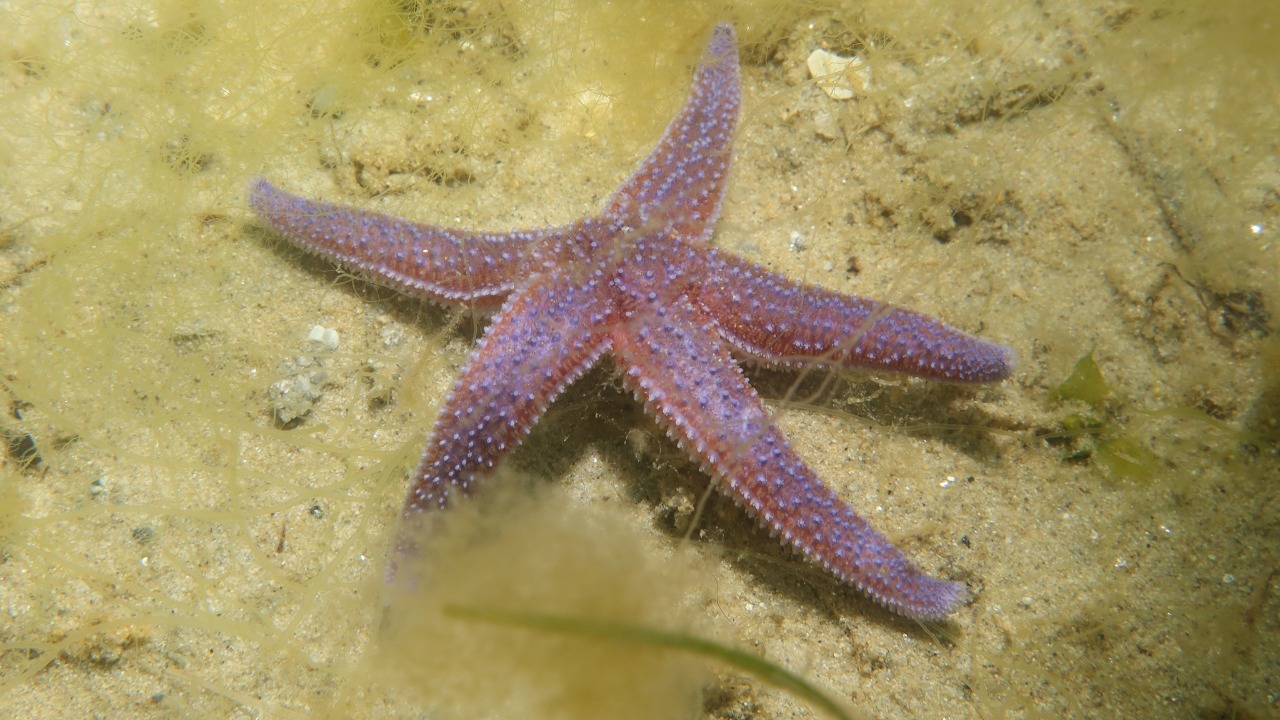

Starfish look like simple beach curiosities, but their bodies hide one of the strangest movement systems in the animal kingdom. With no centralized brain and no blood, they can still coordinate hundreds of tiny feet to crawl the length of a tide pool or creep across a reef in search of food. The result is an animal that can travel hundreds of feet with a kind of distributed intelligence that feels closer to science fiction than seaside biology.
Instead of relying on a single command center, starfish spread decision making across their arms and tube feet, turning the whole body into a moving sensor network. I find that shift in perspective, from “brain-first” to “body-first,” forces a rethink of what it means to move, navigate, and even “choose” a direction in the ocean.
How a brainless body decides where to go
At first glance, the idea that Starfish do not have a conventional brain sounds like a punchline, yet it is a precise anatomical fact. Rather than a single organ in the head, their nervous system is arranged as a central ring with radial nerves running down each arm, so processing is decentralized into each limb, which allows for some redundancy in a complicated physiology and keeps the animal functioning even if an arm is damaged, as described in work on how Starfish coordinate without a central brain. Instead of a bloodstream, they rely on seawater circulating through internal canals, which doubles as both plumbing and part of their control system.
This layout means that what looks like a single animal choosing a path is really hundreds of tube feet and five arms negotiating direction in real time. Each arm has its own sensory inputs and motor control, yet the ring of nerves keeps them aligned enough that the starfish can orient toward food, away from predators, or back into deeper water. I see that as a living example of distributed computing, where no single node is in charge but the network still produces coherent, purposeful motion.
The hydraulic engine hidden under every arm
The key to that motion is a hydraulic system that turns seawater into muscle-like power. Sea stars move by using a hydraulic system to contract and relax their muscles, pulling water into internal canals and then forcing it into their tube feet to create pressure by contracting and resting, a process that lets Sea stars extend and retract those feet in sequence. Inside the body, this plumbing is known as the water vascular system, a branching network that starts at a sieve-like opening and runs along each arm.
They, Etoile de mer, also have a hydraulic system called the vascular system of water, which begins at the mouth and extends along the arms, giving the animal the ability to stiffen or relax different regions as it crawls, as detailed in descriptions of how They, Etoile de mer channel seawater. Sea stars operate using a unique series of tubes in their body called the water vascular system which operates primarily using hydraulic pressure to move the tube feet, lift the body, and coordinate the next step, a mechanism that has been broken down in educational explainers on how Sea stars walk.
Hundreds of tiny feet doing different jobs at once
Underneath their bodies, Sea stars have hundreds or even thousands of tiny, tubed suction feet, especially in species like sunflower sea stars, and these structures are the real workhorses of locomotion, feeding, and even breathing, as highlighted in footage that zooms in on how Underneath, Sea stars rely on those tube feet. Did you know that starfish have tiny, suction-cup-like structures called tube feet on the underside of their arms, which they use not just for walking but also to grip surfaces and even pry open shells, a dual role that close-up videos of feeding Did starfish make hard to miss. When a starfish attacks a clam or mussel, rows of these feet clamp down on each shell half and apply steady, patient force until the prey tires and opens just enough for the stomach to slip inside.
Sea stars really know how to move and groove, because these incredible invertebrates walk using hundreds of tiny suction cupped tube feet located on the underside of their arms, and those feet can extend, grip, retract, and swing in coordinated waves, all powered by the water vascular system that pumps seawater through a madreporite and into a network of canals before it reaches the tube feet, as shown in slow-motion clips of how These tube feet operate. The oral surface of sea stars is lined with arrays of tube feet that enable them to achieve highly controlled locomotion on various terrains, from flat rock to vertical walls, and researchers studying sea star inspired crawling and bouncing have shown that this control comes from the combination of suction, flexible skeleton plates, and a nervous system that is distributed throughout the body, as detailed in analyses of how the oral surface supports movement.
Surviving, sensing, and staying alive without blood
Starfish survive without a brain or blood, Instead they use a unique water vascular system to move, capture food, and transport nutrients, a physiological shortcut that replaces the red, iron-rich fluid most animals depend on with seawater that doubles as both circulatory and hydraulic medium, as explained in outreach pieces on how Starfish, Instead manage without blood. That same system helps them cling to rocks in pounding surf, resist predators that try to pull them off, and recover from injuries that would be catastrophic in animals with more centralized organs.
Sea stars, also known as starfish, are not fish at all but echinoderms with five-point radial symmetry, and they do not have a brain, blood, or vertebrae, relying instead on a skeleton of flexible calcium carbonate bony plates beneath the skin and hundreds of tubed suction feet that assist in locomotion, attaching to rocks, prying open bivalves, and even breathing, as summarized in educational notes on why Sea stars are such versatile invertebrates. Sea stars have a unique water vascular system that allows them to move their tube feet, helping them navigate complex habitats, escape predation, and respond to other threats in their environment, a set of five must know facts for your next test that marine biology resources on Must Know Facts stars emphasize for students.
Why engineers are obsessed with starfish-style movement
For roboticists, the way starfish move without a central brain is not just a curiosity, it is a design template. The oral surface of sea stars is lined with tube feet that can be activated in patterns to crawl, bounce, or cling, and engineers have copied this arrangement in soft robots that use distributed actuators instead of a single motor, drawing directly on research into sea star inspired crawling and bouncing that analyzes how the oral surface and water vascular system work together. Those projects treat each limb or segment as a semi-autonomous unit, echoing the way a real starfish lets each arm “vote” on direction while the ring nerve keeps the whole body coordinated.
In parallel, studies of aquatic propulsion have shown that flexible bodies with distributed stiffness can cross miles of ocean in search of habitat or maneuver quickly to prey, and that high efficiency, low energy consumption, and high maneuverability come from the way forces are spread along the body, insights that have been applied to biomimetic robotic fish where researchers found that non-uniform stiffness affects propulsion performance and helps They cross long distances efficiently. I see starfish fitting into that same movement revolution, showing that you can trade a single, power-hungry brain and rigid skeleton for a flexible, water-driven body that thinks with its feet and still manages to roam the seafloor for hundreds of feet at a time.
More from Morning Overview