
Elon Musk has never been shy about picking a side in the energy debate, but his latest salvo leaves little room for nuance. In a wide‑ranging conversation about the future of power and artificial intelligence, he argued that solar is not just the best option but the only one that really matters, likening other sources to a caveman tossing twigs on a fire. The claim is provocative, yet it sits on a detailed view of physics, economics and geopolitics that is increasingly shaping how governments and companies think about electricity.
At stake is more than the mix on tomorrow’s grid. Musk is tying the case for solar to the race for superintelligent AI, the resilience of national economies and even humanity’s long‑term prospects beyond Earth. When he says “solar is everything,” he is not simply hyping Tesla’s products, he is arguing that the Sun’s energy will decide who leads in technology and who is left paying for yesterday’s infrastructure.
Musk’s ‘solar is everything’ moment
In his recent interview with entrepreneur Peter Diamandis, Tesla and SpaceX CEO Elon Musk pushed his long‑running thesis to an extreme. He told Peter Diamandis that “solar is everything,” and dismissed other energy sources as a waste of time, comparing them to a caveman throwing a few twigs into a fire while ignoring the vast forest around him. That metaphor, relayed in the Bottom Line Up summary of the exchange, was not just rhetorical flair, it was Musk’s way of arguing that humanity is barely scratching the surface of what the Sun can provide.
He framed the point as a simple matter of doing the math. Musk has repeatedly said that the world is not using the Sun enough because “most people don’t do the math,” insisting that “All Energy Generation Will Be” solar once costs and resource limits are properly accounted for. In the Diamandis conversation, he extended that logic, arguing that the sheer scale of incoming sunlight makes incremental improvements in fossil fuels or even some other renewables look like tinkering at the margins rather than serious long‑term strategy.
The physics case: Kardashev scale to ‘Beyond Earth’
Underneath the bravado is a physics argument that Musk has been refining for years. He often invokes the Kardashev scale, a thought experiment that ranks civilizations by how much energy they can harness, to explain why he expects solar to dominate future generation. In one recent discussion he walked through why a civilization that aspires to tap planetary or stellar energy inevitably ends up building around the Sun, a line of reasoning echoed in an analysis of how he uses the Kardashev scale to justify solar build‑out. In that framing, fossil fuels are not just dirty, they are trivially small compared with the continuous power streaming from the Sun.
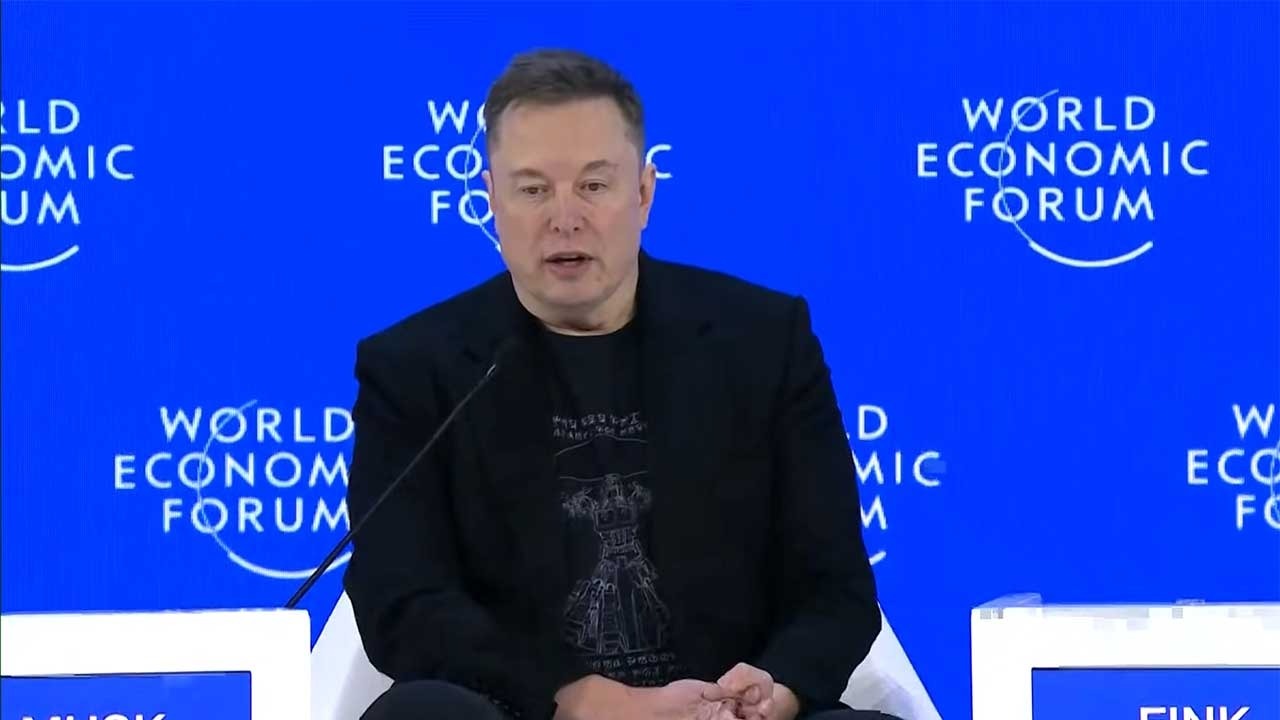
At the World Economic Forum in Davos, Musk sharpened the point with a cosmic twist. Speaking about long‑term abundance, he said that “Beyond Earth, the Sun rounds up to 100% of all energy,” arguing that any serious plan for expansion into space, including Solar powered infrastructure and eventually human missions to Mars, must be built on capturing that flow. He has even floated the idea of Solar powered AI data centres in orbit, where sunlight is constant and panels can feed power back to Earth or to off‑world industry, a vision that turns solar from rooftop hardware into the backbone of a multi‑planetary economy.
Energy as the decisive bottleneck for AI
Musk’s solar absolutism is not only about climate or space, it is increasingly about artificial intelligence. In a recent discussion on AI, he described electrical supply as “Energy as the Decisive Bottleneck,” arguing that the limiting factor for supercomputers is no longer chips but the ability to feed them cheap, abundant power. In that conversation, captured in a detailed Jan report, he compared the electricity needs of future AI systems with current national consumption and concluded that existing grids are nowhere near ready. For Musk, that gap is precisely why solar, with its potential to scale by orders of magnitude, is not optional.
He has gone further, predicting that AI Development will reach Superintelligence in Five Years, a timeline that, in his view, collides directly with today’s slow‑moving energy investments. In the same analysis of his remarks, Musk warned that without a rapid build‑out of generation, AI progress will stall on power constraints, with one significant exception: China, which he sees as moving faster on large‑scale infrastructure. That argument, laid out in a companion Energy breakdown of his comments, is part of why he keeps returning to solar as the only resource that can keep up with exponential compute.
Davos, tariffs and the politics of solar scale
That focus on scale has pulled Musk deeper into policy fights. At Davos, he used his growing prominence, which has been amplified by his proximity to President Donald Trump and his stewardship of firms that sit at the centre of the energy transition, to argue that current rules are actively slowing solar adoption. In one session he complained that his push to expand generation is running into trade barriers, a point highlighted in a Jan account of his remarks that also noted how his stance intersects with Trump’s industrial policy.
In a separate Davos appearance, Musk was more explicit, saying “Unfortunately, in the U.S. the tariff barriers for solar are extremely high,” and arguing that those trade rules are stifling adoption just as AI‑driven demand is set to surge. He paired that criticism with an audacious pledge that SpaceX and Tesla would each produce 100 GW of photovoltaic capacity per year in the U.S. this decade, a target described in detail in a Jan report that also quoted him on how that output could match the electricity power Europe needs. In that telling, tariffs are not an abstract trade issue, they are the main obstacle between Musk’s solar‑first vision and the hardware he says the grid requires.
From caveman twigs to national resilience
When Musk likens non‑solar energy to caveman firewood, he is also making a point about resilience and security. In his Davos conversations on global energy, he argued that Widespread electrified autonomy, built on renewable power, would cut transport emissions while shifting vehicle energy demand onto a grid that can be hardened against shocks. That view, laid out in an analysis of his Widespread autonomy comments, casts solar and storage not just as climate tools but as critical infrastructure for national resilience in a world of AI‑driven systems.
He has also argued that the lowest‑cost energy for AI could come from solar power generated in space, telling the World Economic Forum in Davos that orbital arrays beaming power to Earth would eventually undercut terrestrial alternatives. That claim, relayed in a World Economic Forum summary of his remarks, fits neatly with his insistence that the Sun is the only resource that scales with both AI and population. In that light, the caveman image is less an insult to existing grids than a warning that clinging to legacy fuels leaves societies exposed in a century defined by computation and climate.
More from Morning Overview