
Africa’s water crisis is often framed in terms of scarcity, but the continent’s coastlines and brackish aquifers tell a different story: the water is there, it is just not drinkable. Solar desalination startup Winture is betting that turning this unusable resource into safe supply, without relying on diesel or fragile grids, can shift that equation. By pairing modular treatment hardware with abundant sunlight, the company is positioning itself as a practical bridge between climate resilience and everyday access to clean water.
Instead of chasing mega-scale plants, Winture focuses on compact systems that can sit beside a village borehole, a fish farm, or a rural clinic. The model is simple but ambitious, aiming to deliver reliable drinking, irrigation, and sanitation water in places where conventional utilities have never reached. If it works at scale, it could redraw the map of who gets safe water in Africa and how quickly that access can be expanded.
From lab concept to rugged field hardware
The core of Winture’s approach is to treat desalination as a piece of infrastructure that must survive dust, heat, and neglect, not just perform in a controlled test bay. The company’s flagship unit, branded as Winture Planet Cube, is described as a robust outdoor water desalination system designed specifically for such conditions. It is built to strip out inorganic contamination, bacteria, and viruses, turning raw saline or polluted sources into water that meets hygiene and drinking standards without needing a permanent grid connection.
That ruggedness is not an aesthetic choice, it is a response to the realities of remote settlements and informal urban edges where maintenance teams are scarce and spare parts can take weeks to arrive. Earlier product material for Winture highlighted that the system is designed to perform under the harshest conditions of remote parts of the world and can provide up to 650 liters of pure potable water per hour. That kind of throughput, packaged in a containerized footprint, is what allows a single unit to serve a village kiosk, a small health facility, and even charge up to 10 devices at a time, turning the plant into a micro-hub of basic services.
Solar economics and the cost of a cubic meter
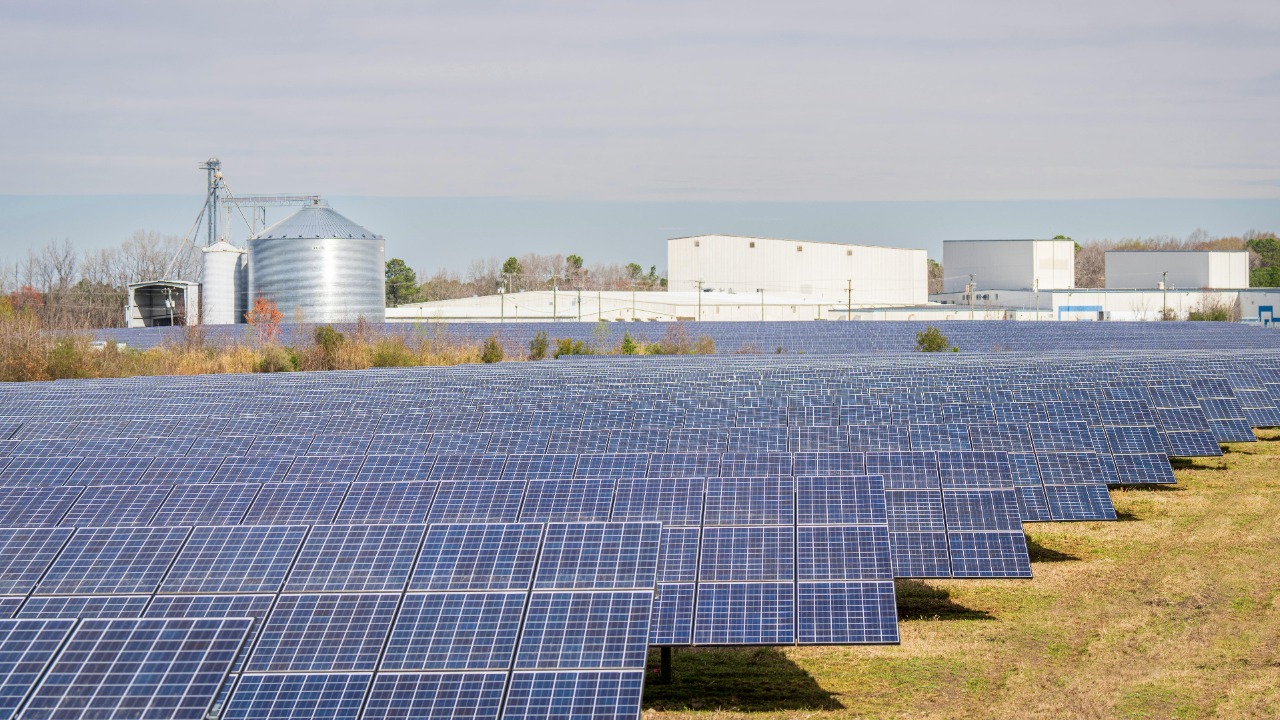
For any desalination technology, the real test is not just whether it works, but whether communities can afford the water it produces. Here, Winture’s solar-first design is central to its economics. By relying on photovoltaic power instead of diesel, the systems avoid fuel price volatility and the logistics of trucking in fuel to remote sites. Independent reporting on similar solar-powered desalination setups notes that Their production cost of water from direct seawater is €0.50 per cubic meter, while for brackish water the price decreases to €0.28 per cubic meter. Those figures, while not specific to a single installation, illustrate how cutting out fossil fuels can bring per-unit costs into a range that local operators can realistically recover through small user fees.
In practice, that cost profile matters most in places where households already pay a premium to water vendors or spend hours queuing at unreliable boreholes. If a solar desalination kiosk can undercut tanker prices while offering consistent quality, it changes the household calculus from emergency purchases to predictable budgeting. The fact that these systems are designed for off-grid applications also means they can be deployed in coastal or inland saline zones that national utilities have long written off as too expensive to serve, turning what used to be a liability into a viable local resource.
Targeting Africa’s most acute water gaps
Winture’s technology is being deployed in Africa through a partnership model that pairs engineering expertise with local operators. The company behind the hardware, Boreal Light, has focused its early footprint on East Africa, where saline groundwater and unreliable grids collide with fast-growing populations. Reporting on its rollout notes that Boreal Light currently operates multiple systems in countries such as Kenya and Tanzania, with an explicit focus on expanding access in underserved regions. That geographic focus is not accidental, it aligns with some of the continent’s sharpest water stress indicators and a high potential for solar generation.
On the ground, the work is often carried out by WaterKiosk Africa, a regional partner that runs the kiosks and interfaces with communities. In one major initiative, Boreal Light and WaterKiosk Africa describe themselves as honored to implement Africa’s largest solar water desalination project for hospitals, schools, and hotels. That framing underscores a strategic choice to prioritize social infrastructure, not just household taps. By targeting clinics, classrooms, and hospitality sites, the partnership is trying to anchor clean water access in institutions that can both pay for service and deliver broad public benefits, from infection control to job creation.
What a Winture kiosk delivers in daily life
For residents, the impact of a Winture installation is measured less in kilowatts and membranes than in the reliability and versatility of the water that comes out of the tap. Local operators describe Winture desalination systems as capable of delivering high quality hygiene drinking, irrigation, fish farm and sanitation water for local communities. That mix of uses is crucial in rural and peri-urban economies where livelihoods depend on small-scale agriculture and aquaculture as much as on household consumption. A single plant that can safely supply both a vegetable plot and a handwashing station at a clinic multiplies its development impact.
Recent updates from WaterKiosk Africa highlight how this plays out in specific neighborhoods. In one coastal community, the organization celebrated a milestone in Kibokoni, noting that Winture desalination systems are capable of delivering high quality Hygiene Drinking, Irrigation, Fish Farm and Sanitation Water for residents. The language used around that project, including tags such as #CleanWaterForAll and #ResilienceBuilding, reflects how communities and operators alike see these kiosks not just as utilities, but as anchors of environmental protection and local resilience in the face of climate stress.
Health stakes, community trust, and the road ahead
The health rationale for this kind of technology is stark. As one analysis framed it under the heading Making Drinking Water, there are serious health consequences to drinking polluted water. There, the reporting cites the World Health Organization’s assessment of the disease burden linked to unsafe supplies, noting that, According to WHO, contaminated water is a major driver of diarrheal illness and other infections. In that context, a poll of affected communities is less about abstract preferences and more about whether people trust a new kiosk enough to abandon long-standing, if unsafe, sources like shallow wells or surface ponds.
Trust is built not only on health messaging but on consistent performance. Earlier descriptions of Wintures emphasized that the systems offer a solution to a serious, global problem, presenting a robust, affordable off-grid desalination setup that can turn salt or polluted water into safe drinking supply. That framing matters because it positions the technology not as a charity giveaway, but as infrastructure that communities can rely on and, in some cases, co-finance. As more units are installed across Africa, the key test will be whether that promise holds over years of operation, not just at ribbon cuttings.
From a systems perspective, I see Winture’s model as a pragmatic attempt to thread a difficult needle. It acknowledges that centralized utilities will not reach every settlement soon, yet it resists the temptation to treat water as a purely private commodity. By anchoring projects in institutions like hospitals and schools, partnering with organizations such as Boreal Light and WaterKiosk Africa, and leaning on solar economics that can deliver water at around €0.50 or €0.28 per cubic meter depending on salinity, the startup is sketching out a middle path. If that balance of affordability, reliability, and local ownership can be maintained, solar desalination will not just be a clever technology story, it will be a tangible part of how Africa narrows its water access gap.
More from Morning Overview